A fine knit can do much the same job as a blouse: give an outfit a neat top half, sit comfortably beneath a jacket and tuck into trousers or a skirt. The difficulty is getting the waist to look relaxed rather than padded. Even a lightweight jumper has a hem, side seams and spare fabric that need somewhere to go.
The answer starts before you tuck anything in. The shape of the knit, the room inside the waistband and the layers underneath all affect the finish. Here is how to bring those pieces together, whether you want a fully tucked silhouette or just a little definition at the front.
Choose a knit that has somewhere to go
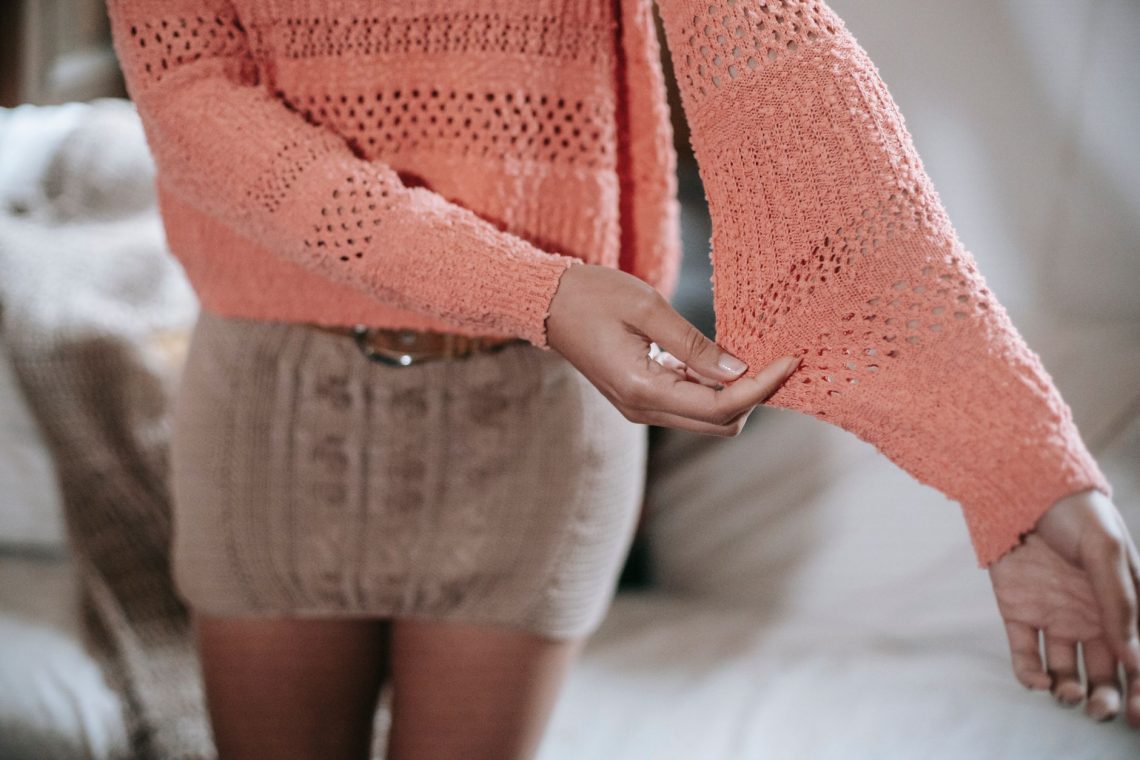
Look for a fine, flexible fabric that folds easily between your fingers. Merino wool, cotton, silk blends and lightweight cashmere can all work, but the construction matters more than the fibre name. A densely knitted jumper with a substantial ribbed hem may create more bulk than a slightly looser knit in another fabric.
A gently fitted or straight shape is usually the easiest starting point. You want enough ease to move without lots of excess width. A very oversized jumper can be tucked, but its volume must gather somewhere, often at the sides or across the lower back.
Length matters too. A knit that finishes around the upper hip generally leaves less fabric to manage than one that covers your bottom. Check that it stays inside the waistband when you lift your arms. Too short, and you will spend the day pushing it back in; too long, and the hem may form a ridge below your waist.
Give the waistband enough room
A waistband that fits comfortably over bare skin may feel tight once you add a jumper and a vest. Try the whole combination together rather than judging each piece separately. You should be able to sit down, breathe normally and bend without the fastening digging in.
High-waisted trousers and skirts often give a clear point of definition, while a mid-rise shape can produce a softer line. Neither automatically guarantees a smoother tuck. A very snug high waist may squeeze the fabric upwards; a slightly roomier mid-rise waistband may let it lie flat.
Consider what happens below the waistband as well. Pleated trousers and gently flared skirts have space for tucked fabric. Close-fitting trousers or a straight skirt in thin fabric can reveal every fold. If you can see the jumper hem through the bottom half, try a shorter knit, a partial tuck or a more substantial trouser or skirt fabric.
Choose what to wear underneath
Start with a smooth bra
Fine knits can show the outline of lace, raised seams and decorative straps. If you want a smooth finish, start with a bra whose cups lie flat beneath the fabric. Check the result in daylight: a jumper that looks opaque in a dim bedroom may reveal more near a window.
For pale or slightly sheer knits, a bra close to your skin tone will usually be less conspicuous than bright white. The right choice depends on the knit and the effect you want. Visible lingerie can be intentional, but it is worth making that decision before leaving the house.
Add a vest only if it helps
A thin, close-fitting vest or camisole can make a wool knit more comfortable against the skin and provide coverage through an open stitch. Choose a neckline that sits beneath the jumper unless you want the layer to show. Wide straps may work under a crew neck; a lower camisole can suit a V-neck.
Keep the underlayer light and avoid bulky lace edging around the hips. A long vest tucked beneath a long jumper creates two sets of hems inside your trousers. If you need both layers, smooth the vest down first, then arrange the knit separately so their hems do not stack in one thick band.
You do not need shapewear to tuck in a jumper. If you enjoy wearing it, check that its upper edge does not create another visible line beneath the knit. Comfortable underwear with flat edges is often all the outfit needs.
Make a full tuck sit smoothly
A full tuck works particularly well when you want a defined waist beneath a blazer or cardigan. Begin with your trousers or skirt unfastened so you can distribute the fabric without forcing it through a tight gap.
- Put on your underlayer, if wearing one, and smooth it into place first.
- Pull the knit down gently so the side seams sit straight. Avoid stretching the fabric.
- Tuck the front, then the back, then work around the sides in small sections.
- Spread the fabric flat inside the waistband rather than pushing it into bunches.
- Fasten the waistband and ease a little knit back out all the way around.
- Sit down and raise your arms, then adjust any sections that pull or balloon.
That final bit of ease makes a difference. A jumper pulled taut into the waistband can catch across the bust or drag at the shoulders. A small, even overhang lets the fabric move and softens the line. Aim for a gentle fold rather than a large roll resting on the waist.
Use a front tuck when there is too much fabric
If a full tuck leaves a padded ring around your middle, try tucking only a small section at the centre front. Leave the sides and back loose, then ease the tucked section out slightly. This shows the waistband without storing the whole jumper inside it.
Start with less fabric than you think you need. A narrow tuck can give enough shape; pushing in the entire front panel may simply move the bulk to either side. Let the hem fall in a gradual curve from the tucked section towards the hips.
An off-centre tuck can also work with a soft knit, especially if a central fastening is already crowded with fabric. Check it from the side as well as the front. If the loose back hangs much lower than the tucked front, a shorter jumper may give a more balanced result.
Fix the most common waistband problems
- A ridge below the waist: check whether the jumper hem and vest hem are sitting together. Separate and flatten them, or remove an unnecessary layer.
- Puffs above the hips: redistribute excess fabric towards the back in small amounts. If it still bunches, use a partial tuck.
- A fastening that strains: choose a waistband with more room or leave the knit untucked. A belt will not create extra space.
- A tuck that keeps escaping: check the jumper length and allow more ease above the waistband so movement does not immediately pull it free.
- Fabric catching underneath: try a smoother underlayer and check for rough seams or labels that interrupt the drape.
Build an outfit around the finished shape
For an easy everyday combination, tuck a fine crew-neck knit into straight-leg trousers and add loafers. Keep the waistband visible enough to show the tuck, and add a belt only if it sits comfortably. A narrow belt can finish the outfit, but a thick buckle may add volume exactly where you are trying to reduce it.
With a midi skirt, try a full tuck and a small amount of ease above the waist. With jeans, a front tuck often feels more relaxed, particularly when the denim waistband is firm. Under a tailored jacket, check that the knit lies smoothly at the back before adding the outer layer.
The useful test is how the outfit behaves when you move. Walk, sit and reach for something before making your final adjustment. A good tuck should leave you comfortable enough to forget about it, with a little softness at the waist and no need for constant rearranging.