Outdoor winter markets invite a particular kind of optimism: you picture twinkling lights, something warm to drink and a leisurely browse through the stalls. Getting dressed for them is less romantic. There may be damp paving, a queue that barely moves and nowhere convenient to put your gloves. The best outfit lets you enjoy the evening without constantly adjusting your scarf or thinking about your feet.
Start with three priorities: layers that keep you comfortable while standing still, pockets that make small essentials easy to reach, and shoes with enough room and support for a long wander. You can build all of that into an outfit that feels like you, whether your winter wardrobe revolves around tailored coats, relaxed knitwear or practical outerwear.
Dress for the standing around
A market visit rarely means continuous walking. You stop to look at jewellery, wait for food and linger while someone chooses a gift. An outfit that feels warm on a brisk walk from the station may feel quite different after a slow circuit of the stalls. Plan for those pauses when choosing your layers.
Think about the whole visit, too. An exposed square calls for different outerwear from a sheltered courtyard, while a journey involving warm trains makes removable layers particularly useful. Before leaving, consider the conditions and how long you expect to stay. Build your outfit around the coldest, least active part of the outing.
Build warmth without a bulky pile-up
Choose a comfortable first layer
A close-fitting long-sleeved top gives you a useful starting point without filling the sleeves of your coat. Choose a fabric you find comfortable against your skin; a fine wool or thermal top can sit neatly beneath knitwear. Check that the neckline works with your jumper so you are happy to keep the coat open indoors.
Your base layer should follow your shape without pulling across your shoulders or riding up when you reach forward. Tuck it in if that feels comfortable. A gap between a cropped top and your waistband becomes much more noticeable when you are standing outside.
Add a middle layer with room to move
A jumper or cardigan supplies the next layer. Medium-weight knitwear often fits more easily under a coat than a very chunky knit, especially around the upper arms. A cardigan offers some flexibility if you expect to move between outdoor stalls and heated shops.
Try the layers together before deciding. Fold your arms, lift them and reach towards an imaginary stall counter. If the combination feels tight, change one layer rather than accepting restricted movement for the evening. Several garments squeezed together can be uncomfortable, even when each feels lovely on its own.
Make the coat do its share
For a slow outdoor outing, a coat that covers your hips is a useful starting point. A longer hem can also shield more of your legs, although you should be able to stride and manage steps easily. Fasten it fully at home and sit down: you will quickly notice whether the zip pulls or the fabric bunches awkwardly.
A tailored wool coat suits dry conditions and creates a polished outline over simple knitwear. For damp or windy weather, consider outerwear designed for those conditions, paying attention to the fastening, hood and cuffs. Check the garment’s care label or existing product information rather than assuming every padded coat handles rain equally well.
You do not need to hide your personal style beneath practical outerwear. A defined waist, an interesting collar or a colour you love can make the coat the centre of the outfit. Let it lead, then keep the layers underneath straightforward.
Give trousers and skirts a realistic trial
Straight-leg jeans, corduroy trousers and relaxed wool-blend trousers can all work, provided they leave you comfortable when sitting and bending. Avoid a waistband that feels restrictive once your first layer is tucked in. Check the hems with your chosen shoes: fabric trailing across wet ground will soon become a nuisance.
If you prefer a skirt or dress, build the outfit around leg coverage. Opaque or thermal tights can sit beneath a knitted dress or a lined midi skirt. Test the tights and boots together so there is no uncomfortable pressure behind the knee or around the toes. A skirt that allows a full step makes uneven paths easier to negotiate.
Very wide hems and long, floating skirts need a little more consideration in crowded or damp spaces. Choose a length you can manage without holding it up whenever you approach a puddle or step closer to a stall.
Choose shoes for the queue
The right shoes should feel comfortable before you leave home. A market is a poor setting for breaking in stiff boots: you may spend much of the visit standing on hard ground, with few places to sit. Reach for a familiar pair with a secure fastening, a supportive feel and a sole suited to the surfaces you expect.
A flat or low, broad heel is an easy choice for many outfits. Look at the tread and condition of the soles, particularly if your route includes wet paving or cobbles. No sole makes every surface safe, so take care where the ground is slippery. If rain is likely, choose footwear you know can cope with it.
Try your boots with the socks you actually intend to wear. Thick socks are no help if they squeeze your toes or make the boot feel tight. You should be able to move your toes comfortably, and the sock should lie smoothly without a bulky fold underfoot. A spare dry pair is useful if your journey is likely to be especially wet.
Treat pockets as part of the outfit
Good pockets make browsing simpler. Ideally, your coat has a secure pocket for a card or travel pass and somewhere separate for gloves. Check that you can reach them with the coat fastened. Decorative pockets, shallow openings and awkward flaps become frustrating when you are juggling a drink.
A small crossbody bag keeps essentials close while leaving your hands available. Wear it over your coat and adjust the strap so the opening is easy to reach. Fasten it between purchases, and avoid filling it so heavily that the strap presses into your shoulder.
- Keep payment accessible: choose one secure place for your card so you are not searching at every stall.
- Allow for your gloves: leave enough pocket space to tuck them away together.
- Carry a folding shopping bag: it gives small purchases a home without requiring a large everyday handbag.
- Edit the extras: take the essentials you will use, leaving unnecessary weight behind.
Finish with accessories that stay put
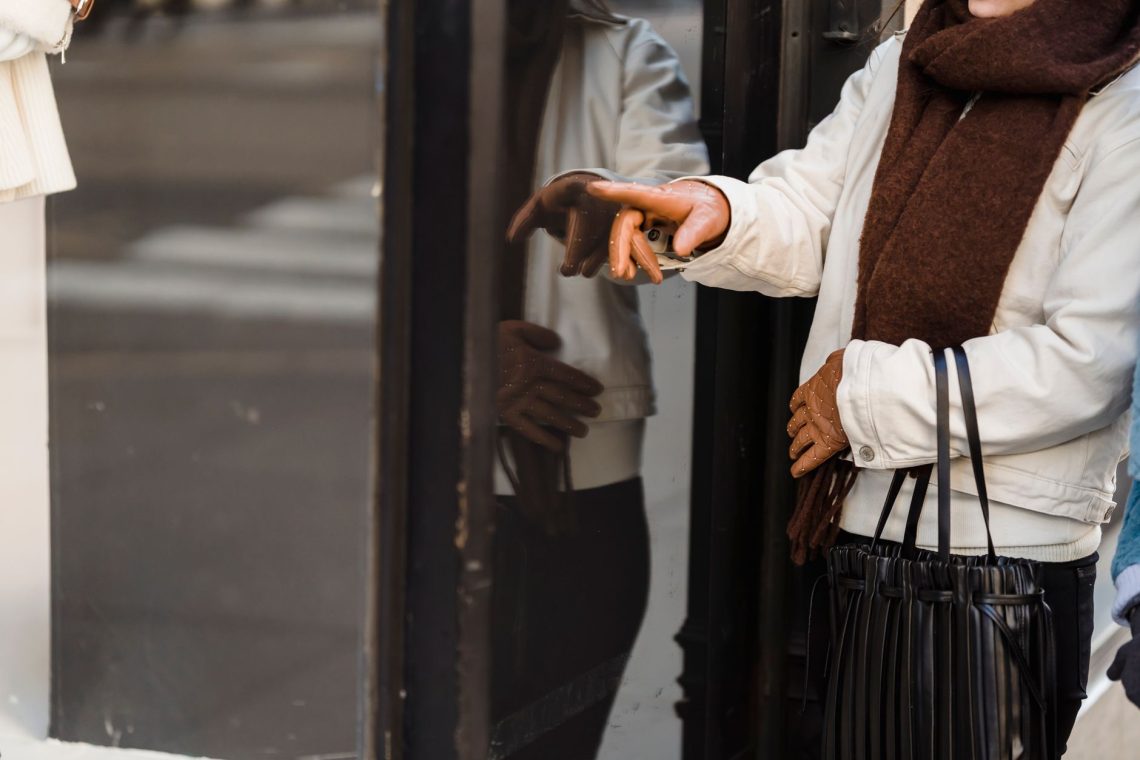
A hat that covers your ears, a scarf that sits comfortably inside your collar and gloves you can remove easily are useful finishing touches. Choose a scarf arrangement that stays clear of food and stall displays. Tuck loose ends inside your coat if they keep slipping forward.
Accessories are also an easy place to introduce colour. A burgundy scarf can lift a charcoal coat, while cream knitwear softens dark outerwear. You might prefer one matching element rather than an entirely coordinated set. Keep earrings and other jewellery comfortable beneath hats and scarves; anything that catches repeatedly will distract from the outing.
Do a final doorway check
Put on the complete outfit, including your bag, and fasten everything. Walk, bend, reach into your pockets and take your gloves off once. Check that your trouser hems clear the ground and that your boots still feel comfortable with the chosen socks. Make any small adjustments now.
Then give yourself permission to keep the outfit simple. Familiar trousers, dependable boots and a well-fitting coat can look considered with very little effort. When your clothes let you browse, queue and carry your purchases comfortably, you have dressed well for the occasion.