A cardigan and a fine-knit jacket can look surprisingly similar on a hanger. Both may have buttons, a neat neckline and sleeves slim enough to slip beneath a coat. Over a work shirt or dress, though, they can create quite different shapes. One tends to soften an outfit; the other gives it a more defined outline.
The useful distinction is less about the name on the label than how the garment is made. A cardigan usually follows the body with a flexible, flowing shape. A fine-knit jacket uses details such as firmer edges, shaped shoulders, pockets or a substantial front fastening to suggest tailoring. Here is how to choose between them when getting dressed for work.
Start with the structure, not the buttons
A cardigan is an opening-front knitted layer, often finished with a ribbed hem and cuffs. It might be fine and fitted, loose and straight, or cropped at the waist. Its main styling strength is adaptability: you can wear it open, fasten a few buttons or push up the sleeves without making the whole outfit feel very formal.
A fine-knit jacket is a less fixed category. Think of a knitted piece designed to do some of a blazer’s work, with a defined front, a stable neckline and a deliberate shape through the shoulders and torso. It may have a round neck, small lapels or a collar. The knit can still feel soft, but the finished garment holds its outline more firmly.
There is overlap. A substantial cardigan with patch pockets may read as a jacket, while an unlined knit jacket can drape like a cardigan. Hold the garment by its shoulders: does the front keep a clear shape, or fall into soft folds? That tells you more about how it will sit over a shirt than its description does.
Over a shirt: decide how much definition you need
Choose a cardigan for a softer shirt-and-trouser outfit
A fine cardigan works particularly well when the shirt already brings enough structure. A crisp cotton collar, firm cuffs and straight trousers provide clear lines; the knit adds a gentler finish. This is an easy combination for a working day that calls for looking considered without the full effect of tailoring.
Check the shirt underneath before blaming the cardigan for looking bulky. A roomy shirt with deep armholes can gather inside narrow knitted sleeves. Choose a shirt that sits comfortably across the back, then let its hem lie flat or tuck it smoothly into your waistband. The cardigan should skim the shirt rather than reveal every fold.
A V-neck gives a pointed collar room to settle and creates a clear opening down the front. With a round-neck cardigan, try wearing the top buttons open so the shirt collar has space. Neither neckline needs a necklace if the collar and buttons already create enough detail.
Choose a fine-knit jacket to sharpen a simple shirt
A fluid blouse or a plain, collarless shirt often benefits from the definition of a fine-knit jacket. The jacket’s edges frame the softer fabric, making the combination feel intentional. It is also useful when you want a jacket-like outline but prefer the flexibility of knitwear while sitting at a desk.
Give competing collars a little attention. If the jacket has lapels, arrange a shirt collar so it sits evenly within them rather than catching halfway underneath. A round-neck jacket can be simpler over a small shirt collar, provided the neckline does not press it upwards. Turn your head and sit down to check that everything stays comfortable.
For either layer, check sleeve space with your arms bent. You should be able to reach forward without the shirt pulling tightly across your elbows. A little shirt cuff showing can look neat, but it should emerge naturally rather than needing constant adjustment.
Over a dress: follow the waist and skirt
Use a cardigan to keep the dress’s shape visible
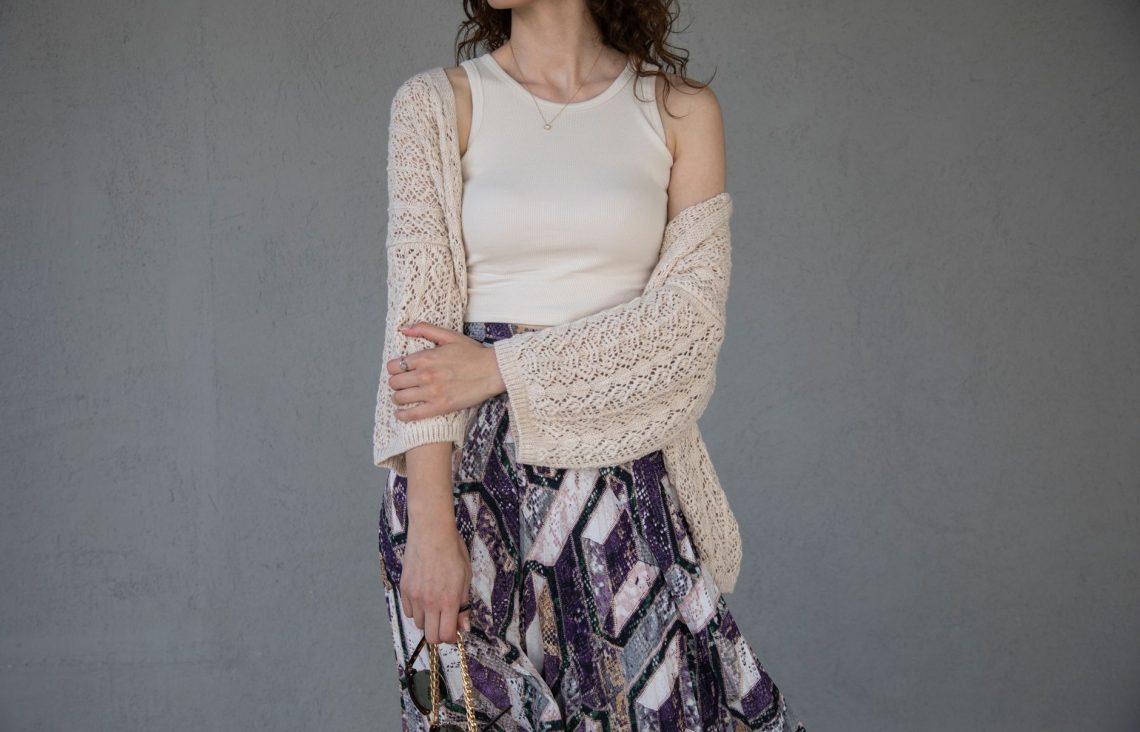
A cardigan is helpful over a dress when you want warmth without changing its character. Over a softly gathered skirt or a printed dress, a plain knit gives the eye somewhere to rest. Choose a neckline that leaves the dress neckline visible, or covers it cleanly, rather than creating two awkwardly close edges.
On a dress with a defined waist, start by trying a cardigan that ends near that point. It can preserve the waistline without adding another belt. If the cardigan has a tight ribbed hem, check that it does not bunch above the skirt. A straight hem may sit more smoothly over gathers.
A longer cardigan can work over a straight dress, especially worn open. Look at the outfit from the side as well as the front: the back should fall freely instead of catching on a belt, pockets or a prominent seam. If it repeatedly catches, try a shorter length or a roomier cut.
Use a fine-knit jacket to give a dress a workwear finish
A simple shift or sleeveless dress is a useful partner for a fine-knit jacket. The dress supplies an uninterrupted base, while the jacket adds shape around the shoulders and upper body. A clean front and modest pocket detail are often enough; the combination does not need elaborate accessories to feel complete.
With a fuller skirt, try a shorter jacket that finishes above the point where the skirt widens. A long, firm jacket can sit awkwardly across that volume. With a straight dress, a slightly longer jacket may work well, as long as it does not grip across the hips or pull the dress underneath.
Dress sleeves matter, too. Gathered shoulders, flutter sleeves and bulky cuffs can distort a close-fitting outer layer. If the dress has those features, try a more generous cardigan, or save the fitted knit jacket for a dress with smooth sleeves.
Check the fastening before you leave
Try the outfit in the way you intend to wear it. A layer that looks good hanging open may pull when buttoned, and one that sits beautifully fastened may swing awkwardly when left undone. You do not need every button closed, but the arrangement should feel deliberate and stay in place as you move.
- Look for pulling: gaps between buttons or diagonal lines towards a fastening suggest that you need more room.
- Check the hem: it should sit without rolling, catching or dragging the shirt or dress upwards.
- Sit down: notice whether the front bunches into your lap or presses uncomfortably at the waist.
- Try your coat: jacket pockets, collars and thicker edges can add bulk beneath a fitted outer layer.
Keep colour and detail working together
When the shirt or dress has a strong print, a plain cardigan usually makes an easy companion. Pick up a colour already present in the pattern for a connected look. A fine-knit jacket can work just as well, but consider whether its buttons, trim and pockets add more detail than the outfit needs.
For plain pieces, use texture to create interest: a smooth shirt beneath a subtly textured jacket, or a soft cardigan over a matte dress. Check pale or lightweight knits in good light, as shirt pockets and dark patterns may show through. The best choice is the layer that sits comfortably, supports the shape underneath and lets you get on with your day.