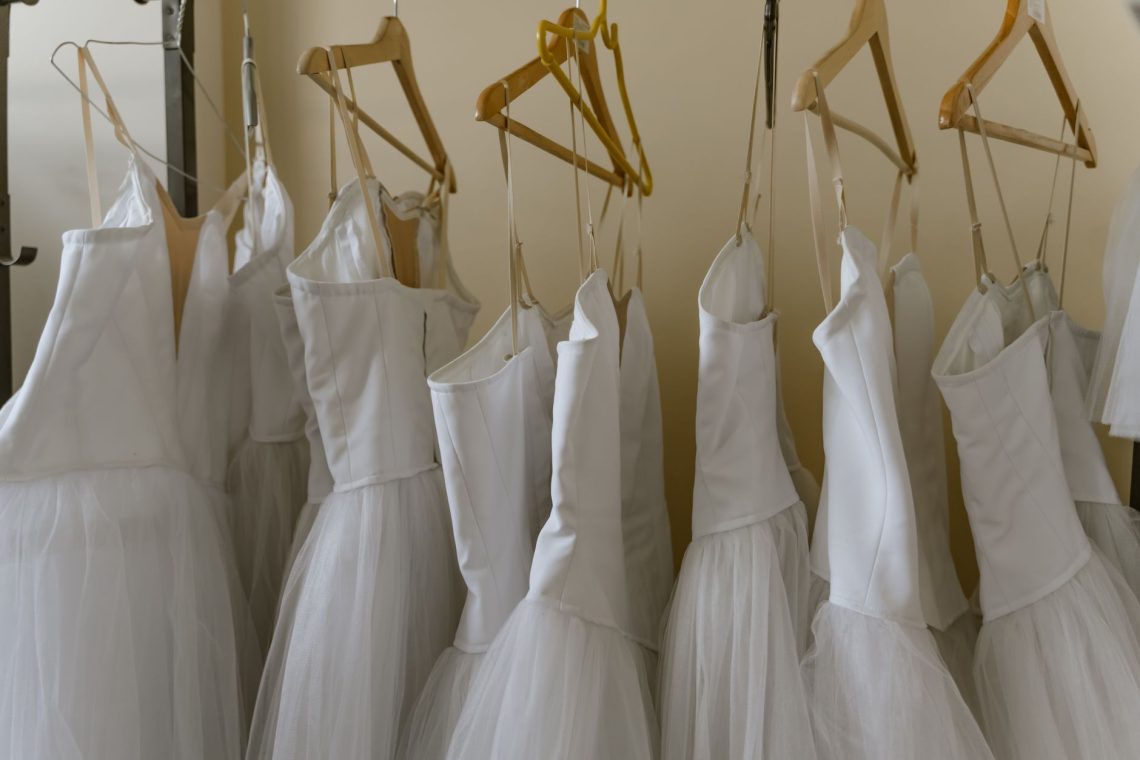
The dress you wear to a summer wedding or a winter dinner needs a different place in your wardrobe from the clothes you reach for every week. Leave it squeezed between everyday jackets and it can emerge creased, dusty or pulled out of shape. Put it somewhere too awkward to reach and you may forget it is there until you have already bought something else.
The best place is usually a quiet section of the wardrobe with enough room for the dress to rest without pressure. Whether that means hanging space or a shelf depends on its fabric, weight and construction. Start with the dress itself, then choose the position and cover that suit it.
Decide whether the dress should hang or fold
A dress does not automatically belong on a hanger just because it is a dress. Hanging helps some garments keep their shape, but the weight of others can stretch shoulders, straps and seams over months of storage. Check the care label first, including any storage advice supplied with the garment.
Hang dresses that hold their shape comfortably
Structured cotton dresses, many woven shirt dresses and tailored styles often sit well on a suitable hanger. A fitted bodice may benefit from shoulder support, while a skirt with soft gathers needs space below it. Look at how the garment behaves: if the shoulders sit naturally and nothing appears strained, hanging may be a sensible choice.
Use a broad, shaped hanger that fits within the shoulder line. A hanger that is too wide can push into the sleeves; one that is too narrow leaves the outer shoulders unsupported. Thin wire hangers concentrate the weight on a small area and are a poor choice for long storage.
Fold dresses that could stretch under their own weight
Knitted dresses and heavy, stretchy styles are generally better stored folded. A long knitted skirt can pull on the bodice when left hanging, even if the dress feels quite sturdy in your hands. Heavily embellished dresses may also need flat support, particularly when beads or sequins add substantial weight.
Delicate vintage pieces, fragile straps and unusually heavy decoration deserve individual attention. If the label gives no useful guidance and the construction looks vulnerable, ask a specialist cleaner about storage. A shelf or box that supports the whole garment is often more appropriate than suspending it from its weakest points.
Choose a quiet, dry part of the wardrobe
For a hanging dress, look for a section towards one side of the rail, away from the clothes you pull out daily. It should be easy enough to inspect, with clear space beneath the hem. If the skirt pools on the wardrobe floor, it can collect dust and develop compressed folds.
Avoid placing occasional dresses against a damp wall or in a wardrobe that smells musty. Keep them away from direct sunlight, which can affect colour, and from heat sources. If the wardrobe has an outside wall behind it, check for condensation before treating the back corner as useful spare space.
For folded dresses, choose a clean shelf that you can reach safely. A high shelf can work, provided the box is light enough to lift down without dragging or tipping it. Avoid storing a delicate dress underneath a stack of heavy jumpers or handbags. The garment needs its own supported space, rather than whatever gap remains.
Prepare the dress before putting it away
Inspect the neckline, underarms and hem after wearing. A dress that looks clean at first glance may still have traces of make-up, perspiration or food on it. Deal with marks according to the care label before storage; do not assume they will be easier to remove next season.
- Clean the dress using the method specified on its label.
- Allow it to dry completely before folding it or adding a cover.
- Check loose hooks, missing buttons and seams that need attention.
- Empty pockets and remove brooches, belts or detachable accessories that could press into the fabric.
A recently worn dress may need airing before you decide what cleaning it requires. Hang it somewhere shaded and ventilated, then inspect it again. Avoid spraying perfume or a fragranced fabric product over it as a substitute for cleaning.
Hang it with the weight properly supported
If your dress has internal hanging loops, use them as intended to help support its weight. Arrange the garment so the bodice sits smoothly, rather than allowing everything to hang from narrow decorative straps. Check that loops are sound and that the hanger has suitable notches or hooks to hold them securely.
Fasten enough buttons or zips to help a structured dress sit naturally, without pulling the fabric tight. Smooth out trapped linings and sleeves, and make sure a wrap tie is not dragging on the floor. Store a removable belt separately if leaving it buckled would compress the waist.
Give the skirt room on both sides. A generously sized cover cannot protect a dress from crushing if the rail itself is packed solid. Move a few everyday garments elsewhere if necessary: being able to slide the hanger out easily is a useful sign that the space is workable.
Fold gently, with fewer hard creases
Start on a clean, dry surface large enough to support the dress. Lay it flat, straighten the lining and bring sleeves inward without twisting them. Fold only as much as you need to fit the storage space. Several tight folds create more pressure points than a few loose ones.
Use plain, acid-free tissue suitable for garment storage to soften folds and separate areas of decoration. Lightly rolled tissue can support a fold rather than leaving it sharply flattened. Avoid coloured tissue, newspaper and printed shopping bags, which are unsuitable for direct contact with a treasured dress.
Place the folded dress in a clean storage box with room around it. Do not force the lid down. Keep beads, sequins and metal fastenings from rubbing against delicate fabric, and avoid piling several embellished garments together. Label the outside with a simple description so you can find the dress without unpacking everything.
Choose a cover that suits the storage space
For a hanging dress, a clean, breathable fabric garment cover is a practical way to keep dust off between wears. Choose one long and wide enough to contain the dress without bending the hem or squeezing the sleeves. Check that its zip and seams do not catch on lace or embellishment.
A lightweight cover is usually easier to handle than a bulky one in a small wardrobe. An opaque cover also helps shield the garment from incidental light, although it does not make a sunny storage position suitable. Wash or clean reusable covers as appropriate before putting a freshly cleaned dress inside.
Thin plastic dry-cleaning bags are intended for the journey home, rather than extended wardrobe storage. Remove them once the garment is home and ready to put away. Vacuum bags are also a poor fit for dresses with structure, delicate trims or decoration: saving space by compressing them can leave awkward creases or flatten details.
Make the next wear easier
Keep a small note with the stored dress if it needs a particular slip, belt or fastening. Store accessories nearby in their own pouch or box, without allowing shoes or sharp jewellery to touch the fabric. This makes getting dressed simpler when the invitation arrives.
Take the dress out ahead of the occasion, rather than on the morning itself. Check the fit, lining, fastenings and any storage creases, then follow the care label when pressing or steaming. The right wardrobe position is one that preserves the dress and lets you retrieve it calmly: supported, covered and ready to enjoy again.