A silk scarf can turn a plain shirt into an outfit, soften the handle of a structured bag or add a little colour at the neckline. A pocket square does much the same on a smaller scale. Yet both can become surprisingly untidy when they spend the day loose beside keys, receipts and a make-up pouch. The answer is a small habit: fold the silk before putting it away, and give it a clean space of its own.
You do not need an elaborate display fold for your day bag. A soft, flat parcel is easier to carry and easier to unfold when you want to wear it again. The aim is to contain the fabric without squeezing it into sharp creases. Here is how to choose a fold, adapt it to your bag and keep the silk looking considered between outings.
Start with clean hands and a clear surface
Spread the scarf or pocket square on a clean, dry table or bed. Check the surface for crumbs, rough edges and anything that might catch the fabric. Remove rings with raised settings if they snag easily, and let hand cream absorb before handling the silk.
Check the fabric itself, too. If you have just worn the scarf, allow any moisture from your neck or hair to dry before folding it. Do not tuck damp silk into a closed pouch. If there is a mark, follow the care label rather than rubbing at it or applying a stain treatment intended for another fabric.
For everyday packing, use your palms to smooth the fabric gently. There is no need to pull the corners until everything looks perfectly square. A slightly relaxed fold is more useful here than a tightly pressed one.
The flat fold for a pocket square
A pocket square is small enough to disappear into a bag pocket, which is precisely how it ends up tangled around a pen. This simple fold creates a tidy rectangle that slips into a soft pouch or a clean internal compartment.
- Lay the pocket square flat with the side you want to protect facing upwards.
- Bring one edge across to meet the opposite edge, making a rectangle. Smooth lightly with your palm.
- Fold the rectangle in half again, keeping the corners loosely aligned.
- If the folded square is still too wide for its pouch, fold it into thirds instead of forcing it into the opening.
- Place it flat in the pouch, with the folded edges facing towards the opening so you can lift it out easily.
Stop folding as soon as it fits comfortably. A pocket square does not become better protected simply because it has been made smaller. Too many folds create a thick little bundle that is more likely to be compressed by everything around it.
If you plan to return it to a jacket pocket later, unfold it fully first. Then arrange your chosen pocket fold afresh. Trying to preserve a puff or pointed fold inside a crowded day bag usually adds fuss without saving much time.
The loose rectangle for a square silk scarf
For a medium square scarf, a broad rectangle is a useful everyday option. It keeps the fabric together while leaving relatively few fold lines, and works well in a tote with an internal slip pocket.
- Lay the scarf flat and bring the bottom edge towards the top edge.
- Fold once more in the same direction to create a broad strip.
- Bring one short end towards the centre, then fold the other end over it, making a loose parcel.
- Check that no corner is trailing outside the parcel before placing it in a pouch.
Keep a little ease at each turn. You are laying one section over another, rather than pressing a crease into place. If the scarf has a plump rolled hem, avoid running a fingernail along it to flatten the edge.
A large square may need one extra fold, but try a wider pouch before reducing it further. The scarf should slide in without being pushed down with your fingertips. If you have to hold the pouch shut while pulling the zip, the parcel is too bulky for it.
A soft roll for a long, narrow scarf
A narrow scarf or long silk neck scarf can be awkward to fold into a square. A loose roll often fits its shape more naturally, especially if you wear it as a neck tie or hair accessory during the day.
- Lay the scarf lengthways on your clean surface.
- If it is wide, fold the long edges inwards to form a strip that fits your pouch.
- Starting at one short end, roll gently towards the other, keeping the edges together.
- Set the roll down with the loose end underneath, then transfer it to its pouch.
Do not wind it tightly or secure it with an elastic band. The pouch should hold the shape loosely. A roll takes up more depth than a flat fold, so reserve it for a bag with room beside your other belongings, rather than beneath them.
Choose the fold that suits your day bag
The right fold depends as much on the bag as on the scarf. Before settling on a method, look at the space you actually have once your essentials are packed.
- Structured shoulder bag: use a flat rectangle in a slim pouch, positioned upright beside a notebook or purse.
- Soft tote: keep the scarf in an internal pocket or a separate pouch near the top, where it will not collect beneath heavier items.
- Small crossbody: take a smaller scarf or pocket square that fits without repeated tight folds.
- Roomy day bag: a loose roll can work, provided a bottle or umbrella will not squash it.
A smooth, clean fabric pouch is useful, but inspect its inside seams and fastening. Exposed teeth, rough stitching and hook-and-loop closures can catch delicate fabric. Keep the silk clear of the zip as you close it.
Keep silk away from everyday bag clutter
Good folding cannot compensate for a leaking lip gloss. Give cosmetics, pens and food their own closed compartments, and keep the scarf separate from keys and jewellery. Check that your water bottle is secure before placing silk beside it.
If you remove a scarf while out, avoid dropping it straight into the bag while searching for its pouch. Open the pouch first, then fold the scarf on a clean surface if one is available. When there is nowhere suitable, bring the ends together in your hands and make a loose fold without letting them trail on the floor.
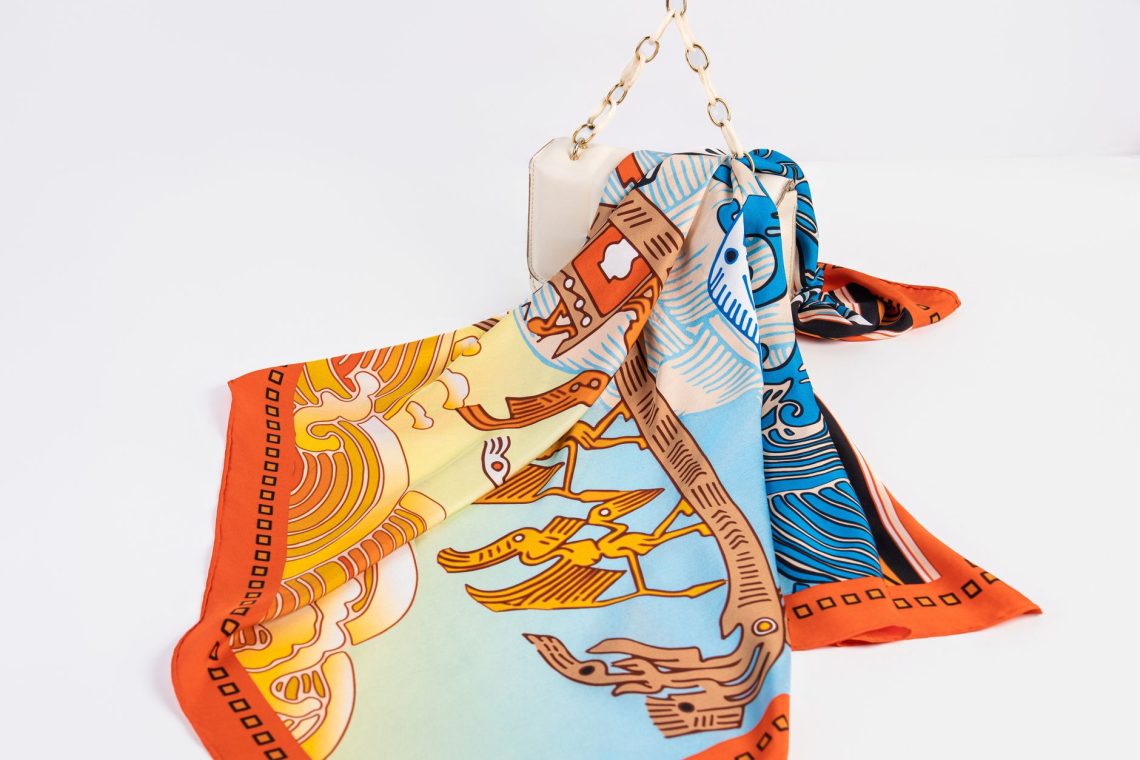
Tying a scarf to a bag handle is a styling choice rather than a storage method. It leaves the fabric exposed to handling and whatever the bag brushes against. If you want it fresh for your neckline later, carrying it inside is the more practical option.
Unpack it when you get home
At the end of the day, take the scarf out rather than leaving it compressed beneath tomorrow’s essentials. Unfold it, check for marks and let it air somewhere clean and dry, away from direct sunlight. Follow its care label if it needs cleaning or pressing.
For a light fold line, first give the fabric time to relax after unpacking. Avoid improvising with a hot iron or holding silk against a kettle. Heat and moisture need care, and the appropriate treatment depends on the item.
The habit becomes easy once the pouch has a regular place in your bag: smooth, fold, tuck away, then unpack at home. Whether you carry a bright pocket square or a generous silk scarf, a little space and a gentle fold help it arrive ready for the next outfit.