High-waisted bottoms and shorter tops are a useful pairing because they give an outfit a clear meeting point. The waistband sets the line; the top decides whether that line is covered, revealed or softened. You do not need a bare midriff, a particular body shape or a perfectly flat tuck to make the combination work.
The practical questions are smaller: how much space sits between the two pieces, where does any spare fabric go, and what happens when you add a coat? Start with those details and you can build outfits that feel comfortable while sitting, walking and getting on with your day.
Find your waistband before choosing your top
A high rise is not a fixed point on every person. One pair of trousers might sit at your natural waist, while another finishes closer to your ribs. Try the bottoms on first and notice where the waistband settles without being pulled upwards. That is the position you need to dress around.
Check the fit seated as well as standing. A waistband that digs in, rolls over or needs constant adjustment will become more noticeable with a short top. Equally, a loose waist may drop as you move, creating a gap you did not plan. Solve that fit issue before trying to balance the outfit with layers.
Look at the waistband itself, too. A broad, structured band creates a strong horizontal line; an elasticated waist usually looks softer. Belt loops, ties and pleats add detail in the same small area, so they may need a simpler top hem.
Choose your gap deliberately
For coverage, aim for a small overlap
If you want your middle covered, choose a top that reaches just below the waistband rather than stopping exactly against it. A little overlap allows for ordinary movement. Raise your arms, reach forwards and sit down: a hem that meets the trousers in the mirror may lift away once you leave the house.
A boxy top can skim over the waistband without being tucked. This works particularly well when its hem falls evenly and the fabric has enough weight to hang rather than catch. With a curved or split hem, check the sides, where coverage can be shorter than it looks from the front.
For a visible gap, keep the edges simple
If you like a strip of skin, start with a narrow gap while standing naturally. There is no ideal measurement: choose what feels comfortable and check how it changes as you move. A smooth top hem and a waistband that stays put make the space look intentional.
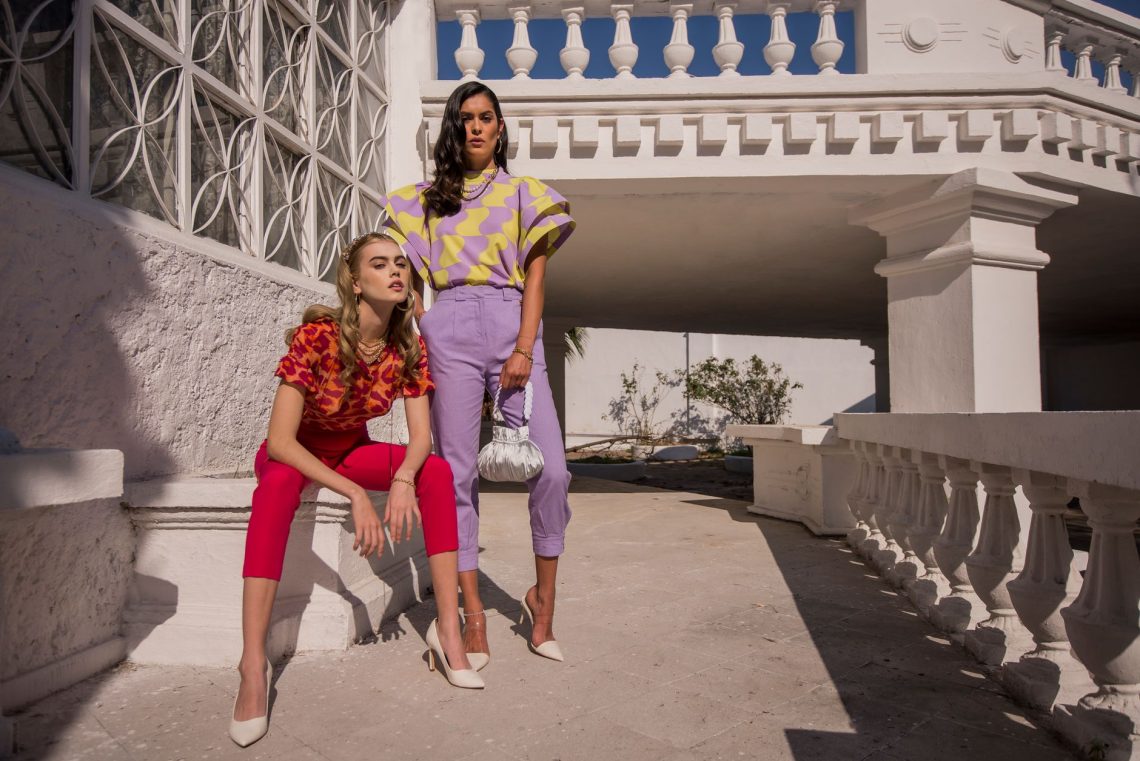
Consider the whole outfit rather than treating the gap as a separate feature. A fitted short vest, wide-leg trousers and an open shirt can feel relaxed. A cropped blouse with a high-waisted midi skirt can look more dressed up. The same amount of skin reads differently depending on fabric, shape and layers.
Pick a tuck that the fabric can support
Shorter tops do not always need tucking. If the hem already lands neatly, leave it alone. A tuck is useful when you want to show the waistband, reduce a little length or stop the top catching awkwardly over a fastening.
- Use a full tuck for fine fabric. A thin cotton top or lightweight blouse can sit smoothly inside trousers or a skirt. Tuck it around the waist, then lift your arms gently to release enough fabric for movement.
- Try a small front tuck for a relaxed finish. Push a shallow section of the centre hem behind the waistband, leaving the sides loose. Check that it creates a soft drape rather than a tight diagonal pull.
- Leave substantial knits untucked. A thick jumper pushed into a fitted waistband can feel bulky. A shorter knit that rests over the top edge usually gives a cleaner, more comfortable result.
With a genuinely cropped top, a front tuck may not have enough fabric to stay secure. If it slips out whenever you sit, wear the hem loose or choose a slightly longer top. You should not need to keep rebuilding your outfit throughout the day.
Balance volume without following a rigid formula
A close-fitting top with roomy bottoms is an easy starting point because the waist remains visible. Think a ribbed short-sleeved top with wide-leg jeans, or a simple vest with a full skirt. The contrast gives each piece space without demanding extra styling.
Two loose pieces can work together as well. With broad trousers and a boxy top, look for a hem that finishes near the waistband so the upper half does not become one long block of fabric. Soft shoulders or an open neckline can also give the outfit a lighter feel.
If both pieces are fitted, check comfort before adding accessories. Stretch fabric should allow you to move without the top riding upwards or the bottoms pulling downwards. A relaxed jacket can add another shape, but it cannot fix clothes that feel restrictive.
Choose a coat by its relationship to the outfit
You do not have to match your coat hem to your top hem. Instead, decide whether you want the outer layer to echo the waist or draw a longer line over it. Try the coat open and fastened, because those are two different silhouettes.
A short jacket can underline the waist
A jacket ending near the trouser waistband keeps the proportions clear, especially over a fitted top. Check that the jacket and top hems do not bunch together. If both are thick, a little difference in length helps them sit comfortably.
A hip-length layer needs a movement check
A blazer or jacket finishing around the hips can bridge the short top and high waist. Wear it open to show that meeting point. With a full skirt or wide trousers, check whether a firm jacket hem catches on the fabric beneath it; a straighter cut or side vents may sit more easily.
A longer coat can frame the whole combination
A knee-length or longer coat creates a continuous outer line while the shorter top defines the outfit underneath. Try it with your intended shoes, particularly if you are wearing a midi skirt. Walk a few steps and check that the hems move freely rather than tangling. Fastened, the coat should have enough room over the waistband and any pleats.
Keep the finishing details useful
Add a belt when it helps the fit or gives you a detail you actually want. You can skip it if the waistband already has a tie, prominent buttons or a clean finish you like. With a tucked top, check that the buckle does not push the fabric into a lump.
Choose shoes for the length of your bottoms. Wide trousers should clear the ground in the pair you plan to wear; a skirt should let you walk comfortably. Before heading out, sit, reach and put your coat on. If the gap feels right, the tuck stays comfortable and the layers move easily, the outfit is ready.