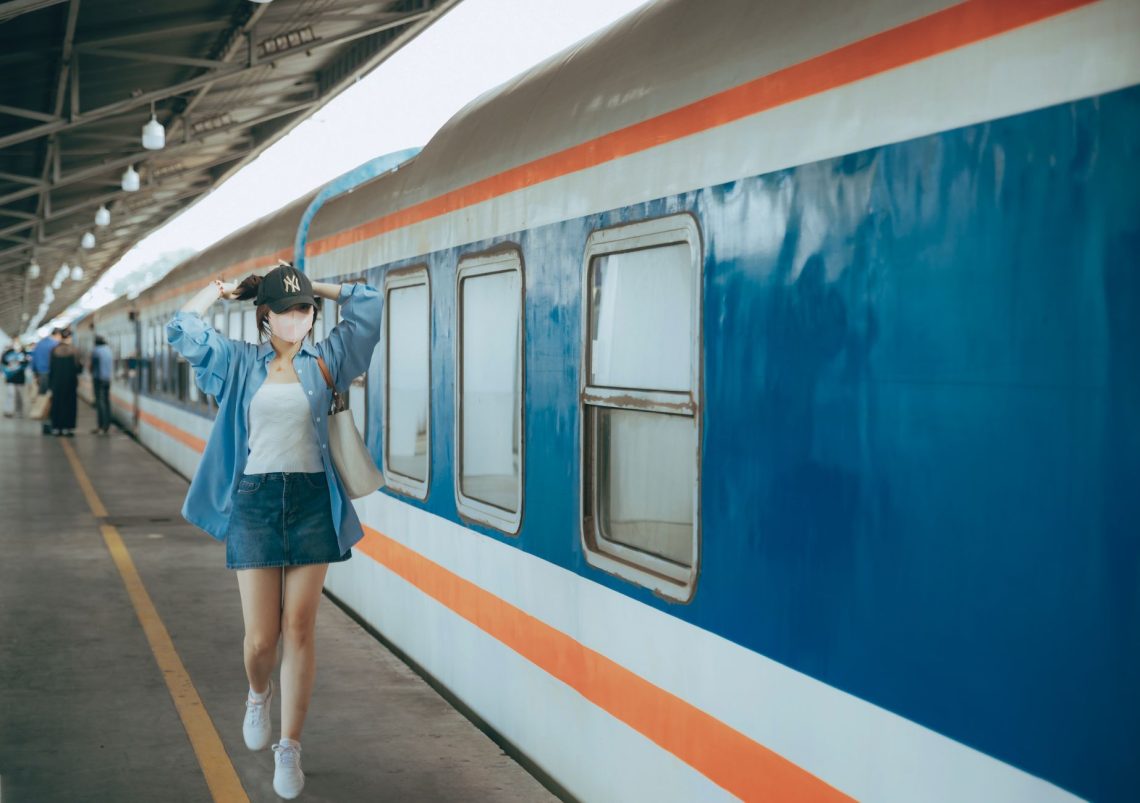
A long train journey asks quite a lot of an outfit. You need to sit comfortably, negotiate a narrow aisle, manage a bag and cope with a carriage that may feel warm one moment and chilly the next. Then, ideally, you want to step onto the platform looking ready for lunch, a meeting or the start of a weekend away.
The answer is not to travel in your smartest clothes and hope for the best. It is to choose fabrics that recover well, give your clothes enough room to move and keep the most crease-prone finishing touches out of the seat. Here is how to put together an outfit that feels comfortable for hours and still looks considered at the other end.
Start with how the fabric behaves
A fabric’s name tells you something, but its weight, weave and finish matter too. Two pairs of cotton trousers can behave very differently. A soft, substantial cotton twill may look relatively tidy after sitting, while a fine cotton poplin can collect sharp folds across the lap.
Before choosing your travelling clothes, gently scrunch a small section of fabric in your hand, then release it. If the folds stay pronounced, expect the same thing around your hips, elbows and knees. This is a useful wardrobe check, rather than a guarantee: pressure, warmth and the length of your journey also affect the result.
- Fine or medium-weight knits: a smooth jumper, knitted top or softly structured knitted dress can move with you without holding every fold.
- Wool blends: these can offer useful resilience in tailored trousers and jackets. Choose a weight suited to the weather and check that the fabric feels comfortable against your skin.
- Soft stretch fabrics: a little stretch can make trousers easier to sit in, provided the fit is not so tight that the fabric remains under tension.
- Textured weaves: a subtle texture can make small wrinkles less conspicuous than they would be on a flat, shiny surface.
Linen is lovely for warm weather, but it will develop creases. Wear it if you enjoy that relaxed appearance; do not choose a crisp linen suit expecting it to look freshly pressed after several hours in a seat. A linen blend may behave differently, so judge the actual garment.
Give your waist and hips room to sit
An outfit can look immaculate standing in front of a mirror and become uncomfortable as soon as you sit down. Try your proposed clothes in a chair before packing. Bend your knees, lean forward and reach as though retrieving something from beneath the seat.
Trousers should allow those movements without cutting into your waist or pulling firmly across your thighs. Straight-leg and gently wide-leg shapes are useful options, as are trousers with a discreet elasticated section at the back. Look for a smooth fit through the hips rather than assuming a larger size will solve everything.
Avoid excessive length that pools around your shoes. Extra fabric can get trapped beneath your heels, drag across the floor or become awkward when you climb aboard. A hem that clears the ground is easier to manage with luggage.
If you prefer a dress or skirt, choose enough room through the seat and a hem you can comfortably climb steps in. A soft A-line skirt or relaxed knitted dress can work well. Check that a back zip, bulky seam or decorative fastening does not press against you when seated.
Keep the base outfit simple
A straightforward base gives you fewer things to straighten on arrival. Try softly tailored trousers with a fine knitted top, or a jersey dress with an open cardigan. A tonal combination can look pulled together without requiring a stiff shirt or elaborate accessories.
Mid-tones, marl finishes and small patterns can be forgiving of minor wrinkles. Very pale, flat-coloured fabrics make marks easier to spot, while glossy surfaces can draw attention to folds. You do not have to wear dark colours, but consider how much attention the fabric needs.
If you like a tucked-in top, leave a little ease above the waistband. A tightly tucked shirt is likely to pull when you sit and bunch when you stand. Alternatively, choose a top designed to finish neatly at the hip, with a hem that looks intentional worn loose.
Build layers you can remove easily
Several light layers are easier to adjust than one heavy jumper. Start with a comfortable top, add a cardigan or light knit, then choose outerwear for the weather outside. Each layer should fit comfortably over the one beneath it without squeezing the sleeves.
A cardigan is particularly useful because you can open it while seated without pulling anything over your head. A soft jacket can also work, but check the shoulders and back: if it feels restrictive when you reach forward, take it off for the journey.
Keep a scarf within reach if you tend to feel cold. Choose one that folds down easily and does not shed noticeably onto the rest of your outfit. It can add colour on arrival, but it should be an optional finishing touch rather than something you must keep rearranging.
What not to sit in for hours
Take off your coat before settling into the seat. Sitting on a long coat traps the back beneath you and encourages folds around the waist. Empty bulky pockets first, then fold or hang it where permitted, keeping it clear of the aisle and other passengers’ space.
The same applies to a sharply tailored blazer you want to wear at your destination. Remove it before sitting, smooth the lining and avoid crushing it beneath a bag. If you fold it, keep the folds loose and place it somewhere it will not be repeatedly compressed.
Stiff jeans, tight pencil skirts and rigid waistbands can become tiresome on a lengthy journey. Heavy belts, large back-pocket buttons and prominent embellishments may also press into you. Save anything that requires frequent adjustment for another occasion.
Think twice about delicate pleats, very crisp shirts and bias-cut satin if a smooth finish matters to your plans. They are not forbidden travelling clothes, but they demand more care. If a particular item is essential for an event, packing it separately and changing later may be the simplest solution.
Choose shoes and bags that help the outfit
Wear shoes you already know are comfortable for walking and standing. Clean trainers, soft loafers or low ankle boots can all suit a travel outfit, depending on the weather. Check that your shoes have enough room and do not rely on loosening them completely to feel comfortable.
Keep jewellery simple enough that it will not catch on knitwear or become uncomfortable against a seat. A small pair of earrings or a watch can provide a finishing touch without much fuss.
Pack your ticket, phone, water and extra layer where you can reach them easily. Constantly hauling a large bag onto your lap can rumple clothes and make the journey feel more cramped. A smaller bag for essentials helps you leave the main luggage stowed.
Reset your outfit before arrival
When you first sit down, gently smooth your skirt or trouser fabric beneath you rather than settling onto a twisted fold. Avoid sitting on a cardigan hem or leaving a top bunched behind your back. Small adjustments at the start can prevent unnecessary creasing.
Shortly before arrival, give yourself a moment to straighten your outfit when it is safe to do so. Untwist trouser legs, ease your top back into place and put on the jacket you removed earlier. Check the back of your coat before fastening it.
Finish with your scarf or jewellery, collect your bags and allow time to get off without rushing. Clothes with room to move, a forgiving fabric and a carefully stored outer layer will do most of the work. You can then step onto the platform feeling dressed for the day ahead.