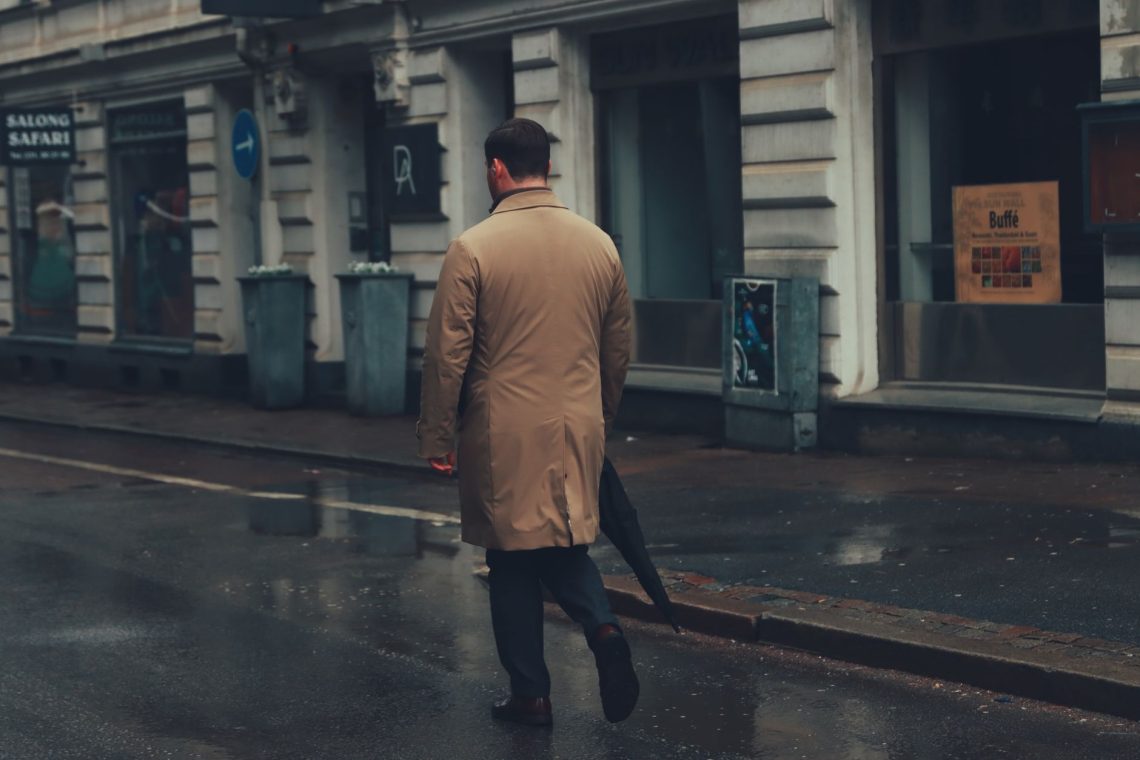
A raincoat can look perfectly roomy over a shirt, then feel surprisingly tight once a blazer goes underneath. The problem is rarely just the number on the label. A blazer adds structure at the shoulders, thickness through the upper arms and another set of sleeves that need space to move. For a comfortable commute, your raincoat has to accommodate all of that without looking as though you have borrowed someone else’s coat.
The most useful approach is to shop in the layers you actually wear. Bring your usual work blazer, along with any knitwear that regularly sits beneath it, and judge the raincoat as part of that outfit. Start with the shoulders, work down to the cuffs, then check how the coat behaves when you walk, sit and carry a bag.
Start with your everyday blazer
A softly tailored linen blazer and a structured wool jacket take up different amounts of room. Try on a raincoat over the blazer you wear most often in wet weather, rather than the thinnest one in your wardrobe. If your commuting outfit includes a cardigan or fine jumper, wear that too. You want enough space for your normal combination, without adding several unlikely layers just in case.
Empty bulky pockets before assessing the fit, then fasten the blazer as you normally would. Check that its shoulder line and sleeves sit correctly before putting on the raincoat. A jacket that is already pulling across your back will make it harder to tell which layer is causing discomfort.
Give the shoulders room to settle
The raincoat should sit over your blazer’s shoulders without compressing them. With your arms relaxed, look for a smooth upper back and a collar that rests comfortably rather than being pushed upwards. Strong horizontal creases across the shoulder blades can suggest insufficient room, especially if they appear alongside a restricted feeling when you reach forwards.
On a raincoat with conventional set-in sleeves, the shoulder seam may sit slightly beyond the blazer’s shoulder. It should not drag the sleeve down so far that the whole coat feels cumbersome. Raglan sleeves, which run diagonally towards the neckline, can be accommodating over tailoring because there is no fixed shoulder seam to align. However, the cut still needs checking through the upper arm and chest.
Try the commuting reach test
Reach forwards as though holding a train rail, then bring your hands together in front of you. Next, lift one arm as if placing a bag on a luggage rack. Some fabric movement is normal, but the coat should not clamp across your back or haul your blazer towards your ears. Repeat these movements with the raincoat fastened: an open front can disguise a tight fit.
Check the armholes and upper sleeves
A generous body does not guarantee comfortable sleeves. If the raincoat’s upper arms are narrow, the blazer sleeves can bunch inside them, making every bend of the elbow feel stiff. Slide your arms in slowly and notice whether the lining catches on the blazer. Once dressed, bend your elbows and check for a squeezing sensation around the biceps.
Very low armholes are not automatically the answer. They can make the entire coat lift when you raise an arm. Aim for an armhole that accommodates the blazer while allowing the sleeve to move naturally. A smooth lining can help the layers slide against one another, although it cannot compensate for a sleeve that is simply too small.
Get sleeve length right with both layers on
For wet-weather commuting, the raincoat cuff should cover the blazer cuff when your arms hang naturally. You do not want the jacket’s fabric exposed to rain or brushing against a damp umbrella. At the same time, the coat sleeve should not swallow your hand or interfere with your grip on a bag handle.
Now reach forwards again. Sleeves pull back during movement, so check that the blazer does not emerge excessively when you hold your phone or carry a tote. Judge the two arms separately if necessary; small differences in how sleeves sit can become more noticeable when you add tailoring underneath.
Adjustable cuff tabs are useful for controlling the opening around your wrist. Leave enough space for the blazer sleeve to settle rather than tightening the tab around a bulky bundle of fabric. If the raincoat fits everywhere except sleeve length, ask an alterations specialist whether shortening is practical. Waterproof construction and cuff details can make the job more involved than a straightforward hem.
Allow space through the chest and waist
Fasten every closure you expect to use in the rain, including the zip, buttons or storm flap. The front should lie comfortably over the blazer’s lapels without flattening them harshly or producing pulling around the fastenings. Take a full breath and sit down. A coat that feels acceptable standing in front of a mirror may become restrictive on a bus seat.
If there is a belt, tie it gently at first. Pulling it tight can gather excess fabric into bulky folds over the blazer, while making the hips feel constrained. A straight or subtly shaped raincoat often works easily over tailoring; a belted style can work just as well when its underlying fit allows room. Use the belt to define the outline, rather than force the coat into shape.
Choose enough length for coverage and movement
Ideally, the raincoat hem should extend below the blazer hem. Apart from looking more deliberate, this helps protect the jacket from rain and splashes. Check the back as well as the front, particularly if your blazer has a longer cut. A short rain jacket can leave the lower part of the blazer exposed even when the shoulders fit beautifully.
A longer coat offers more coverage, but you still need to walk freely and manage stairs. Take several normal strides, then sit and stand. Check that the hem does not catch awkwardly around your knees or pull across your thighs when fastened. Your route matters: a brisk walk to the station calls for a different movement check from a short walk between car and office.
Look for venting that suits a layered commute
Even in cool weather, a blazer and raincoat can feel warm once you start walking. Look at how the coat releases heat as well as how it keeps rain out. Covered back vents or underarm openings can provide airflow while keeping the overall appearance neat. Check that any openings are shielded and that your bag will not immediately cover them.
A rear hem vent serves a different purpose: it gives your legs room to move. Make sure it opens freely over the blazer and does not remain splayed when you stand still. A two-way front zip can also help when sitting, allowing you to loosen the lower section while keeping your chest covered. Try the fastening yourself to see whether it feels convenient.
Consider how much lining you need. A heavily lined coat over a wool blazer may feel excessive for a busy journey. A lighter raincoat gives you more flexibility to adjust warmth with the clothes underneath. Fabric descriptions can help you compare options, but pay attention to how enclosed or comfortable the complete outfit feels during your fitting.
Finish with your bag and a full movement check
Put on your usual commuting bag before deciding. A shoulder strap can press the coat against your blazer and reveal tightness that was not obvious with empty hands. If you use a rucksack, check that you can reach into the straps without the sleeves twisting. Watch whether the collar presses into your neck once the bag is in place.
Before buying, run through these final checks:
- Fasten the coat completely and take a comfortable, full breath.
- Reach forwards and bend both elbows without the blazer bunching.
- Check that the cuffs and hem cover the jacket beneath.
- Sit down, stand up and walk with your normal stride.
- Adjust the cuffs, hood and any vents while wearing your bag.
If sizing up solves the shoulders but leaves the sleeves and body unwieldy, try a different cut. The right raincoat should give your blazer space to hold its shape and let you move through your journey comfortably. Once those essentials work, colour and finishing details become much easier choices.