A strong lip colour can make even a simple outfit feel considered. Whether you favour a clear red, a deep berry or a bright pink, the finish often depends as much on preparation as on the lipstick itself. A little dryness can catch the colour; too much rubbing can leave your lips feeling worse before you have even opened the tube.
The aim is a comfortable surface that lets colour glide on evenly. You do not need to scrub away every visible line or achieve perfectly smooth lips. Start with softening, use the lightest touch, and let the condition of your lips decide whether exfoliation belongs in your routine at all.
Check your lips before you start
Look at your bare lips in ordinary daylight. There is a difference between a few loose, dry flakes and lips that feel sore, cracked or tender. If yours sting, have open splits or feel uncomfortable when you smile, leave exfoliation and strong lip colour for another day. Keep the routine simple with a plain balm you already find comfortable.
Even when your lips feel fine, their natural lines will still show beneath lipstick. Those lines are not something to remove. What you are looking for is a small amount of loose surface skin that might catch a matte or richly pigmented formula.
If the surface already feels comfortable and reasonably even, skip straight to balm. Exfoliating simply because you are wearing red lipstick adds an unnecessary step.
Gather a few simple essentials
You do not need a cupboard full of lip treatments. For this preparation, set out:
- A clean, very soft face cloth or cotton pad.
- Lukewarm water.
- A plain lip balm that you know suits you.
- A soft tissue for blotting.
- Your lip colour and, if you use one, a matching lip pencil.
Choose a cloth without a coarse weave, scratchy edging or dried product on it. Wash your hands before touching your lips, too. The gentleness comes from using very little pressure, rather than finding a tool that can polish more thoroughly.
Step one: remove yesterday’s colour gently
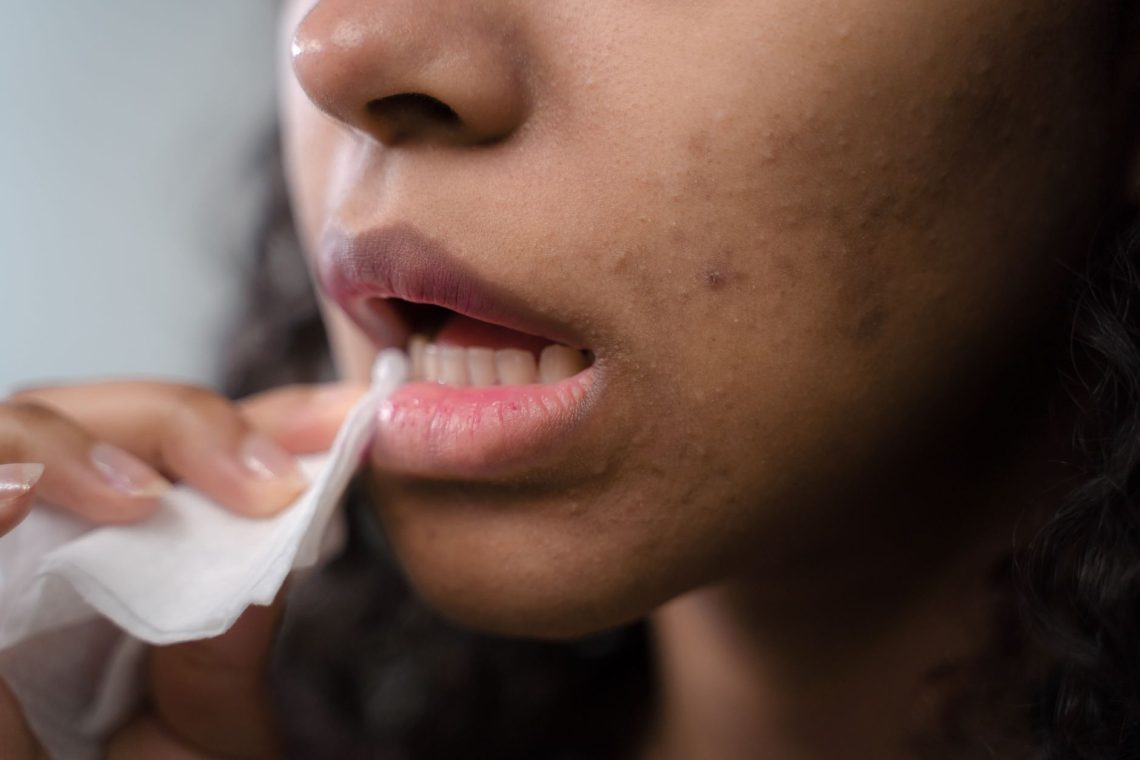
Begin with bare lips. If any lipstick remains, use a remover intended for the lip area, following its instructions. Let it loosen the colour before wiping it away. Repeatedly rubbing at a stubborn stain with a dry tissue is an unhelpful start to a gentle routine.
Once the old colour has gone, check how your lips feel again. If removal has left them uncomfortable, stop there and apply balm. Preparing for a bold lip should never become a series of increasingly forceful attempts to get the surface ready.
Step two: soften before you wipe
Apply a light, even layer of your usual balm and leave it while you do another part of your make-up. This gives you a natural pause rather than encouraging you to rush straight into rubbing. A familiar, uncomplicated balm is a sensible choice when you want to avoid surprises before going out.
Next, dampen your cloth or cotton pad with lukewarm water and squeeze out the excess. Rest it lightly against your lips for a brief moment. It should feel comfortable, not hot. You are softening the surface, not trying to steam your lips or soak them until every flake disappears.
Step three: make one light pass
With your lips relaxed, gently sweep the damp cloth across the surface once. Use the sort of pressure you would use to wipe away a little balm. Avoid pulling your mouth taut or working back and forth over one patch.
Pause and look. If a loose flake has lifted easily, that is enough. If a patch remains attached, leave it alone. Do not pinch it with your nails or use tweezers to pull it away. The goal is to remove only what comes away without resistance.
Stop if you feel stinging, tenderness or discomfort. More passes will not make an irritated surface a better base for lipstick. Gently pat away excess moisture, then return to your plain balm.
It is quite possible to finish this step with a little texture still visible. That is a better place to stop than chasing a completely uniform surface and ending up with lips that feel raw.
Why a vigorous scrub is rarely the answer
A grainy scrub can make exfoliation feel like a proper beauty ritual, but it also makes it easy to keep going. For this routine, there is no need to add sugar, salt or a firm toothbrush. A soft, damp cloth gives you a straightforward way to make a brief, controlled pass.
Keep facial exfoliating products away from your lips unless their instructions specifically allow use there. Likewise, do not improvise a lip treatment with lemon juice or a mixture of whatever happens to be in the kitchen. Preparing for lipstick is a good moment to keep things familiar.
Step four: balance comfort with grip
After the gentle wipe, apply a thin layer of balm. Leave it to settle while you finish your brows, choose your earrings or get dressed. You want your lips to feel comfortable, with no thick, slippery coating left on top.
Before applying colour, press a tissue lightly between your lips to take off excess balm. Avoid rubbing the tissue across them. Too much balm can make a precise outline harder to control, particularly with a creamy lipstick.
If your lips feel dry again as soon as you blot, do not restart the exfoliation. Choose a more forgiving lip finish that day, or wear the balm on its own.
Apply strong colour in thin layers
If you like lip pencil, use it with light strokes around your natural lip line. Start where you feel most confident and join the outline gradually. Pressing harder to cover a rough patch is unlikely to improve the result.
Apply a thin layer of lipstick, working from the centre towards the edges. A lip brush can help with a detailed outline, although applying directly from the bullet is perfectly reasonable if that gives you better control. Check the corners of your mouth before adding more colour.
Blot gently if your formula suits blotting, then add a little more only where needed. Follow the directions for liquid lip colours, which may be intended to set without being pressed or layered immediately. Try to avoid building a thick coating over a patch that still looks dry.
Adapt the finish to the day
A bold colour does not have to mean an ultra-matte finish. A comfortable satin lipstick can still give a red or plum plenty of presence. If your lips feel slightly dry, pressing a small amount of colour onto them for a softer stain may look more even than a dense, sharply outlined application.
Check the result in daylight and from a normal conversational distance. A close mirror can tempt you into correcting details that are barely noticeable once you step away. Aim for an even impression of colour and a shape you enjoy wearing.
Keep the routine occasional
Do not make exfoliation an automatic daily appointment. Check what your lips need each time, and leave them alone when they already feel smooth enough. Regular, comfortable balm use and gentle lipstick removal can make preparation simpler.
When you take your colour off at the end of the day, give the remover time to work and finish with balm. The most useful preparation for your next strong lip is a routine that leaves your lips feeling comfortable after this one.