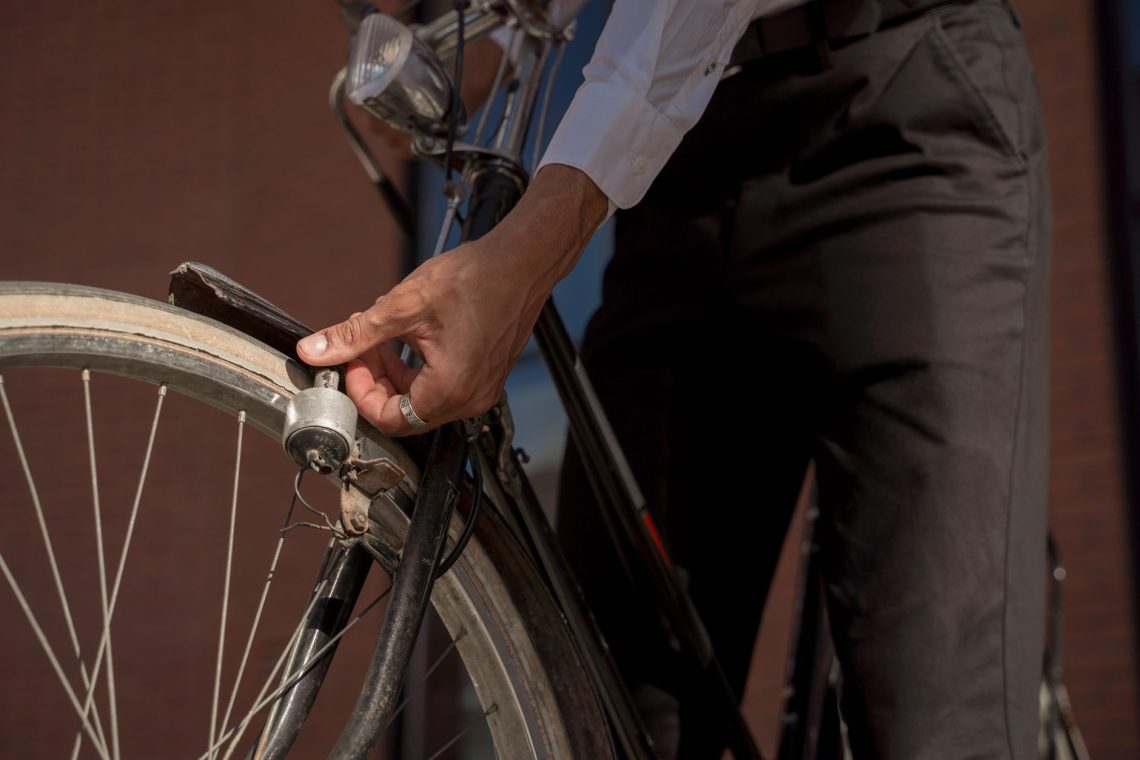
The best trousers for cycling to work should earn their place twice: once on the saddle and again when you sit down at your desk. A pair can look perfectly smart in a fitting room yet pull across your thighs on the bike, flap beside the chain or leave you wanting a complete change before your first meeting.
Start with the journey you actually make, then work backwards to the office outfit. An easy ride in ordinary clothes calls for different compromises from a longer commute with hills. Focus on three things: keeping the ankle clear, choosing fabric that moves comfortably, and deciding what you will change when you arrive.
Decide how much of your outfit needs to travel
Think about your usual pace, the dress code and the facilities at work. If you ride gently and have somewhere to hang a jacket, you may be able to wear the same trousers throughout the day. If your commute regularly leaves you sweaty, carrying office trousers can be the more comfortable choice, however adaptable your riding pair looks.
There is also a useful middle ground: cycle in trousers that suit your office, but change your top and shoes on arrival. This keeps the daily bag manageable while giving you a fresh starting point. Choose your plan before shopping, so you are not asking one garment to solve every part of the commute.
Get ankle clearance right first
A trouser hem needs to stay away from the chain and other moving parts. Begin by looking at the leg shape from the knee down. A straight leg with a modest opening or a gently tapered cut is generally easier to manage than a wide, flowing hem. Check both legs, paying particular attention to the side nearest the chain.
Length matters as much as width. A hem that pools over your shoes when standing can become awkward on the bike. An ankle-skimming length often works neatly with loafers, trainers or lace-ups at the office, but try it seated too: trousers rise as your knees bend, and you may want socks to cover the gap in cooler weather.
Make any hem adjustment deliberate
If you prefer a longer straight leg, a trouser clip or a secure ankle band can gather the fabric for the ride. Practise using it before relying on it for a rushed morning. It should hold the material without leaving a loose tail, and you should remove it when you arrive.
A narrow turn-up can shorten a hem, but do not assume that rolling automatically makes a wide leg safe. Fabric can unfold or remain loose around the ankle. Check the adjusted shape beside the bike before setting off. If the hem still hangs near moving parts, choose another pair for riding and carry your preferred office trousers.
Look for movement, not just a stretch label
A little stretch can help, but the cut still has to work. Trousers that are tight across the seat or upper thighs may feel restrictive even when the fabric contains elastane. Look for enough room to bend your knees and lean forwards without the waistband digging in or the pockets pulling open.
A tapered cut with ease through the thigh is a useful starting point for an office wardrobe. Pleats can provide extra space, although their effect depends on the whole fit. A slim pair can work too, provided it allows comfortable movement; the aim is a clean outline rather than the closest possible fit.
Check the waist in a riding position
A waistband that feels comfortable standing up may press into your stomach when you lean towards the handlebars. Try sitting and bending forwards. Notice whether the back waist slips down, the fastening presses or the belt becomes uncomfortable. A slightly higher back rise or a discreet elasticated section may suit you better than a rigid waistband.
Look inside as well. Bulky seams, stiff pocket bags and prominent fastenings can become irritating where your body meets the saddle. You do not need a particular label or trouser category; you need an interior that feels comfortable in your own riding position.
Choose fabric for the ride and the working day
Handle the fabric rather than judging it only on the hanger. It should have enough substance to hang neatly, without feeling heavy or board-like when folded. A fine, flexible weave can be easier to sit and pedal in than a thick, rigid cloth, but check that it still gives the coverage and shape you want.
- Stretch cotton twill: a familiar option for chinos and relaxed tailoring. Check how readily it creases and allow for drying time if it gets wet.
- Wool blends: worth considering for a more tailored office look. Assess the weight, flexibility and care instructions rather than assuming every wool trouser will suit riding.
- Technical woven fabrics: useful when you want movement and straightforward care. Choose a matte finish and restrained detailing if your office is formal.
- Heavy denim or rigid tailoring: try carefully before committing. Weight, firm seams and limited give can make an otherwise attractive pair uncomfortable on the saddle.
Read the care label before buying. Trousers worn regularly on a bike need a cleaning routine you can maintain. If a pair needs specialist care, consider whether that fits your week. Water resistance may help with a light shower, but it does not mean ordinary office trousers will keep you dry through sustained rain.
Use colour and details to keep the outfit polished
Charcoal, navy, olive and mid-tone brown are easy starting points because they combine with many office staples. Choose a colour you already wear rather than building an entirely new wardrobe around the commute. Pale trousers can look excellent, but consider whether you are happy dealing with visible splashes and marks.
For a smarter finish, look for tidy pocket openings, simple belt loops and a hem that sits cleanly with your office shoes. Large cargo pockets and shiny panels create a more casual impression. Keep keys and a bulky phone out of tight trouser pockets while riding; a bag can carry them without distorting the fit.
Try the trousers as you intend to wear them
Wear your usual underwear and try the trousers with the belt or waistband adjustment you expect to use. Sit down, lift each knee and lean forwards. You should be able to move without tugging the legs into place. Check whether the fabric becomes strained or revealing across the seat.
If possible, assess the fit on your own bike before removing the tags, following the retailer’s return conditions. With the bike stationary and supported, check your riding position and ankle clearance. Then stand up again: the trousers should settle back into a shape you would be happy wearing at work.
Build a simple arrival routine
A small, repeatable change plan makes the outfit easier to maintain. Keep office shoes at work if you can, and carry a fresh top when your journey calls for one. Pack clothes flat in a separate pouch so they stay apart from damp layers and commuting essentials.
- Remove any ankle bands or clips and check both hems.
- Give damp outer layers space to air rather than leaving them bundled in your bag.
- Change your top or trousers as planned, then put on your office shoes.
- Smooth the waistband and pockets, and check the seat and hems for marks.
For wet days, have a fallback ready: suitable waterproof overtrousers or a separate office pair packed in a water-resistant bag. Check that any additional layer also stays clear of moving parts. The most useful trousers are the ones that fit your route, feel comfortable on the bike and make getting ready at your desk straightforward.