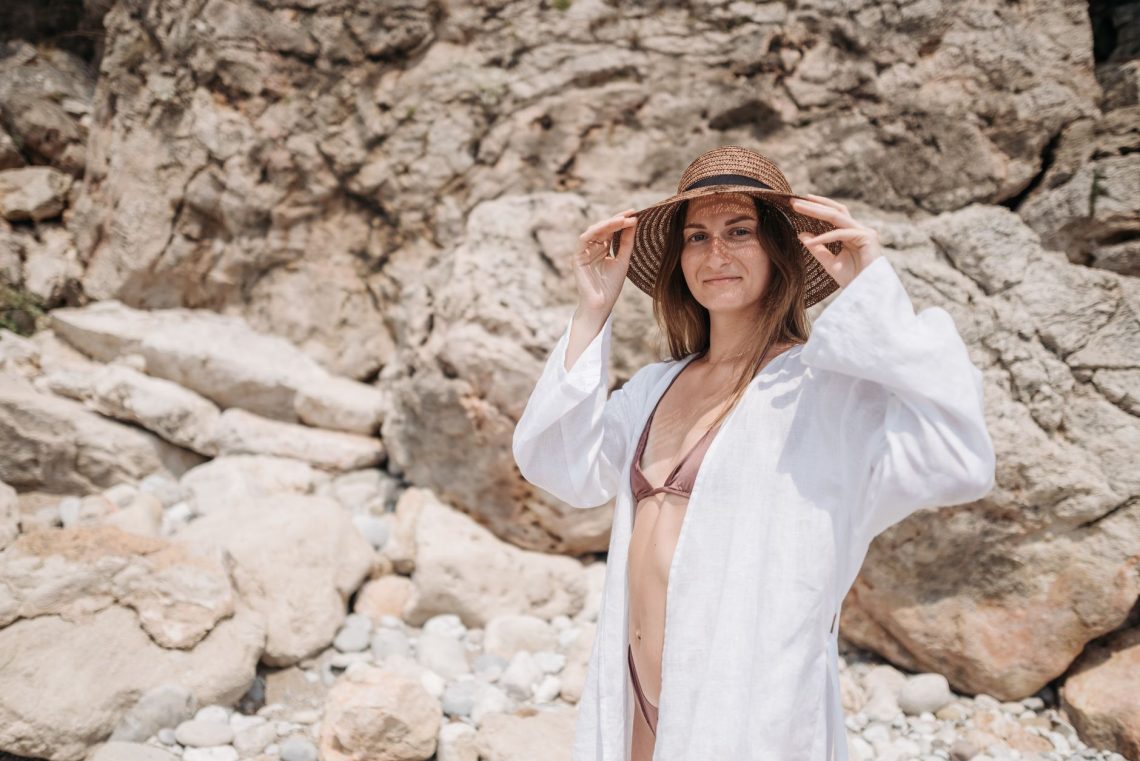
A beach cover-up earns its place in your wardrobe when it does more than get you from a sunlounger to lunch. The right one can become a shirt for the journey home, a dress for a warm afternoon or a light layer over your usual trousers. That does not mean it has to look formal. It simply needs a shape, fabric and finish that make sense away from swimwear.
Before buying, think about where you actually spend summer days. A piece for seaside walks and casual cafés has a different job from something you want to wear to dinner. Start with those ordinary plans, then work backwards to the beach.
Choose its inland job first
Give your cover-up one clear second role. Perhaps you need an oversized shirt to wear with straight-leg jeans, an easy dress for weekends or a wrap skirt that works with a vest. This makes choosing much easier than hoping a very sheer beach tunic will somehow become an everyday outfit.
Picture it with three things you already own. Include proper underwear, shoes and a bag, rather than relying on a bikini and sandals to complete the picture. If it only works with a new slip, a particular belt and trousers you have yet to buy, its versatility may be more theoretical than useful.
- For everyday separates: look at shirts with a full button front, wearable sleeves and a hem you can tuck.
- For an easy summer dress: prioritise enough coverage, comfortable armholes and a neckline that stays in place.
- For a skirt: choose a secure wrap with generous overlap, or an elasticated waist that sits comfortably without swimwear beneath it.
Check fabric in daylight
Fabric that looks substantial on a hanger can become transparent against the light. Hold a single layer up to a window, then try the garment over underwear close to your skin tone. Check the seat, chest and areas stretched across your body. A loose weave may be lovely at the beach while needing another layer inland.
Decide whether that extra layer suits your plans. A simple slip you already own can make a sheer dress useful, but it also adds warmth and another item to pack. If you want something to pull on and leave the house in, choose opacity from the start.
Cotton, linen and flowing fabrics
Cotton poplin gives shirts and dresses a little structure, helping them feel like everyday clothes. Cotton gauze has a softer, crinkled finish that suits relaxed shapes. With either, check the weight: very fine cotton can still reveal more than you expect.
Linen works well for loose shirts, tunics and simple dresses if you enjoy a rumpled finish. Try sitting down before deciding whether you like how it creases. Viscose can give a wrap or shirt dress a fluid drape, though the care label matters, especially if your holiday routine involves frequent washing. Fibre content alone will not tell you how a garment behaves; handle the actual fabric.
Open crochet and mesh are harder to turn into standalone inland clothes. They can still work as deliberate layers over a vest and trousers, but choose them because you like that outfit. Do not assume the holes will stop mattering once you leave the sand.
Find a shape that works without a swimsuit
A swimsuit can provide coverage and support that ordinary underwear does not. When trying on a cover-up, wear the bra you would use inland. Check whether straps show through armholes, whether a low back exposes the band and whether the neckline sits comfortably when you lean forward.
Ease is useful; excess fabric is not automatically more versatile. A very wide tunic can be awkward under a jacket or difficult to tuck into trousers. Look for room through the shoulders and hips, then see whether the fabric falls cleanly when your arms are down.
The shirt
A long shirt is a flexible starting point. Wear it open over swimwear, then button it over a vest with shorts or trousers. Check that the shoulder seam and sleeves feel intentional rather than cumbersome. Side slits can help movement, but very deep ones may limit whether you can wear it as a dress.
The dress
A shirt dress or loose midi can move easily between settings when its details are secure. Check button spacing across the bust and hips, and sit down to see whether the front gaps. For a wrap dress, take a long step and try sitting with your legs crossed. You should not need to hold the skirt closed throughout lunch.
The skirt or sarong
A sarong is wonderfully adaptable at the beach, although a narrow rectangle may not give enough overlap for town. If inland wear is a priority, a proper wrap skirt can be simpler. Look for an internal tie or fastening as well as the outer closure, and check that the knot does not create an uncomfortable lump beneath a top.
Use length as a practical decision
Choose length by how you move and what you will wear with it. A maxi hem might look lovely standing still but trail on steps or catch beneath flat sandals. A shorter tunic may work beautifully with trousers yet feel too brief on its own. Neither is a problem if that is the role you intended.
Walk, sit, reach up and bend to pick something up. If you plan to belt the garment, do this with the belt on: drawing in the waist often raises the hem and changes where slits fall. Also check sleeve length while carrying a bag. Wide cuffs that constantly slide over your hands can become irritating surprisingly quickly.
Choose details you like in everyday clothes
Small construction details often decide whether a cover-up feels useful inland. Secure buttons, neat seams and a collar that sits properly make styling straightforward. Pockets are helpful if they lie flat, but check that their outlines do not show strongly through pale fabric.
Think about decoration in relation to your wardrobe. Tassels, shells and dramatic cut-outs can be enjoyable, but they may steer the piece towards beachwear. Keep them if they suit your usual style. If you prefer simple clothes, a clean hem or plain button front will probably be easier to combine.
Colour does not have to mean beige or white. A stripe that echoes your favourite trousers, a blue you already wear or a lively print with familiar colours can be just as adaptable. Judge the whole outfit rather than treating neutrals as an automatic solution.
Build two complete outfits before you commit
For the beach, keep things simple: swimwear, the cover-up, comfortable sandals and your beach bag. For inland wear, change the supporting pieces deliberately. A cotton shirt might go with a tucked-in vest, tailored shorts and leather sandals. A loose dress might need only flat shoes and a compact shoulder bag.
A belt is optional, not a compulsory way to make a relaxed shape presentable. Try the piece loose first. If you prefer definition, use a belt that sits comfortably and does not pull the fabric into bulky folds. With a long shirt, rolling the sleeves or tucking just the front can give enough shape without adding anything.
Make sure its care suits your routine
Read the washing instructions before buying. Consider how you will deal with salt, sunscreen marks and repeated wear, and whether you are happy to hand-wash or iron it. Check that ties and trims feel securely attached. A useful everyday garment should fit your habits as well as your body.
The best choice is one you can imagine reaching for on an ordinary warm morning. If the fabric gives the coverage you want, the shape lets you move freely and an inland outfit comes together from clothes you own, it has a good chance of staying in rotation long after the beach bag is unpacked.