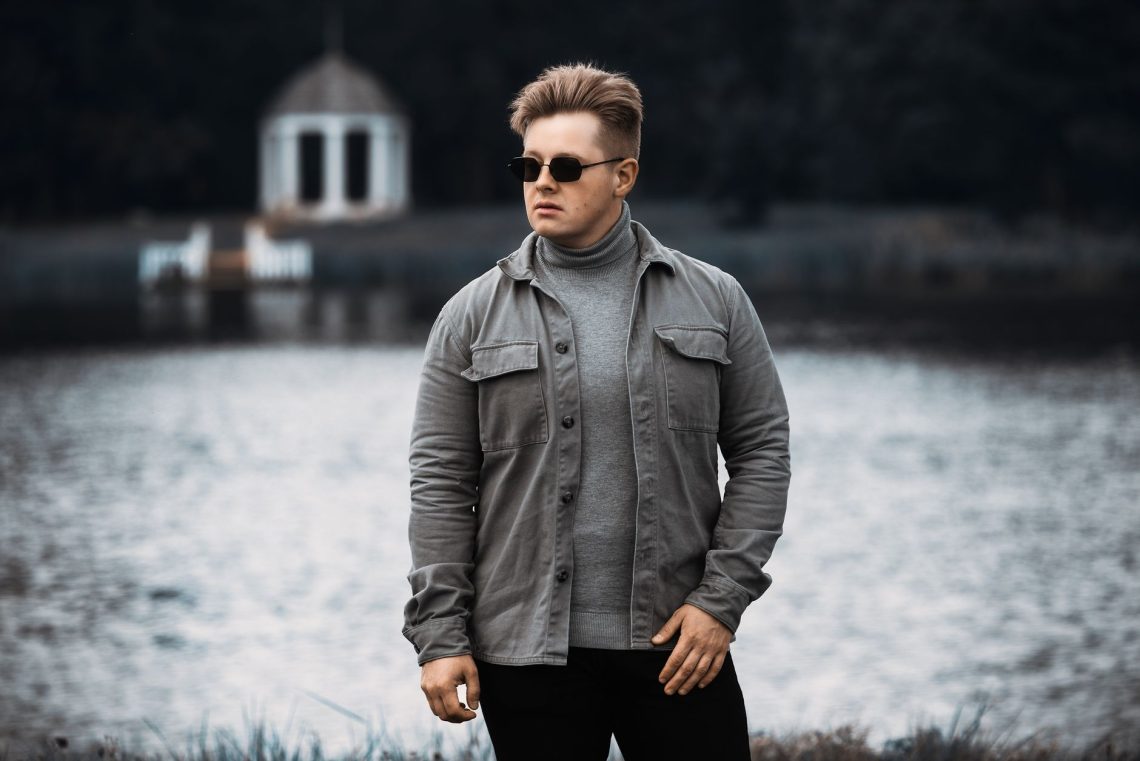
A turtleneck under a shirt can make familiar pieces feel different without adding another heavy layer. The high neckline brings a clean edge to an open collar, while the shirt gives a fitted knit a little structure. The difficulty is keeping the combination smooth: a crowded neck, wrinkled sleeves or two thick waistbands can quickly make it uncomfortable.
The answer is to give each layer a clear job. Choose a thin, close-fitting turtleneck for warmth and coverage, then let a slightly roomier shirt provide the shape. With the right fabrics, a considered neckline and a tidy tuck, the two can sit together comfortably rather than competing for space.
Start with a fine, flexible base layer
A chunky roll-neck is lovely on its own, but it is rarely the easiest starting point beneath a shirt. Look instead for a fine-gauge knit or a lightweight stretch jersey. It should follow the body without pulling across the bust, gripping the upper arms or riding up when you move.
Try the turtleneck on by itself and raise your arms, reach forward and sit down. If the hem immediately works its way towards your waist, the fit may be too tight or the body too short. A base layer that needs constant adjustment will be harder to manage once it is covered.
Fine merino, lightweight cotton blends and soft stretch jerseys can all work. Judge the actual garment rather than relying on the fibre name: cotton can be thick, and wool can be remarkably fine. Pay particular attention to seams, cuffs and the lower hem, where several folded edges can add more bulk than the main fabric.
- Choose sleeves that sit close to the arm without restricting it.
- Look for a flat hem that will tuck without forming a ridge.
- Avoid substantial ribbing if it creates visible channels beneath your shirt.
- Check that the neck feels comfortable before adding a collar around it.
Give the shirt enough room to skim
The shirt needs a little more ease than you might want when wearing it alone. You should be able to button it over the turtleneck without horizontal pulling at the chest or waist. Look sideways in a mirror as well as straight ahead: strained buttons and fabric caught across the back are easier to spot from another angle.
A straight or gently relaxed cut is usually straightforward. Dropped shoulders can offer extra room, but an extremely oversized shirt introduces a different problem: excess fabric that has to go somewhere when tucked. Aim for enough space to move, with shoulder and sleeve proportions that still feel deliberate.
Smooth cotton poplin gives a crisp contrast to a soft knit. Supple chambray or a light, fluid shirt can create a more relaxed finish. A heavy brushed shirt may work as an open outer layer, but it will be harder to tuck neatly over a knit. Check the armholes too; a narrow armhole can trap the turtleneck sleeve even when the shirt body feels roomy.
Arrange the neck before adjusting anything else
Start by settling the turtleneck collar against your neck. If it is designed to fold over, make one even fold rather than rolling it into a thick band. Smooth the fabric down towards your shoulders so it does not bunch at the base of your neck. Avoid forcing a tall collar into repeated folds simply to shorten it.
If a full roll-neck feels crowded, try a thin mock neck. Its shorter, unfolded edge creates a similar line beneath a shirt while leaving more breathing room around the jaw. This is especially useful with a small shirt collar or if you dislike fabric touching your chin.
Next, open the shirt’s top button, then decide whether a second needs to be undone. The aim is to let the collar frame the turtleneck rather than squeeze around it. A shallow opening looks tidy; a deeper opening reveals more of the base layer and can make the outfit feel less enclosed. Keep adjusting until the collar points lie comfortably.
Put the layers on in the right order
Small twists become surprisingly noticeable under a smooth shirt. Put on the turtleneck first, straighten the side seams and settle both sleeves. If you plan to tuck it in, do that now. Leave a little ease above the waistband so the fabric does not pull down on your shoulders when you sit.
As you slide each arm into the shirt, hold the turtleneck cuff briefly with your fingers. This helps stop the sleeve being pushed towards your elbow. Release it once your hand is through, then smooth the shirt sleeve from shoulder to wrist. Check that neither layer is twisted at the upper arm.
At the wrist, choose one clear finish. You can keep the turtleneck cuff hidden, or show a narrow, even strip beneath the shirt cuff. Pushing both sleeves up together often creates a thick band at the elbow. For a rolled-shirt look, fold the shirt cuffs separately and keep the thin base sleeves smooth underneath.
Choose a tuck that suits the waistband
Tuck the turtleneck and leave the shirt loose
This is the simplest option when you want a smooth waist without handling two tucked layers. Tuck the base into your trousers or skirt, distributing the fabric evenly around your hips. Let the shirt hang over it, either buttoned or open. A shirt with a fairly straight hem works particularly well worn this way.
Tuck both layers separately
For a more defined waist, tuck the turtleneck first and smooth it flat. Add the shirt afterwards, working around the waistband in small sections. Spread the shirt’s excess fabric towards the sides instead of gathering it into one lump at the front. Gently lift your arms afterwards to release enough fabric for movement.
A waistband with a little room makes this easier. If trousers already feel snug over the turtleneck alone, adding a tucked shirt is unlikely to feel comfortable. Avoid tightening a belt to compress the layers: it can make fabric balloon above the waist. Choose a different bottom or leave the shirt untucked.
Use a small front tuck
A front tuck can give shape while leaving most of the shirt outside the waistband. Keep the tucked section modest and let the sides fall naturally. Check the view from the side so the transition looks relaxed rather than caught. This works best with a supple shirt; stiff fabric may project outwards around the hips.
Use colour to keep the combination clear
Similar shades can help the layers read as one outfit, especially when you want a quiet finish. A cream turtleneck beneath an ivory shirt, or charcoal beneath a grey shirt, leaves the texture and collar shape to provide interest. Exact matching is unnecessary, but check the colours together in daylight.
Contrast makes the neckline more prominent. A dark, fine turtleneck beneath a pale shirt creates a strong frame around the face, while a pale base can lighten a darker shirt. With thin or sheer fabric, check whether the base layer’s outline shows through. If that bothers you, choose a closer colour match or a more opaque shirt.
Make a final movement check
Before heading out, sit down, bend your elbows and reach forward. The shirt should move over the turtleneck without dragging it upwards. If fabric gathers under the arms, straighten the sleeves and check the armhole fit. If the waist feels crowded, simplify the tuck before changing the whole outfit.
Keep any finishing layers in proportion. A roomy blazer or coat needs enough sleeve space for both garments underneath. With the neck already covered, earrings or a simple bracelet may be all the detail you want. The most successful version feels easy to wear: a comfortable neckline, smooth sleeves and enough room at the waist to forget about the layers.