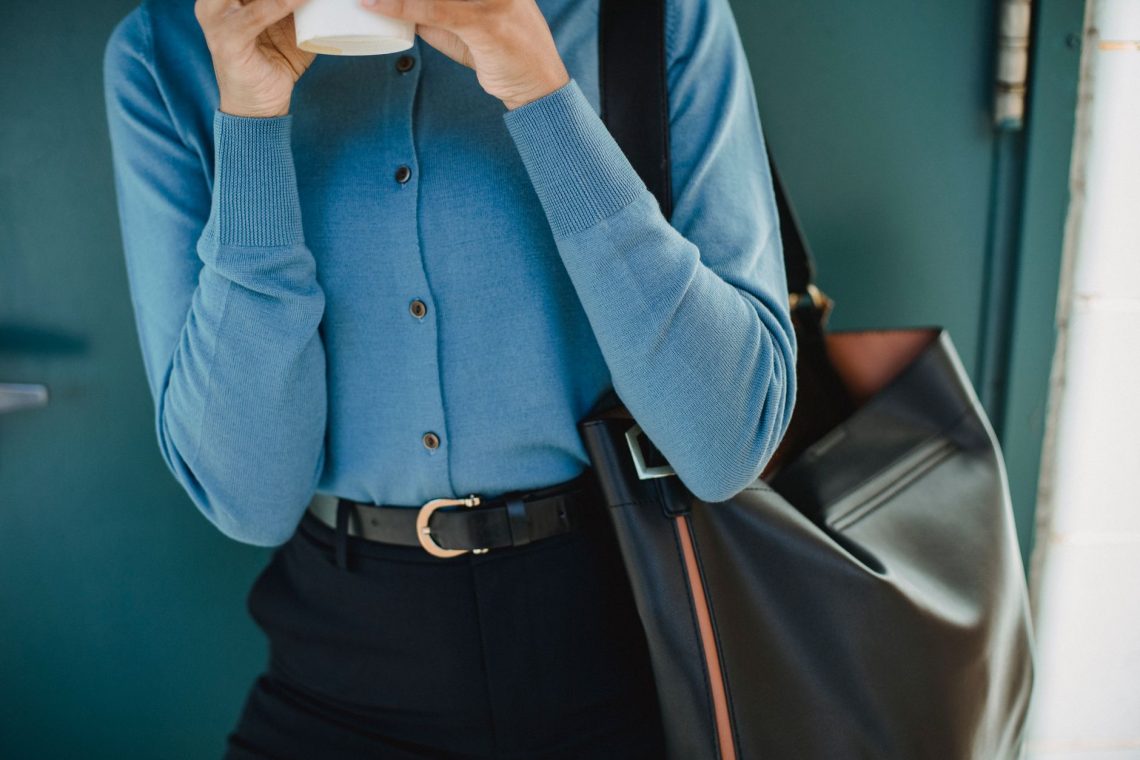
High-waist trousers look their best when the waistband stays where the cut intends it to sit. A belt can help with that, but pulling it tighter is not always the answer. Sometimes it steadies an otherwise good fit; sometimes it gathers spare fabric into a ridge and makes the trousers less comfortable.
The useful distinction is between supporting a waistband and trying to reshape the whole garment. Once you know which job your belt is doing, choosing its width, fastening and position becomes much easier. Start with the trousers themselves, then add only as much adjustment as they need.
Check where the waistband wants to sit
Put the trousers on without a belt and fasten them fully. Let them settle, then look at the front, sides and back. High-waist styles vary: some sit around your natural waist, while others finish a little below or above it. The waistband should follow your body comfortably without needing to be hauled upwards.
Pay attention to the rise, which is the distance through the crotch to the waistband. If lifting the trousers to your preferred position makes the crotch feel tight, a belt will simply hold that discomfort in place. If the crotch hangs too low when the waistband sits comfortably, the cut may not suit the position you want.
Next, sit down and stand up again. A small amount of movement is normal. Sliding noticeably down your body, gaping at the back or requiring repeated tugs gives you something more specific to investigate.
When a belt genuinely helps
A belt is useful when trousers fit well through the hips and seat but have a little room at the waist. It can hold the waistband against the body so that the trousers stay at their intended height. This is especially handy with a tucked shirt, where slipping trousers can gradually pull the shirt loose.
Look for a gentle adjustment. You should be able to fasten the belt without changing the shape of the pockets, twisting the side seams or creating new folds beneath the waistband. The trousers should still hang smoothly when you take a few steps.
A slight gap at the back may respond well to this approach. A large gap that closes only when the belt is pulled hard usually needs a different solution. A belt works best as a finishing adjustment to a reasonably good fit.
Why tightening can cause bunching
When you shorten the circumference of a waistband with a belt, the excess cloth has to go somewhere. A little ease may distribute discreetly around the waist. Too much gathers into puckers, particularly beside the buckle or between widely spaced belt loops. Thicker fabrics can form firm folds that show through a tucked top.
Bunching can also come from how you dress. A shirt pushed into one crowded section of the waistband adds bulk before the belt is even fastened. Spread the tucked fabric evenly, then ease out a small amount above the waistband so you can move without everything pulling taut.
If the front looks ruffled, loosen the belt and smooth the waistband with your hands. Fasten it again with less tension. If the same folds return immediately, stop tightening: the issue is probably spare fabric, an unsuitable belt or the relationship between the trouser cut and your body.
Choose belt width around the trousers
Start with the belt loops
The loops set the practical limit. A belt should pass through them easily and lie flat, with enough clearance to move as you sit. Forcing a broad belt through narrow loops can curl its edges and pull the loops away from the waistband. A very slim belt in tall loops may shift about or sit at an angle.
Check every loop, including those at the back, before deciding the belt fits. The buckle also needs room beside the trouser fastening. A bulky buckle pressing against a prominent button can create an awkward lump even when the strap width is suitable.
Use a narrow belt for a light finish
A narrow belt often suits lightweight trousers and a discreet outfit. It adds definition without covering much of the waistband, which can work well with a fine knit or softly tucked blouse. Choose one with enough structure to stay flat.
However, a thin strap is not automatically more comfortable. If it needs to be pulled tightly to keep the trousers up, pressure can feel concentrated along a small area. Loosen it and reassess the fit instead of assuming a narrower belt will solve the problem.
Try a medium width for everyday support
A medium-width belt is a useful starting point for trousers with conventional loops. It gives a more substantial contact area than a slim strap without taking over the whole waistband. Try it with tailored trousers, straight-leg cotton styles or high-waist jeans, checking how each fabric responds.
Stiffness matters as much as width. A firm leather belt can feel quite different from a supple one of the same size. You want enough body to resist folding, with enough flexibility to follow your waist comfortably.
Keep wide belts proportionate to the waistband
A wide belt can make a deliberate styling statement, especially with a broad waistband and generous loops. But width alone does not provide a better fit. If the belt extends beyond the waistband, its edges may press into your torso or hips when you sit.
Try it with your full outfit rather than judging it standing in front of the mirror for a moment. Check that it stays flat, clears the fastening and allows the waistband to bend naturally.
Fasten for movement, not just the mirror
Choose a fastening position that feels secure while standing and comfortable while seated. You should be able to breathe normally, bend to pick something up and sit without needing to undo the buckle. Deep marks, pinching or a waistband forced into a hard crease suggest too much tension.
If one hole feels loose and the next feels restrictive, the spacing may be wrong for you. A belt with a different fastening arrangement may offer a finer adjustment. For a favourite leather belt, a suitable repair service can advise on adding a neatly positioned hole.
Keep the belt threaded through all the intended loops. Missing one to avoid a fold can make the support uneven. Arrange the loose end through its keeper so it lies flat instead of sticking out beneath your top.
Know when to change the fit instead
If the hips fit but the waist is consistently too generous, ask an alterations specialist whether the waistband can be taken in. The construction, pockets and seams will affect what is practical. This can be more comfortable than gathering the same excess fabric every time you get dressed.
If the pockets flare, the seat pulls or the crotch feels restricted, try a different size or cut before reaching for a firmer belt. Curved waistbands, different rises and alternative trouser shapes can sit differently on the same person. A belt cannot add room where the garment is too tight.
A quick check before leaving
- Let the trousers settle at their intended height before fastening the belt.
- Smooth the waistband and distribute any tucked fabric evenly.
- Check that the belt lies flat inside every loop.
- Sit, bend and walk, watching for slipping, pinching or new folds.
- Loosen the belt if tightening starts to distort the trousers.
The right belt should make high-waist trousers easier to wear. When the waistband stays comfortably in place and the fabric falls cleanly beneath it, the belt is doing its job. If you keep adjusting it throughout the day, return to the fit of the trousers before buying something wider or fastening something tighter.