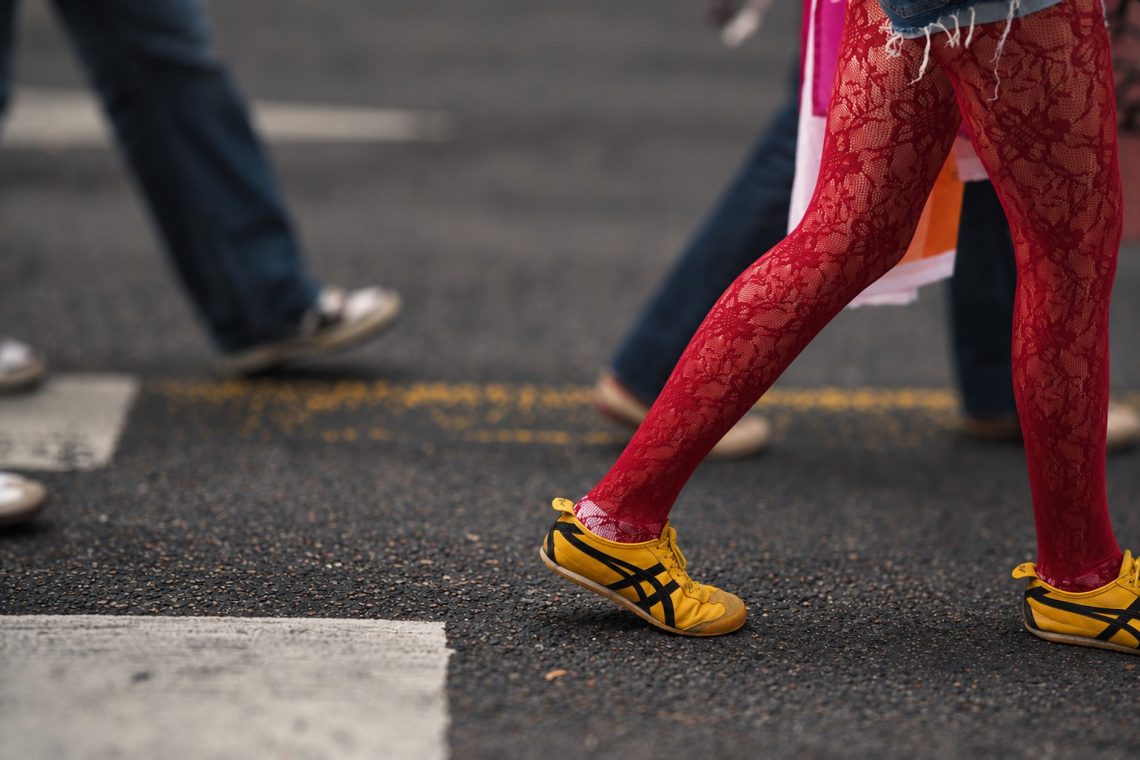
A pair of tights can look almost solid in the bedroom mirror, then surprisingly transparent on the walk to work. Daylight reveals the skin beneath the yarn, the sheen of the fabric and the places where it stretches. That is why choosing between sheer and opaque tights is about more than whether you prefer a light or dark leg.
The useful distinction is simple: sheer tights allow your skin to remain part of the look, while opaque tights create a more continuous block of colour. Between them sits a generous middle ground. To choose well for an office day, an event or a cold commute, consider how the tights look in natural light, how they feel and what the rest of your outfit needs.
What sheer and opaque actually mean
Sheer tights are transparent enough for your skin tone to show through. In black, they create a soft veil rather than a solid black surface. In a shade close to your skin, they can give a subtle, more even-looking finish, although their visibility depends on the colour match and the amount of shine.
Opaque tights cover the leg more fully, so the colour of the tights becomes the dominant effect. Black opaques can connect a dark skirt to black boots; coloured opaques can introduce a deliberate contrast. They are useful when you want the leg to read as part of the outfit rather than as exposed skin.
Semi-opaque tights fall between these effects. They may look fairly solid down the shin but reveal skin at the knee when you sit. That does not necessarily mean the fit is wrong. Stretch changes how closely the yarn sits together, so coverage is rarely identical across the whole leg.
Use denier as a starting point
Denier describes yarn weight, rather than guaranteeing a particular level of coverage. Lower-denier tights are generally finer and sheerer; higher-denier versions are generally denser. However, the knit, fibre, colour and fit all influence what you actually see. Two pairs with the same denier can look different beside a window.
Read the description alongside the number. Words such as sheer, semi-opaque, opaque, matte and satin help explain the intended finish. If your priority is consistent coverage, look for an opaque description and check the fabric under gentle stretch, rather than relying on the denier alone.
Check the finish in daylight before leaving
Indoor lighting can flatten differences between tights. Natural light makes it easier to notice a shiny surface, a colour mismatch or uneven coverage. You do not need direct sunshine: stand near a window in ordinary daylight, wearing the shoes and hemline you intend to go out in.
- Look at the whole outfit first. Step back from the mirror. Decide whether you want your legs to blend into your shoes, soften the outfit or create contrast.
- Check straight and bent knees. Sit down, then stand again. Notice whether the change in transparency feels right with the skirt or dress.
- Turn slightly. A finish that appears matte from the front may catch the light along the calf. Judge it from more than one angle.
- Check the colour against visible skin. With skin-tone sheers, compare the overall effect with your hands and neckline. Avoid choosing a noticeably darker shade simply to imitate a tan.
- Check the top of the tights. If your hem moves when you sit, make sure any reinforced section stays covered if that is the finish you want.
For an evening event, also glance at the outfit under indoor lighting. Daylight is a useful check, but a satin finish can become more noticeable under lamps. The aim is to understand the effect before you arrive.
Choosing tights for work
Start with the actual dress expectations of your workplace. Where hosiery is required or preferred, sheer tights can work with tailoring when you want a lighter visual finish. Skin-tone sheers keep attention on the clothes, while sheer black adds definition without the density of an opaque leg.
With a navy dress and dark shoes, for example, sheer navy or black can give a softer transition than a very dense black opaque. Check the combination in daylight: different dark colours can sit comfortably together, but their undertones become clearer outside.
Opaque tights are useful with substantial fabrics such as wool skirts, knitted dresses and heavier tailoring. Their stronger colour can balance chunky loafers or ankle boots. A matte pair often feels visually quieter than a glossy pair, particularly when the outfit already includes polished leather or jewellery.
Comfort matters throughout a working day. A waistband that digs in, toes that feel cramped or a gusset that keeps slipping will be distracting regardless of the finish. Use the size chart for the individual pair. If you sit between sizes, check the maker’s guidance rather than assuming that tighter tights will look smoother.
Choosing tights for weddings, dinners and parties
Let the weight and detail of your outfit guide you. A floaty dress with delicate shoes often suits sheer tights because the leg stays visually light. Black sheers can complement a dark evening dress, while a close skin-tone match can offer a subtler finish with lighter colours.
Opaque tights can look considered with a structured mini dress, a knitted dress or a heavier skirt. They also give you a way to repeat a colour: burgundy tights beneath a patterned dress, for instance, can pick up a similar shade in the print without requiring matching shoes.
Pay attention to the toe area if your shoes expose it. Reinforced toes can be visible through open or cut-out footwear. Check the tights with the actual shoes, including while seated, and choose a toe finish you are happy to show. A sandal-toe description concerns the toe construction; it does not automatically mean the tights will be invisible.
If the occasion involves photographs outside, do your daylight check before committing to a shiny finish. Sheen can be an intentional part of an evening look, but it should sit comfortably alongside the shine of your shoes, dress fabric and accessories.
Choosing tights for a cold commute
For chilly mornings, opacity is a useful clue but not a complete warmth guide. Fibre, thickness, construction and wind exposure all matter. A pair that looks completely solid may still feel light, so read the fabric description and consider how much time you will spend outside.
For a long walk to the station, denser tights, a knitted pair or a lined style may feel more comfortable than fine sheers. Check that your footwear has room for the extra fabric. Boots that fit neatly with sheer tights can become uncomfortable with a much thicker pair.
Balance the commute with your destination. If the office is warm, a very thick pair may feel excessive indoors. You could carry a lighter pair to change into, or build the outfit around boots and a longer coat so that warmth does not depend entirely on your tights.
Make the final choice around your outfit
Choose sheer when you want skin to show through and the outfit to feel visually lighter. Choose opaque when you want a stronger block of colour, fuller coverage or a finish that suits heavier clothes. Semi-opaque is worth considering when either extreme feels too pronounced.
Before leaving, smooth the fabric gently from the ankle upwards so it is distributed evenly. Check for twisting, pulling and obvious snags. Then take one final look by the window with your coat off: if the colour, coverage and comfort work together there, you have a useful basis for the day ahead.