A short jacket and trousers ought to be an easy pairing: a neat top half, a longer line below and enough structure to feel dressed. Yet a jacket that stops beside a trouser waistband can make the middle of an outfit look unexpectedly busy. Add a belt, a contrasting top and a pocket flap, and several horizontal lines compete for the same few inches.
The answer is not to hide your waist or insist on the highest rise available. It is to decide where the jacket ends in relation to the waistband and hips, then give that junction some breathing room. Small adjustments often do more than changing the whole outfit.
Find the line that is interrupting the outfit
Put on your trousers with the shoes you intend to wear, then add the jacket. Look straight ahead in a full-length mirror, with your arms relaxed. Notice where your eye lands first. Is it the jacket hem, a strip of shirt beneath it, the belt buckle or the trousers pulling across the hips?
There is no universally awkward place for a jacket to finish. A hem across the upper hip might look crisp with straight trousers and restless with a pair that has bulky pockets at exactly that point. What matters is the relationship between the garments, including how they behave when you move.
Try one change at a time. Open the jacket, remove the belt or tuck the top. If the outfit immediately feels calmer, you have found the interruption. You can work around it without treating your body as the problem.
Give the jacket hem and waistband a clear relationship
Let the jacket overlap the waistband
For a straightforward starting point, choose trousers whose waistband sits underneath the jacket hem. The jacket can finish around the upper hip while the waistband remains covered when you stand naturally. This gives the middle a continuous surface, particularly when the jacket is fastened.
Check the overlap from the side as well as the front. Some jackets rise at the back, and some trouser waistbands dip at the front. Raise your arms and sit down: a combination that only works while you stand rigidly is unlikely to become a favourite.
Or make a shorter jacket look intentional
A jacket that finishes above the waistband can also work, but the layer beneath it becomes part of the design. Try a smooth, close-fitting top in a colour similar to the trousers. That visible section then connects the upper and lower halves rather than forming a separate stripe.
The more difficult arrangement is often an accidental near-meeting: a jacket just short of the waistband, with a sliver of contrasting fabric between them. Either close that gap with a longer jacket or higher waistband, or make the underlayer clearly visible by wearing the jacket open.
Choose the rise by fit, not by its label
High-rise trousers can provide a useful long line beneath a short jacket, but only if the waistband sits comfortably. A rise that digs in, slides down or forces the crotch out of position will keep changing the proportions as you wear it. Mid-rise trousers may give you a cleaner result.
Start with a waistband that stays where it belongs without a tightly pulled belt. Then check that the fabric falls smoothly over the upper hips. Side pockets should sit reasonably flat, and pleats should have room to relax rather than being pulled open at rest.
If the waist fits but the hip area feels tight, try a different cut or a roomier size with the waist adjusted. A short jacket leaves more of the trouser fit visible, so comfortable ease through this area makes a noticeable difference.
Balance the volume around your hips
Think about where each garment has its fullness. A boxy jacket and wide-leg trousers can look beautifully deliberate, but two stiff, expansive shapes meeting at the hip may feel cumbersome. You do not need one half to be skin-tight; you need enough definition to understand the silhouette.
- With a boxy jacket: try straight trousers or a wide leg that falls softly from the hip. A simple underlayer keeps the centre of the outfit clear.
- With a fitted short jacket: pleated or wider trousers can provide movement below the neat upper shape. Check that the jacket hem does not catch on the pleats.
- With tapered trousers: a slightly relaxed jacket can balance the narrower lower leg. Keep an eye on pockets that add extra width at the top of the trousers.
Also look at the jacket’s side seams. If the hem grips your hips, it can bunch above them and create a shelf. A little more room, a side vent or a hem that finishes slightly higher may let the jacket hang properly.
Use colour to soften the join
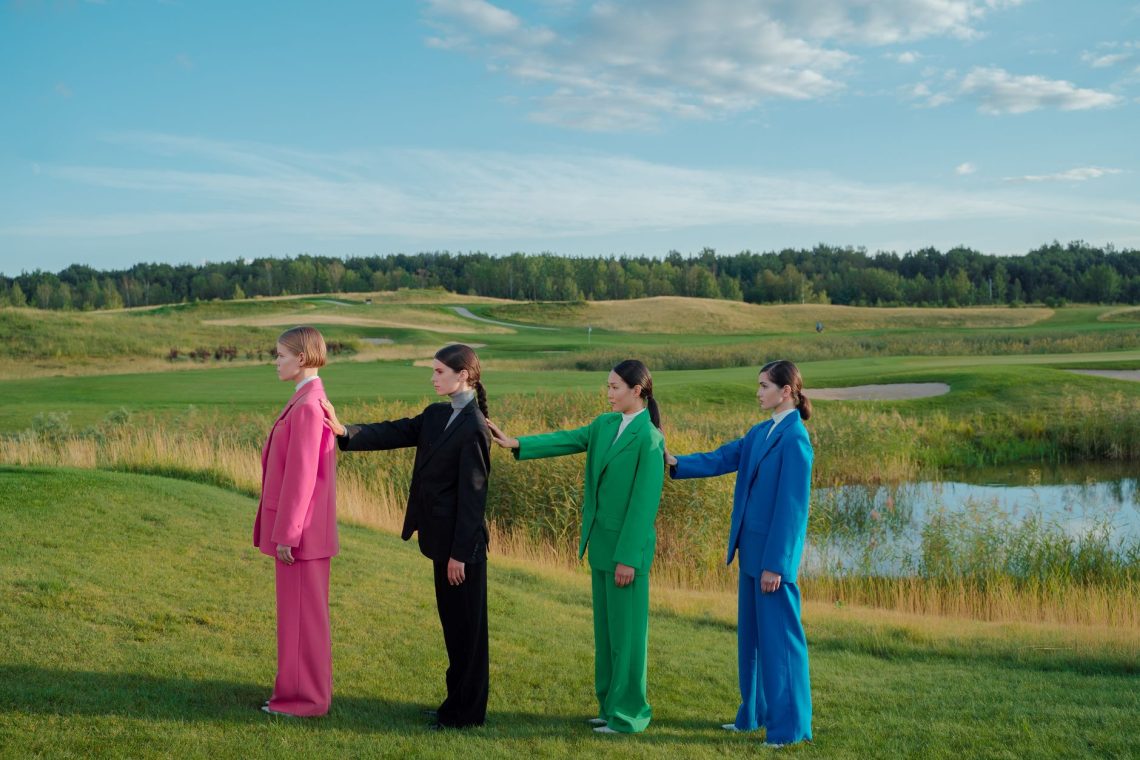
Similar colours across the jacket and trousers make their meeting point less prominent. They do not have to match exactly: charcoal with black, cream with oatmeal or two related browns can create continuity while allowing the textures to show.
If you prefer a contrasting jacket, link the top underneath to the trousers. A navy top with navy trousers and an open cream jacket creates a continuous central column. The jacket frames it, and its short hem becomes less dominant.
Strong contrast is still an option. A dark jacket over pale trousers can look sharp when the waistband, fastening and hem are uncluttered. The aim is to choose the break in colour consciously, rather than adding several competing breaks around it.
Keep the underlayer under control
A top hanging a little below a short jacket can produce another horizontal line across the hips. Sometimes that layered effect is exactly what you want. If the outfit feels chopped up, though, try a full tuck or a top that finishes beneath the jacket without showing.
Use a fine knit, jersey top or light blouse that sits comfortably inside the trousers. Spread the tucked fabric around the waistband so it does not collect in a lump at the front. With lightweight trousers, a thick jumper may create more bulk than the jacket can accommodate.
An open jacket gives you another option: leave a fluid shirt untucked and let its front form a longer vertical shape. Check the back view, too. A shirt tail protruding beneath a fitted jacket can look quite different from the front.
Decide whether a belt earns its place
A belt can define the waist, but it also draws attention to the exact line you may be trying to quieten. Begin without one if the trousers fit securely. If you add it, try a modest buckle and a colour close to the trousers.
A statement belt works best when you want the waistband to be a focal point. Give it space: wear the jacket open and keep the top fairly simple. A large buckle half-covered by a jacket hem can look crowded and may push the jacket forwards.
Try three easy combinations
- For everyday wear: pair a short denim jacket with straight-leg trousers and a tucked jersey top. Leave the jacket open and use similar shades for the top and trousers.
- For a smarter outfit: wear a cropped tailored jacket with softly pleated trousers. Let the jacket overlap the waistband and keep the blouse smooth beneath it.
- For evening: combine a neat short jacket with fluid wide-leg trousers and a simple tonal top. Check that the jacket releases cleanly above the fullest part of the trousers.
Finish by walking, sitting and reaching for something. If the hem catches, the waistband shifts or the top escapes, adjust that specific point. A successful pairing gives the hips enough room, makes the waist detail intentional and stays comfortable once you leave the mirror.