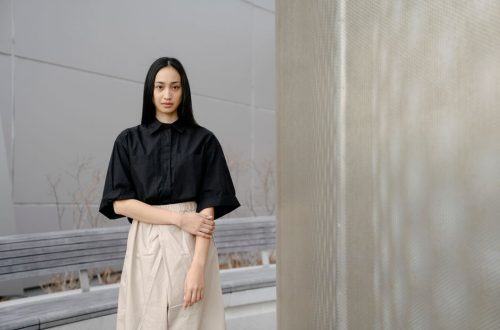
An open shirt is useful when a cardigan feels too soft and a jacket feels too much. It adds a little coverage, gives a simple outfit some shape and slips off easily when the afternoon warms up. The trick is making it look like a deliberate outer layer, rather than a shirt you have forgotten to fasten.
Start with what sits underneath, then check how the shirt behaves when you move. A smooth base layer and a well-chosen fabric do most of the work. If the fronts keep flying apart or the hem twists around your legs, a small adjustment to fit or fastening can make the outfit much easier to wear.
Choose a shirt with enough substance
You do not need a shirt sold specifically as an overshirt. A cotton shirt, a soft denim style or a substantial linen blend can all work. Hold the fabric up and let it fall: you want enough weight for the front panels to hang, with enough softness for comfortable movement.
Very fine, floaty fabric tends to flutter, particularly in a long, oversized cut. Crisp cotton can hold a pleasing shape, but an excessively stiff shirt may stick out at the sides. Try the shirt over your intended top before deciding; fabric that looks relaxed on a hanger can behave differently over another layer.
Check the shoulders and upper arms. You should be able to reach forwards without the back pulling tight or the sleeves gripping your base layer. A little room is helpful, but sizing up several times can leave you with too much fabric to manage. The aim is an easy fit, with sleeves you can actually use your hands in.
What to wear underneath an open shirt
A fitted vest for a clean outline
A ribbed vest is a straightforward starting point. Its close fit keeps the middle of the outfit tidy while the shirt provides a looser frame. Choose straps that sit comfortably over your bra straps if you prefer them covered, and check that the neckline stays where you want it when you bend or sit.
With a pale shirt, a vest close to your skin tone creates a quiet base; white gives a brighter contrast. A black vest beneath blue denim or an earthy cotton shirt makes the opening more defined. You do not have to match every colour, but repeating one shade elsewhere can help the outfit feel connected.
A T-shirt for everyday coverage
A plain crew-neck T-shirt works well when you want more coverage across the chest. Choose one that skims your body without bunching beneath the arms. Thick, boxy sleeves can catch inside a narrower shirt sleeve, so put both pieces on together and move your arms before leaving.
Tuck the T-shirt into jeans or trousers if you want a clear waistline. Leaving both layers untucked can also work, especially with a shorter shirt, but check their hems. A narrow strip of T-shirt showing beneath the shirt may look accidental; either keep the inner hem concealed or make the difference in length clearly visible.
A fine knit when the air turns cooler
A fine-gauge cotton or merino knit adds warmth without filling the sleeves. A neat crew neck or slim roll neck makes an open denim shirt feel more substantial. Avoid forcing a thick jumper underneath a close-fitting shirt: the result can restrict movement and push the front panels outwards.
If the layers cling together, swap one of them. A smooth jersey top may sit more easily beneath brushed cotton than a textured knit does. Comfort matters here; you should be able to take the shirt off without rearranging the whole outfit.
A simple dress for an easy extra layer
An open shirt can soften the line of a fitted jersey dress or add coverage over a sleeveless style. Try a shirt ending around the hip with a midi dress, then check the side view. If both garments are very loose, rolling the sleeves and choosing a shorter shirt can give the outfit a clearer shape.
Balance the length and volume
Think about where the hem lands in relation to your waistband and pockets. A shirt ending around the upper hip is easy with wide-leg trousers because it leaves more of the trouser shape visible. A longer shirt can work with straight jeans or a narrow skirt, where there is less competing fabric below.
These are starting points, not rules about body shape. Try the outfit with the shirt open, then take a step back from the mirror. Can you see the base layer clearly? Does the hem fall comfortably, or does it catch on a pocket or the widest part of a skirt? Adjusting one layer is often enough.
How to stop an open shirt flapping
Use one lower button as an anchor
For a partly open look, fasten a button near your waist or just below it, leaving the upper section open over your top. This brings the fronts together and limits how far they can swing. Pick a button that closes without pulling, and sit down to check that it feels comfortable.
If fastening a button makes the hem ride up, try the next one down. If every position strains, the shirt needs more room or the layers underneath need less bulk. An anchor should settle the fabric, not create a tight point across your middle.
Try a loose front tie
On a sufficiently long, soft shirt, bring the two lower front corners together and make a loose knot. Keep the back hanging freely and check that the knot does not drag the collar forwards. This suits casual outfits with a vest and high-waisted trousers, particularly when you want to show the waistband.
Skip this with stiff denim, delicate fabric or a short shirt that needs tugging to reach. A bulky knot can be uncomfortable when seated, and pulling hard at the tails puts unnecessary strain on the fabric. If it will not tie easily, choose another adjustment.
Use a belt when you want the waist defined
A belt worn around the shirt can hold the panels closer to the body while leaving the neckline open. Arrange the fronts first so the base layer remains visible, then fasten the belt loosely enough to breathe and sit comfortably. Ease a little fabric above it if the back feels taut.
This works best when the shirt has enough length to stay beneath the belt as you move. Walk around and raise your arms: if the hem keeps escaping, a shorter shirt worn freely will be less fussy. A belt is an outfit choice, rather than a fix for every cut.
Reduce the fabric that catches the breeze
If you want the shirt completely open, fabric and cut are your main controls. Choose a shorter hem, less width through the body or a slightly weightier cloth. Roll the cuffs to keep the sleeves contained, but remember that cuff rolls will not stop loose front panels moving.
A cross-body bag may hold one section in place, though it can also pull the shirt unevenly. Settle the strap over the shoulder seam and smooth the fabric beneath it. For a genuinely windy walk, a shirt with one button fastened is usually easier to manage than a long style left fully open.
Do a quick movement check
Before heading out, walk across the room, sit down and reach for something. Check that your top stays covered as intended, the shirt does not catch at the hips and the cuffs stay clear of your hands. Smooth the collar so both sides lie comfortably rather than repeatedly folding it into place.
For a dependable everyday combination, start with a fitted vest, straight-leg jeans and an open cotton shirt. Add trainers or loafers, then use a lower button if the fronts become distracting. Once the layers sit well and move comfortably, the shirt can do its job: an easy extra layer you barely need to think about.