A shirt with French cuffs can feel overdressed before you have even chosen your trousers. The folded cuffs suggest tailoring, polished shoes and a reason to dress up. Yet the same shirt can work for lunch, a gallery visit or an informal evening out if the rest of the outfit gives it some breathing room.
The trick is to decide how much formality you actually want. Sometimes a small, understated fastening is enough to soften the cuffs. Sometimes rolling the sleeves makes more sense. And sometimes the easiest answer is to leave that shirt on its hanger. Here is how to make the choice, then put together an outfit that feels comfortable rather than ceremonial.
Understand what the cuffs need
French cuffs, also called double cuffs, have extra length that folds back on itself. They usually have holes on both sides instead of a button and buttonhole. Once folded, those holes align so a cufflink can hold the layers together.
That construction matters when you dress casually. Simply removing the cufflinks does not turn a French cuff into a standard button cuff. Left open, it can spread around your wrist or hang over your hand. A relaxed outfit still needs sleeves that behave when you reach for a drink or put on a jacket.
Check your particular shirt before planning an alternative fastening. Some convertible cuffs have a button as well as holes for links; a conventional French cuff generally does not. Avoid forcing a spare button through the holes or pinning the fabric together as a shortcut.
Start with a shirt that can relax
The easiest shirts to dress down have something gentle about them: a pale blue colour, a fine stripe, a slightly textured weave or fabric that moves rather than standing rigidly away from the body. White can work too, especially when its finish is soft rather than glossy.
A heavily starched shirt with a stiff collar, covered buttons or an eveningwear front asks much more of a casual outfit. You may be able to combine it with denim, but the contrast will be conspicuous. For an uncomplicated result, choose a plainer shirt and save the more ceremonial details for another occasion.
Fit matters as much as fabric. You should be able to sit, bend your elbows and reach forward without the shirt pulling sharply across your back. Equally, excess fabric bunching above the cuffs can make the sleeves look untidy. Try it on with your intended trousers before deciding whether it needs a tuck.
When to skip the stiff links
Large polished cufflinks, prominent stones and intricate crests can make a simple shirt feel dressed for an occasion. If that is the part that feels wrong, change the fastening before abandoning the outfit.
Try soft knots for a quieter finish
Fabric knot cufflinks offer a softer-looking alternative to metal. Choose a muted colour that sits comfortably with the shirt: navy against pale blue, for example, or charcoal against white. Small knots keep the detail discreet. Bright contrasting colours make the cuffs more noticeable, which may be exactly what you want, but will not make them disappear.
Check that the knots fit through the holes without excessive pulling and hold the folded cuff securely. Their soft appearance does not mean every knot will suit every shirt. If the fabric puckers or the fastening keeps slipping out, choose another pair.
Keep metal small and simple
You do not have to avoid metal entirely. A modest pair with a plain shape can look natural beside chinos or dark jeans. Let the cufflinks be one small detail rather than adding a tie clip, several rings and a conspicuous watch around them.
Fasten the cuff with the inner faces meeting in the usual way, then let it sit comfortably around the wrist. Do not tighten or twist it into an unfamiliar shape just to make it look less formal.
Roll the sleeves when it suits the setting
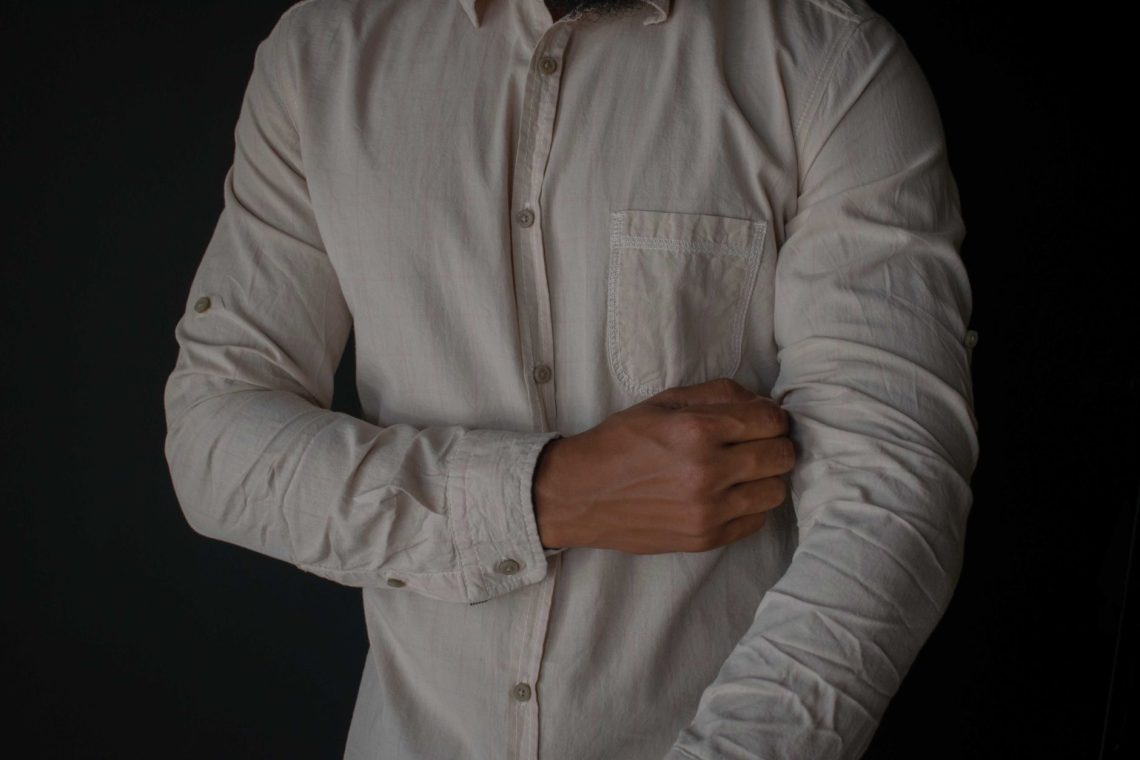
Rolling is useful for a warm afternoon or a relaxed meal when you genuinely want your forearms free. Remove the cufflinks first and put them somewhere secure. Unfold the double cuff, then turn the sleeve upwards in broad, even folds. Continue until the loose cuff is contained and the roll stays in place without squeezing your arm.
Use the fabric as your guide. A thick double cuff creates more bulk than a lightweight button cuff, so a high, tightly packed roll can become uncomfortable. Stop if it feels restrictive at the elbow. Avoid repeatedly crushing the same section into a narrow band.
Do both sleeves to a similar height and check them after moving around. A little softness looks easy; one sleeve slipping over your hand while the other sits above your elbow looks accidental. If the shirt refuses to hold a comfortable roll, wear the cuffs properly fastened or choose another shirt.
Build the outfit from relaxed basics
Once the cuffs are settled, use familiar casual pieces to give the shirt context. You do not need to introduce several dramatic contrasts at once.
- With jeans: Choose a straight or gently tapered pair in dark or mid-blue denim. Add clean trainers or suede loafers. A pale shirt and discreet cuff fastenings keep the combination easy to read.
- With chinos: Stone, olive or navy chinos soften the shirt without making the outfit feel thrown together. Leave the collar open and try a simple belt if you tuck it in.
- With relaxed tailored trousers: A little room through the leg balances a crisp shirt. Loafers and an unstructured jacket can suit an informal dinner without requiring a tie.
Distressed jeans, a very shiny shirt and elaborate cufflinks can all pull attention in different directions. Start with one interesting detail, then add more only if the outfit still feels like something you would happily wear.
Decide whether to tuck it in
Many French-cuff shirts are cut with long tails because they are intended to stay tucked into trousers. Wearing those tails loose can look awkward even when the cuffs are styled well. If the hem hangs low over your seat or forms long points at the front, a full tuck is usually the cleaner choice.
A shorter, more casual hem may work untucked. Check the side view as well as the front: the shirt should sit comfortably over the waistband without overwhelming the trousers. An open collar and relaxed footwear can take the edge off a tucked shirt, so you need not rely on an untucked hem to make the outfit casual.
Choose layers that leave room at the wrist
A soft cardigan, unstructured blazer or roomy overshirt can sit comfortably with French cuffs. Try the layers together before leaving home. The folded fabric needs space inside the outer sleeve, particularly when you bend your arm.
A narrow jumper sleeve may catch on the cuffs or bunch around them. Forcing the cuffs through only makes the wrist area feel crowded. Choose a looser sleeve, remove the layer or switch shirts. There is no need to display a precise amount of cuff in a casual outfit; comfort and proportion are more useful guides.
Know when another shirt is the better choice
French cuffs are easiest to wear casually when you can mostly leave them alone. If your plans involve cooking, practical work or repeatedly taking layers on and off, a regular button cuff is often simpler. The same applies if you know you will spend the day adjusting the fastenings.
Before heading out, sit down, reach forward and try your jacket on. Check that the cuffs stay clear of your hands and that the sleeves feel comfortable. If everything settles naturally, you have done enough. The shirt should be part of your outfit, not a small styling problem you carry around all day.