A drawer full of heavy jumpers can look tidy until you want the one at the bottom. Pull it free and the pile slumps; tuck it back and a sleeve catches in the runner. In a small chest of drawers, the answer is a fold that suits both the knit and the space, rather than simply pressing everything flatter.
File-folding makes individual jumpers easier to see, while low stacks can be kinder to particularly thick or floppy knits. You can use both in the same chest. The aim is to support the fabric, keep sleeves contained and leave enough room to lift out a favourite without dragging its neighbours along.
Start with the drawer, not the jumper
Empty one drawer and check its usable depth, including the clearance beneath the drawer above. A jumper that fits when the drawer is open may still brush against the frame as you close it. Check for rough edges or exposed fittings that could catch a loose stitch.
Lay your bulkiest jumper beside the open drawer. This will help you judge whether it could sit upright in a broad, soft fold or needs to lie flat. Do not make the drawer close by pushing down on the knitwear. If it needs that much pressure, change the fold or reduce the contents.
Group similar weights together. A dense cable knit, a fine merino layer and a long, loose cardigan do not necessarily need the same arrangement. Keeping everyday jumpers in the easiest drawer to reach also makes it less tempting to rummage through everything each morning.
Prepare heavy knitwear without pulling it into shape
Fold jumpers when they are clean, completely dry and aired after wear. Follow the care label when washing and drying; folding damp knitwear into a crowded drawer can leave it smelling musty. Empty pockets and unfasten any belt that would create a bulky knot.
Use a bed or a clean table so the whole garment is supported. Lay the jumper face down and smooth it gently with your palms. Settle the shoulders and hem into their natural positions without tugging the cuffs or stretching the body into a perfect rectangle.
Let ribbing relax. A ribbed hem may naturally be narrower than the chest, and that is fine. Folding is about making a manageable parcel, not forcing the garment to match the width of the drawer.
How to file-fold a heavy jumper
File-folding means placing folded garments beside one another, with their folded edges visible from above. For a heavy jumper, use a wider, softer fold than you might for a cotton T-shirt. Try the method with one garment before reorganising the entire drawer.
- Lay it face down. Spread the sleeves out gently and straighten the body without pulling. Keep any raised decoration facing the soft surface beneath it.
- Bring one side in. Fold a side of the body towards the centre, taking the shoulder with it. Choose a width that will leave the finished parcel room to sit comfortably in the drawer.
- Lay the sleeve along the body. Bring it across, then angle it down towards the hem. Bend the sleeve where it falls naturally rather than pulling the cuff to reach the bottom.
- Repeat on the other side. You should have a long rectangle with both sleeves contained. Offset the cuffs slightly if putting them directly together creates a lump.
- Fold the hem towards the neckline. For a shorter jumper, folding roughly in half may be enough. For a longer one, bring the lower section up first, then fold again to create a broad parcel.
- Check the fit. Place the jumper in the drawer with a rounded folded edge uppermost. Adjust its height on the folding surface if it stands too tall; do not squash it down inside the drawer.
The parcel need not stand unsupported on the bed. Heavy, soft knitwear may lean gently against its neighbours or the drawer side. It should remain easy to lift out with one hand supporting underneath, without having to pull at an exposed collar.
Arrange the files so you can actually see them
Place the jumpers in a row from front to back, like files, so you can see a strip of each one when you open the drawer. If the drawer is wide enough, make two rows. Leave a little space between them so sleeves cannot migrate into the neighbouring row.
Keep one recognisable detail visible where possible: a colour block, a distinctive cable or the edge of a contrasting cuff. Several navy jumpers can look identical from above, so placing the crew necks together and the roll necks together may be more useful than arranging everything by colour.
A smooth-sided divider can support a partly filled row, but it should fit without bowing the drawer or pressing into the wool. Avoid rough baskets and fittings that could snag. If you already have a suitable shallow box, check its edges before using it as a compartment.
When a low stack works better
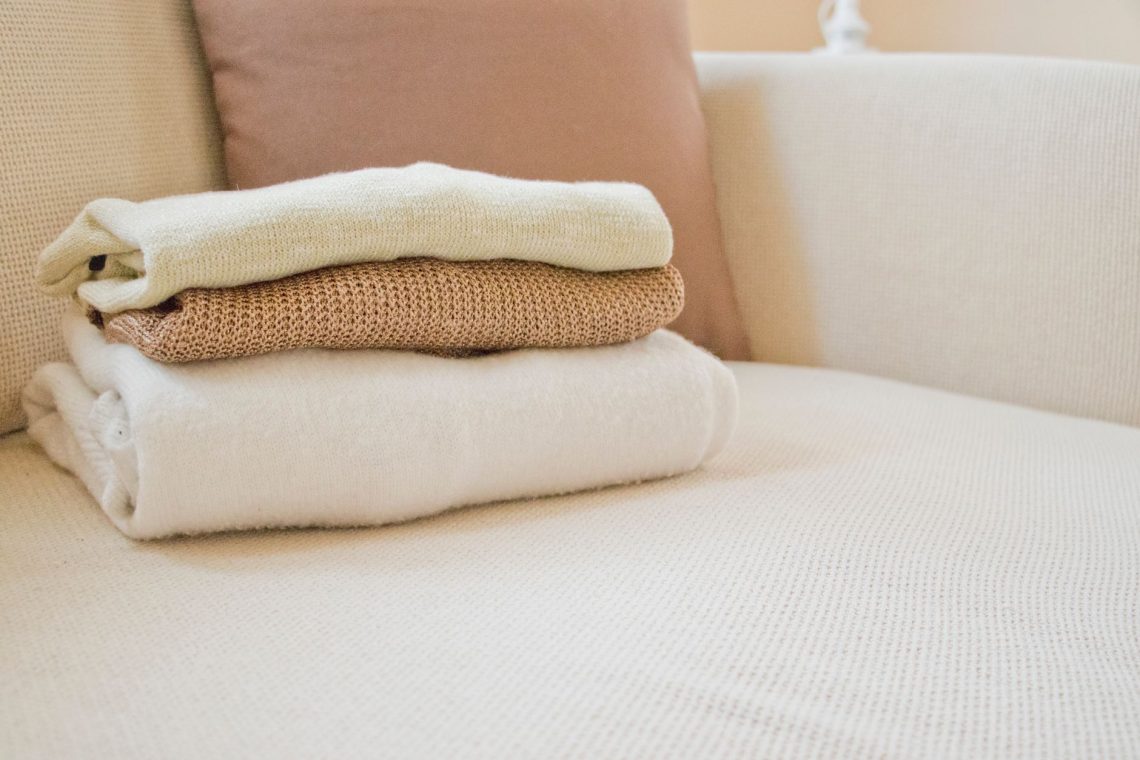
Some jumpers are simply too bulky, too loosely knitted or too slippery to file-fold comfortably. A thick cable knit can become an awkward wedge when folded several times. In a shallow drawer, one broad fold and a low horizontal stack may use the space more sensibly.
Fold the sides and sleeves inward as above, then bring the lower half up towards the shoulders. Lay the jumper flat with its weight evenly supported. Keep heavier, firmer knits beneath lighter pieces, and avoid tall piles that require you to lift several garments to reach one.
A stack of two can be more practical than a tightly packed row. Stagger the folded edges slightly if this lets you identify both jumpers without hiding a sleeve near the runner. To retrieve the lower one, lift the upper jumper fully out first rather than sliding the lower garment from underneath it.
Adapt the fold for awkward shapes
Roll necks and chunky collars
Lay a roll neck flat along the upper body before making the final fold. Let it bend loosely rather than winding it into a tight roll. If the collar makes one end much thicker, alternate the direction of neighbouring parcels or use a flat stack instead.
Longline jumpers
Give extra length a broad additional fold through the body. Avoid repeatedly doubling the entire jumper, which piles sleeves, hem and collar into one thick block. If the finished parcel is still too tall, store it flat; the drawer height sets the limit.
Cardigans and embellished knits
Align cardigan fronts before folding, fastening a button if needed to keep them together. Place a tie belt flat along the body. Keep hard buttons, beads and raised trims from pressing into neighbouring knits; a loose layer of plain tissue can separate delicate surfaces. Give heavily decorated pieces their own flat space.
Keep the system easy to maintain
Leave enough spare room to return a jumper without rearranging the drawer. If every gap is filled, taking one piece out will be easy but putting it back will become a chore. Store less frequently worn knitwear elsewhere if the drawer cannot accommodate it comfortably.
After dressing, close the drawer slowly and check that no fabric protrudes over the back or sides. When returning a worn jumper, air it first and fold it on a supported surface. A quick check of the sleeves and collar is usually all it takes to restore the shape of the parcel.
Judge the arrangement by how it works on an ordinary morning. You should be able to see your choices, lift out a jumper and close the drawer smoothly. Whether that means neat files, a couple of low stacks or a mixture of both, the best fold is one that leaves your knitwear relaxed and ready to wear.