Sometimes a clothes declutter is essential. We always say, “Oh, I’ll keep this just in case” or “This might come back into fashion one day”. I imagine you’ve used one of these excuses before; I know I have. But sometimes we have to let go of the top that brought us joy before and doesn’t now.
I declutter my clothes about twice a year, sometimes more. I usually do it when I’m making the transition from spring/summer to autumn/winter and vice versa. It’s a good chance to look at my wardrobe and sift through the clothes I see no future for.
These days, I buy more neutral, classic pieces that are versatile. I like to think I’m building a capsule wardrobe, and honestly, I love it. Having fewer clothes can still give me plenty of outfit options when the pieces work together. Following content creators who dress this way has inspired me, and I like having a little more space and less mess.
Decluttering can be a painstaking process, but a rejuvenating one too. I have a system that helps me decide which clothes to keep, donate, recycle or sell on Vinted. There are a few questions to ask, but the effort is worth it.

Before you start, make space to sort
I find it easier to work through one category at a time: jeans first, then tops, then knitwear, for example. That way, you can compare similar pieces without covering every surface in clothes. Bring together anything from that category that’s sitting in drawers or waiting to be put away.
Set aside separate bags for selling, donating and textile recycling, plus a small space for repairs. Keep a mirror handy and wear underwear that works with the clothes you’re trying on. If you only have time for one drawer, finish that drawer. You don’t need to empty the entire wardrobe to make a useful start.
1) Did I wear this item much during the last season?
When making the seasonal wardrobe switch, I ask myself two questions:
- Did I wear it much last season?
- If I didn’t, can I realistically see myself wearing it this season?
A no makes me pause and consider whether it belongs in the donate or sell pile. It helps to ask why I skipped it. Perhaps the sleeves annoy me, the fabric needs more care than I want to give it, or I always choose another top instead.
There are exceptions. A special occasion dress doesn’t need weekly outings to earn its place, and a warm coat may have stayed unworn because the weather was mild. Think about whether the item suits your actual plans. “I’ll wear this to the wedding I’ve been invited to” is more convincing than an imaginary event with no date.
2) Does it still fit me?
My usual rule is simple: if it doesn’t fit, it doesn’t stay in my everyday wardrobe. If it fits but I no longer have a reason to keep it, that alone isn’t enough to save it either.
Try things on rather than judging by the label. Sit down in your jeans, raise your arms in a blouse and check whether a skirt feels comfortable when you walk. Something can fasten perfectly well and still pinch, pull or need constant adjusting. Clothes should work for your body as it is now.
If a small alteration would make a favourite wearable, put it in the repair pile with a specific job attached, such as shortening the hem. Be honest about whether you’ll arrange it. A bag of clothes waiting indefinitely for alterations is still clutter.
3) Does it have sentimental value?
This is always tricky. When I met the Liverpool players at their training ground back in 2016, I wore a lovely blouse from Topshop. I still have it, even though I don’t wear it any more, because it reminds me of that day.
I’m happy to make room for a few pieces like that. The important distinction is between something you treasure and something you feel obliged to keep. You don’t have to keep a gift forever simply because somebody chose it for you.
If an item is a keepsake rather than something you wear, store it separately from your everyday clothes, clean and dry. A photograph can also preserve a memory if you’re ready to part with the garment. Sentiment is a reason to keep something special; it doesn’t need to become a reason to keep everything.
4) Do I have similar items already?
One word: jeans. I have pairs I’ve kept because they’re flattering and others I’ve kept for everyday wear. It’s easy to overlook how many similar pieces you’ve collected until they’re all laid out together.
Compare duplicates side by side and try on the ones you’re unsure about. Which pair do you reach for first? Which fits comfortably with your favourite shoes? If two tops serve the same purpose but one always stays on the hanger, that’s useful information.
You don’t have to reduce every category to a single item. If you wear plain T-shirts throughout the week, a few similar ones may be practical between washes. Keep duplicates because they support how you dress, rather than because you’ve forgotten they exist.
5) Is the quality still there?
I particularly ask this when sorting jumpers, which can become bobbly or lose their shape. Check cuffs, seams, underarms and necklines, as well as the front of the garment. Look at clothes in good light so you can spot stains or thinning fabric.
A little maintenance may rescue something you still love. Follow the care label, remove surface bobbles gently with a suitable tool, or sew on a loose button. Keep repairable favourites separate so they don’t go straight back into the wardrobe with the same problem.
Be realistic about condition when deciding what to pass on. Something too worn for you isn’t automatically suitable for someone else. Clothing that’s beyond wearable needs a different destination from a clean, sound jumper you simply don’t enjoy wearing.
6) Do I still feel great in it?
If I don’t feel good wearing something, I don’t want it taking up space. I want clothes that help me feel confident, whether I’m dressing up or putting on a comfortable everyday outfit.
Try an uncertain piece with something you’d actually wear it with. A blouse might make more sense tucked into your usual trousers than worn alone in front of the mirror. If you still spend the whole time adjusting it or wishing it looked different, it’s probably time to let it go.
An item doesn’t need sentimental value or a dramatic story to stay. Enjoying it, wearing it and feeling comfortable in it are perfectly good reasons.

Give the clothes you’re letting go a destination
If I choose to sell: the item needs to be in a condition I’d be happy to buy myself. Wash or clean it according to its care label, take clear photographs and describe any wear honestly, including small flaws. Keep sale items together and set aside time to list them so they don’t drift back into your drawers.
If I choose to donate: I pass on clean, wearable clothes and check what the charity or collection accepts before dropping them off. Empty pockets and fasten any belts or matching parts to the garment so they stay together.
If it’s beyond wearable: I look for textile recycling where possible and check the collection’s requirements. Don’t assume every clothing bank accepts damaged textiles. Anything unsuitable for an available recycling route needs disposing of according to local guidance.
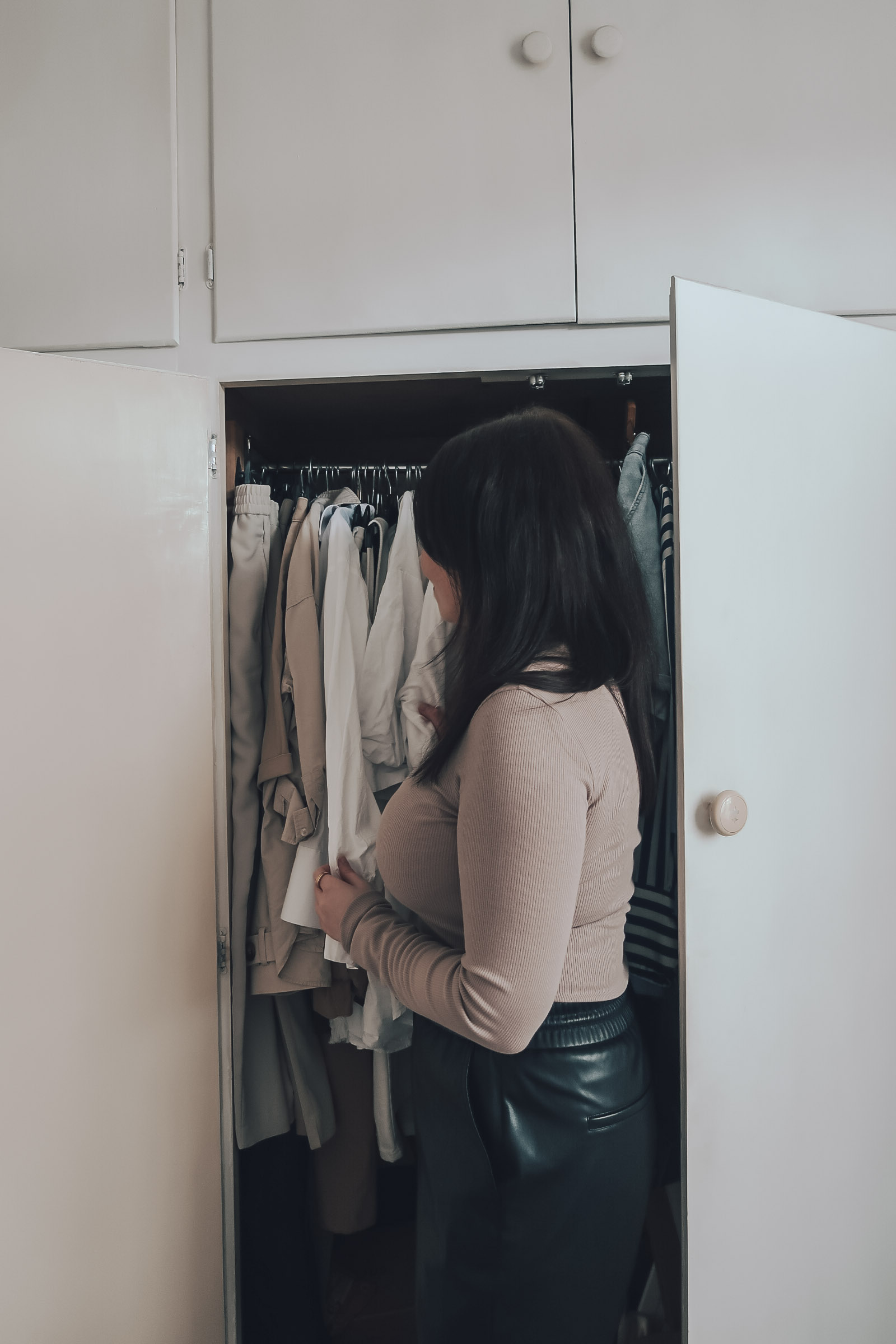
Finally, put your keepers back where you can see and reach them, grouping similar pieces together. Leave enough room to remove a hanger easily. For me, that’s the best part: opening the wardrobe and finding clothes I want to wear, without having to squeeze past everything I’ve already decided to say goodbye to.