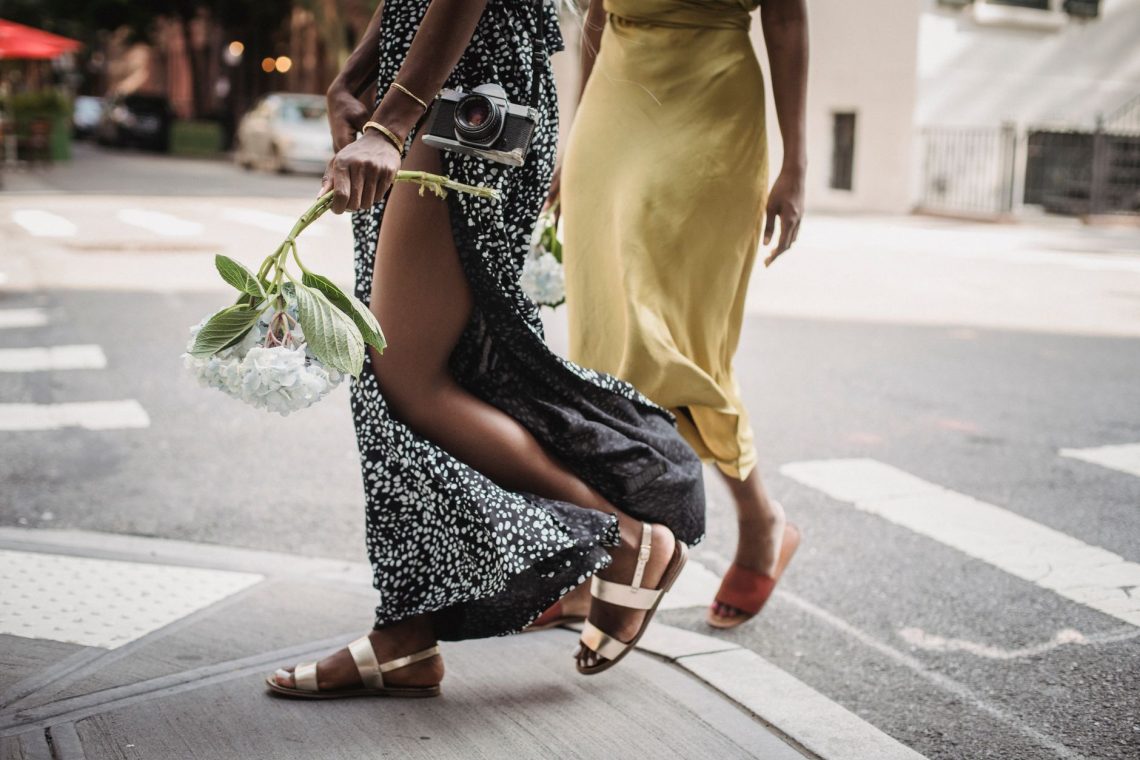
A summer sandal can look perfect beside a linen dress and still become the wrong choice halfway through a walking tour. When the route includes cobbles, steps and long stretches between café stops, the useful question is whether your foot stays comfortably in place. You should be able to look at the buildings rather than concentrate on keeping your shoes on.
Enough hold comes from several details working together: straps that secure without digging, a sole that feels steady beneath you, and a fit you have tried beyond the bedroom mirror. Start with those, then choose the colour and finish that earn the sandal a place in your holiday wardrobe.
Start with the walking you actually have planned
Think about the most demanding part of your itinerary. A short guided stroll on level pavements asks less of a sandal than an afternoon through a hillside old town. Standing while someone explains a landmark also counts: a shoe needs to feel comfortable when you are still as well as when you are moving.
For city tours, look for a secure heel strap, adjustable fastening and a sole that does not feel flimsy. If the route includes loose ground or substantial climbs, consider whether your familiar walking shoes would suit it better. You can still pack a lighter sandal for dinner or an easy morning.
Check where the straps hold your foot
Give the heel something to sit against
A back strap is a useful starting point because it helps keep the sandal attached as you step forwards. It should sit securely around the heel without slipping down or pressing into a sensitive spot. Walk several lengths of the room and turn both ways; a strap that behaves while you stand may shift once you change direction.
With the sandal properly fastened, notice whether your heel repeatedly lifts away from the footbed. A little movement is different from having to catch the shoe with every stride. If you find yourself curling your toes to keep it on, try adjusting the straps or choosing another shape.
Look for adjustment across the foot
An ankle buckle alone cannot correct a loose fit over the forefoot. Ideally, you can adjust more than one area, especially if your heel and the front of your foot need different amounts of room. Buckles offer distinct settings; hook-and-loop fastenings allow smaller changes. Check that either fastening remains comfortable against bare skin.
Straps should feel secure without needing to be pulled to their tightest setting. Leave yourself adjustment in both directions. Feet can feel fuller in warm weather, and a fastening that only just closes during a cool indoor fitting leaves little flexibility for a summer afternoon.
Pay attention to edges and joins
Run a finger along the underside of each strap, including stitching, folded edges and the back of any hardware. Then check where those details land on your foot. A neat buckle can still be awkward if it sits directly against a bony area, while a decorative knot may create pressure beneath an otherwise soft upper.
Wider straps can feel reassuring, but width alone does not guarantee comfort. A broad, stiff band that cuts across the wrong place may be less wearable than a softer, narrower one. Judge the whole contact area as you walk, rather than choosing by appearance or strap count.
Make sure the footbed fits your foot
Stand with your weight evenly distributed and check both sandals from above and from the side. Your heel and toes should sit within the footbed, with a little spare space rather than hanging over the edge. Avoid buying extra length simply to gain width: a longer sandal may leave its straps and shaped sections in the wrong places.
If the footbed has a raised arch or a moulded heel cup, notice whether it lines up comfortably with your foot. A sculpted shape is only useful if it suits you. You should not feel as though you are balancing on a lump or being pushed towards one edge.
Try both shoes and give each foot equal attention. If one feels less secure, adjust it separately. Matching buckle holes may look tidy, but the aim is a comfortable fit on each side.
Assess the sole beyond its thickness
A substantial-looking sole is not automatically a good walking sole. Try the sandal on a firm floor and notice whether you feel steady as you move, stop and turn. Very soft cushioning may feel pleasant at first yet leave you working to balance; a very thin sole may let you feel more of the ground than you want.
Look for a balance of cushioning and structure that feels comfortable to you. The sandal should allow a natural step without folding loosely beneath the foot or forcing you into a rigid shuffle. A thick platform also adds height, so judge how confidently you handle changes of direction rather than assuming extra depth means extra support.
Inspect the underside for visible tread instead of a completely smooth surface. No outsole makes every surface safe, particularly polished or wet paving, but a sole intended for walking is a more sensible starting point than a smooth fashion sole. Keep the route and weather in mind when making your final choice.
Use a proper fitting routine
Try sandals later in the day if possible, and allow enough time to move around. Fasten them as you would for a tour, rather than slipping them on loosely for a quick look. Use this short routine before deciding:
- Walk at your usual pace and check whether your stride feels natural.
- Stop, turn and take a few shorter steps to see whether your foot slides.
- Stand still and notice pressure beneath the straps or footbed.
- Check that your toes remain clear of the front edge as you move.
- Remove the sandals and look for areas that feel rubbed or sore.
If you are trying a pair at home, follow the retailer’s return conditions and keep the soles clean. Persistent pressure during an indoor fitting is useful information. Do not dismiss it because the sandal looks good with your favourite holiday outfit.
Build up wear time before departure
Break-in time is a chance to understand a sandal, rather than a promise that an uncomfortable pair will transform. Begin with short periods indoors, then take an easy local walk once you are keeping them. Increase the time gradually if they remain comfortable, choosing outings where you can return home easily.
Notice when discomfort begins and what causes it. Does your foot slide after you have been walking for a while? Does a strap edge rub on a slope? Make small adjustments and reassess. Stop if a spot becomes painful; pushing through does not prove that the sandal is suitable.
Leave enough time before travelling to change your plans. If departure is close, a familiar, comfortable pair deserves priority over a new sandal that has only passed a mirror check. Pack blister plasters for unexpected rubbing, but do not rely on them to make an unsuitable fit work.
Bring the practical choice into your outfits
Once the fit works, choose a finish that connects with what you already pack. Tan leather can sit easily with cream linen and denim, while black straps give printed dresses a clear finishing point. A sportier sandal can work with tailored shorts or a simple midi skirt when the rest of the outfit feels considered.
Before leaving for the tour, check the fastenings and take a few steps. Adjust as needed during the day, especially after a seated break. The right summer sandal lets you enjoy the outfit and get on with the walk, without constantly thinking about what is happening at your feet.