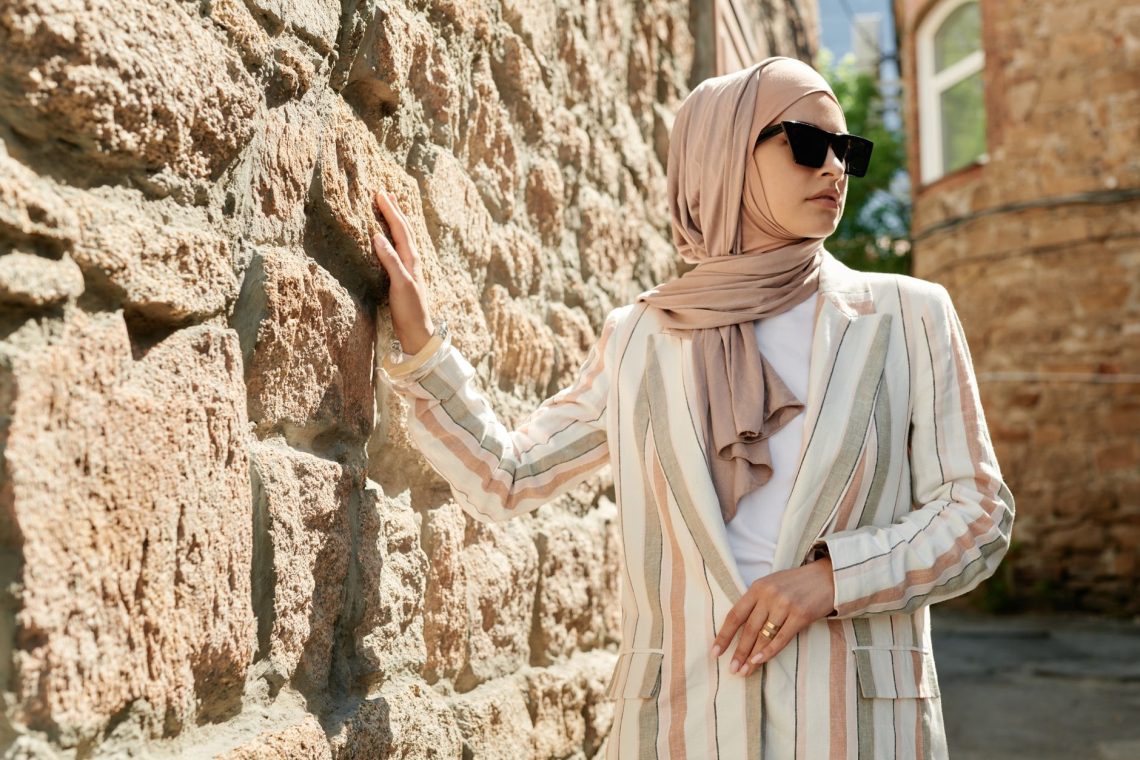
A summer blazer should bring an outfit together without making you wish you had left it at home. Yet a pale jacket labelled lightweight can still feel stuffy on a warm commute. The difference often lies in details that are easy to overlook on a hanger: how tightly the cloth is woven, how much lining sits beneath it and how the cut allows the jacket to move around your body.
Choosing well means looking beyond linen as a reassuring word on a label. Start with the fabric, turn the jacket inside out, then try it over the clothes you actually wear in summer. Colour matters too, both for styling and for how the blazer feels in direct sunshine. Here is how to put those checks together.
Start with the weave, not just the fibre
Fibre tells you what a fabric is made from; weave tells you how its threads are arranged. Both affect comfort. A loosely woven cloth can leave small spaces for air to pass through, while a densely woven fabric may feel enclosed even when it is relatively thin. A fine, smooth finish is not automatically the coolest choice.
Hold a single layer of the outer fabric towards a window or shop light. Look for tiny, reasonably even gaps between the threads. This is a useful clue to openness, rather than a guarantee of comfort. Avoid judging through a pocket, facing or lined section, where extra layers will obscure the result.
Then feel the cloth between your fingers. Does it have a dry, slightly textured handle, or does it feel compact and almost sealed? An open weave with a little body can be particularly useful: it holds the jacket away from your skin instead of collapsing against it. Check that it still gives you the coverage and shape you want.
Understand the main fabric options
- Linen: often a comfortable summer choice, especially in an open weave. Expect creases at the elbows and waist; choose it because you like that relaxed character, rather than hoping it will stay perfectly smooth.
- Cotton: can work beautifully, but inspect its construction. An airy cotton weave is a different proposition from a dense cotton twill, which may feel surprisingly substantial.
- Wool: need not mean winter weight. Look for lightweight, open-weave wool intended for warm weather. A crisp texture can suit smarter outfits without the heavy feel of a traditional winter jacket.
- Blends: judge the finished cloth, not a single ingredient. Linen mixed with cotton, wool or another fibre may change the drape, crease pattern and feel. A summer fibre on the label does not cancel out a tight weave.
Seersucker is also worth considering if you like texture. Its puckered surface creates an uneven contact with the body, although the jacket’s lining and fit still matter. Whatever the composition, squeeze a small section gently and release it. This shows how the cloth responds to handling and helps you decide whether its everyday creasing will bother you.
Turn the blazer inside out
Lining can make a jacket slide neatly over a shirt and cover internal seams, but it also adds another layer. A fully lined blazer covers the back, front panels and usually the sleeves. That may be welcome for a formal finish, yet it is worth questioning when your main priority is staying comfortable in warmth.
A half-lined jacket often leaves much of the lower back exposed inside. A quarter-lined version generally has still less coverage, commonly around the shoulders and upper back. These terms are not completely consistent between makers, so inspect the actual jacket rather than relying on the description.
An unlined blazer removes most of that extra fabric, but it is not necessarily free of internal layers. The front edges, lapels and pockets still need construction. Feel these areas and check whether the chest is heavily padded or stiffened. A softly constructed jacket can feel easier for everyday summer dressing, provided it gives you enough shape.
Check the sleeves and lining label separately
Even a largely unlined body may have fully lined sleeves. This makes the jacket easier to put on, but your arms may still feel enclosed. Read the lining composition as well as the outer fabric label. Do not assume that a breathable outer cloth tells you everything about the layers beneath it.
If you are comparing two jackets, wear each for several minutes over the same top. Move your arms, sit down if possible and notice where warmth starts to build. A quick glance in the mirror will not reveal as much as giving the jacket time to settle against you.
Choose colour with your day in mind
Light colours generally reflect more sunlight than dark ones, making cream, stone, pale grey and soft blue useful starting points for a summer blazer. That does not mean a cream jacket will always feel cooler than a navy one: weave, lining, fit and the conditions around you still play a part.
Think about where you will wear it. For outdoor lunches or a walk between appointments, a pale shade makes practical sense. If most of your day is indoors and you need a jacket that works with existing workwear, an open-weave navy blazer may be more useful than a tightly woven beige alternative.
Try pale fabrics over both a light and a dark top. An open weave can allow the colour underneath to show through, especially across the back or sleeves. That need not be a problem, but it should look intentional. Also check whether pocket bags and internal seams are conspicuous from the outside.
Choose a shade you can comfortably repeat. Stone pairs easily with white, chocolate and denim; pale blue works with ecru and navy; soft grey can sit well with black or muted pink. If bright white feels too formal or demands more care than you want, an oatmeal or sandy tone offers a gentler alternative.
Leave room for air and movement
A summer blazer does not need to be oversized, but it should not cling across your upper arms, chest or back. Try your usual size first and assess the cut. Sizing up cannot always fix a jacket with narrow armholes or tight sleeves, and may simply leave the shoulders sitting in the wrong place.
With the jacket fastened, reach forward as though holding a steering wheel. Sit, bend your elbows and lift your arms gently. Look for pulling around the button and tension across the back. You want enough ease for normal movement without the blazer twisting or dragging your top with it.
Back vents can help the hem move as you walk and sit, although they cannot compensate for dense cloth. Check the length too: a longer jacket covers more of the body, while a shorter cut may suit your proportions and summer wardrobe better. Choose the balance that feels comfortable on you.
Build a lighter outfit underneath
Try the blazer with a breathable shirt, a simple vest or a light T-shirt, depending on the setting. A thick top can undo the benefit of a thoughtfully chosen jacket. Keep the outfit easy through the waist, particularly if you will spend much of the day seated.
For work, pair a softly structured blazer with loose trousers and a fine cotton shirt. For a relaxed occasion, wear it over a simple dress or with a vest and straight-leg jeans. If you prefer rolled sleeves, check that they stay comfortably in place; a bulky roll can feel restrictive.
Make these checks before buying
- Inspect one layer of cloth: look for an open weave and feel whether the fabric has enough body to sit away from you.
- Look inside: check the back, sleeves and chest for lining, padding and extra layers.
- Try your real outfit: assess movement and coverage over the kind of top you plan to wear.
- Consider the colour outdoors: balance a pale shade’s usefulness in sunshine with your wardrobe and care preferences.
- Read the care label: make sure the cleaning requirements suit how frequently you intend to wear it.
The most useful summer blazer combines a reasonably open cloth, considered internal construction and enough room to move. Choose those features together, then find a colour you enjoy wearing. You will have a jacket that earns its place in your summer wardrobe, rather than one you spend the day carrying.