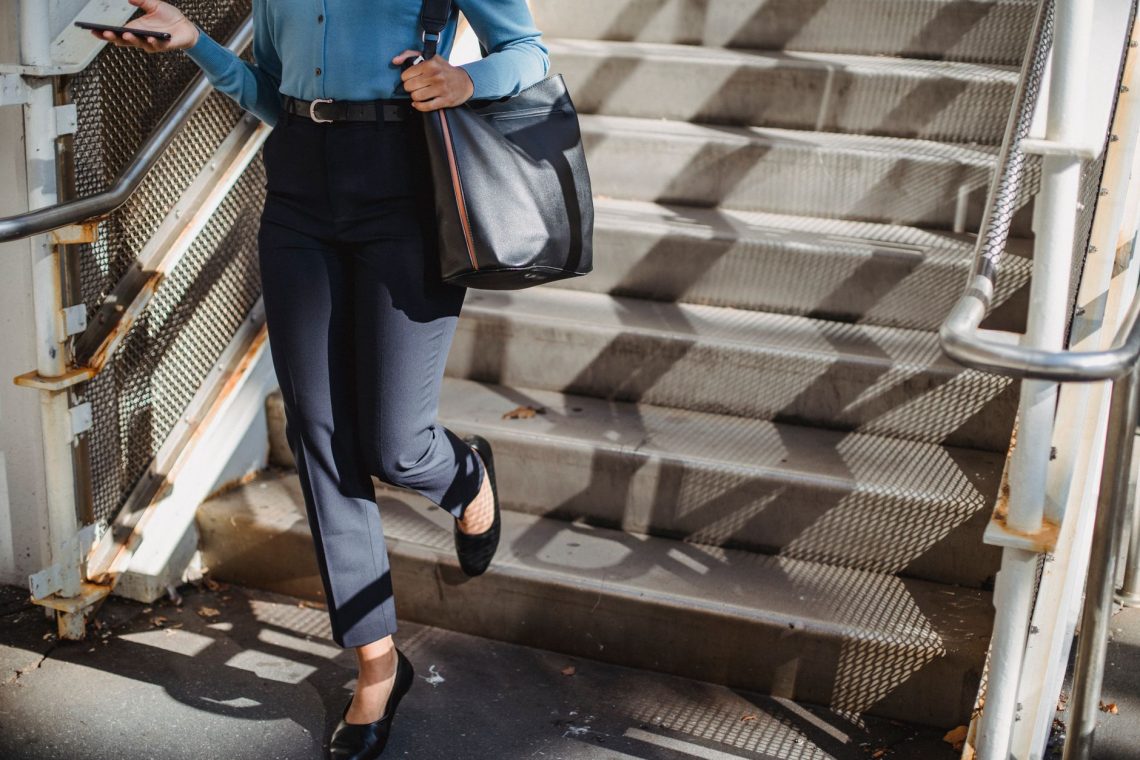
A belt, bag and pair of shoes can each look lovely on their own, yet feel oddly disconnected when worn together. Often, the problem is simply that every accessory introduces a different colour with nothing else in the outfit to connect it. The answer need not be a matching set or another shopping trip.
Start with the clothes you want to wear, then give the accessories a clear job: continue a colour, repeat a detail or provide one deliberate contrast. This method works with the pieces already in your wardrobe, whether you are dressing up jeans or finding the finishing touches for a printed dress.
1. Lay out the outfit before choosing accessories
Put together the clothes first, including any jacket or coat you expect to keep on. Lay them on the bed or try them on without a belt, bag or shoes. This gives you a clear view of the colours you are actually working with.
Identify the colour covering the largest area. With a navy dress, that is straightforward. With black trousers and a cream blouse, you have two main colours. With a patterned skirt, look at its background as well as the colours in the print.
Next, notice any smaller colour you could repeat. It might be a brown stripe in a checked jacket, a burgundy flower on a blouse or the tan buttons on a cardigan. These details offer a reason for an accessory to belong, even when it does not match the largest part of the outfit.
2. Choose one colour to anchor the accessories
Pick an anchor colour from the clothes, or choose a neutral that sits comfortably beside them. Black, brown, navy, grey, cream and tan can all do this job. The most useful choice is the one you already own in suitable shoes, belts or bags.
For example, blue jeans and an ivory shirt leave several possibilities open. Brown loafers could establish a warm direction; black ankle boots could give the same clothes a sharper finish. Choose the shoes you want to wear first, then use their colour as a starting point for the other accessories.
There is no need to find three identical shades. A chocolate belt and dark brown shoes can look connected because they share a colour family. However, a reddish brown belt may look less settled beside very yellow tan shoes. Compare the actual pieces instead of relying on their colour names.
3. Give each accessory a role
Before adding anything else, decide which accessory should draw attention. If your favourite bag is bright red, let it lead. If you want the outfit to feel quiet and continuous, allow the shoes and belt to blend into the clothes.
A useful starting arrangement is:
- Shoes: connect to the trousers, skirt, dress or chosen neutral.
- Belt: repeat the shoes or blend with the garment it sits against.
- Bag: repeat an existing shade or introduce the main accent colour.
These are starting points, not obligations. A distinctive pair of green shoes can take the accent role instead, leaving the bag and belt quieter. The aim is to avoid asking all three accessories to compete for attention at once.
4. Use repetition where it helps
Repeating a colour gives the eye something to follow. Black shoes and a black belt can connect the top and bottom of an outfit, while a bag in a colour borrowed from your blouse adds another link.
The repeat can be small. A burgundy bag might echo a narrow stripe in your shirt, rather than match the entire garment. A cream bag can pick up the pale background of a floral print. Look closely before deciding that an accessory needs an exact partner.
You can also repeat a colour through different depths. Navy shoes with a pale blue shirt create a softer connection than identical shades would. Keep another part of the outfit simple while you judge the combination: a plain belt is easier to assess than one with a contrasting buckle and patterned strap.
5. Check warmth, depth and finish
When colours seem almost right but still feel awkward, look at their undertones. Cream often looks warmer than a crisp white; camel usually feels warmer than a blue-grey. Holding accessories beside the clothes near a window can make these differences easier to see.
You do not have to keep every colour warm or every colour cool. Instead, look for a connection. A tan bag beside a cool blue dress may feel deliberate when tan sandals repeat it. If the bag is the only warm element, decide whether you enjoy that contrast or would prefer a quieter alternative.
Finish matters too. A glossy black bag can attract more attention than soft black suede shoes, despite sharing their colour. Metallic accessories also bring shine into the balance. If a silver bag is already the focal point, a simple belt may be all the waist needs.
6. Try the method on familiar outfits
Jeans and a cream knit
Start with brown ankle boots. Add a brown belt in a similar depth, then try a tan bag. The bag does not need to match the boots exactly: the browns provide a connection, while the cream knit keeps the overall palette soft. If the tan looks too orange beside the belt, compare a darker bag before changing the whole outfit.
A navy dress
Choose navy shoes if you want a continuous line, or burgundy shoes for a restrained accent. With the burgundy pair, a navy bag keeps the colour choices focused. If you add a belt, try navy first so that it blends with the dress. A belt is optional; a dress with a defined waist may already feel finished.
A patterned skirt and plain top
Imagine a skirt with olive leaves and rust flowers on a cream background, worn with a cream top. Brown shoes can sit quietly beneath it, while a rust bag repeats the flowers. If the waistband does not need a belt, leave it alone. You already have enough colour connections to make the accessories feel considered.
7. Make one final check while wearing everything
Stand far enough from a mirror to see the whole outfit, with the bag where you normally carry it. A shoulder bag sits beside your top; a handheld bag may fall against your skirt or trousers. Its position changes which colours meet.
If something feels unsettled, change one accessory at a time. First remove any belt that adds an unnecessary colour break. Then compare the bag with a quieter option. Finally, check whether the shoes support the outfit’s overall lightness or depth. This makes it easier to identify the issue than replacing everything together.
Once a combination works, take a quick photograph for your own reference. Next time, begin with that pairing and adjust only what the clothes require. Colour-matching becomes much simpler when you know which pieces already work together, and your wardrobe starts offering answers before you reach for something new.