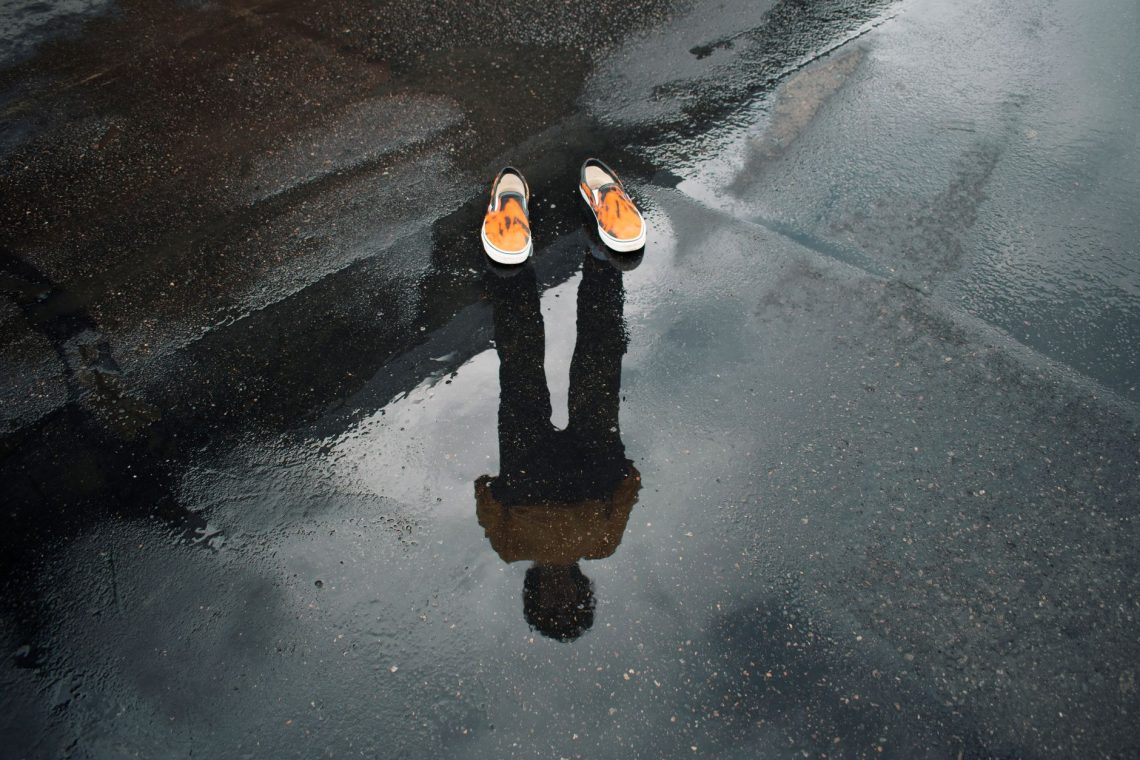
A smart outfit can lose its appeal when you spend the journey watching every puddle. Rain-ready footwear should let you walk comfortably while still feeling right with your clothes when you arrive. That does not mean wearing wellingtons for every grey forecast, or expecting a favourite pair of delicate loafers to cope with a downpour.
The useful distinction is between shoes for a little wet pavement and shoes for sustained rain. Start with the journey, look closely at the sole and upper, then decide whether one pair can reasonably do everything. Sometimes a rubber-soled ankle boot is enough. Sometimes the most polished solution is a practical commuting pair and clean shoes waiting at the office.
Match your shoes to the journey
Think about the parts of your day spent outdoors. A short walk from the bus stop calls for a different choice from a long walk across exposed streets. Include the journey home: damp shoes that seemed tolerable in the morning can become an unwelcome prospect at the end of the day.
For occasional showers, smooth leather shoes with suitable protection and rubber soles may fit the brief. For prolonged rain, choose footwear specifically described as waterproof, checking the manufacturer’s care and construction information. A substantial-looking boot is not automatically waterproof, and a protective spray does not turn an ordinary fashion shoe into a rain boot.
Also consider where water can enter. Low-cut loafers leave the top of the foot exposed, while deep elastic panels, open lacing and decorative perforations deserve a closer look. An ankle boot offers more coverage, but water can still enter over its top. Avoid walking through standing water simply because your shoes look sturdy.
Choose rubber soles when the pavement is wet
Rubber soles are a sensible starting point for everyday rainy-day dressing. They put a barrier between the ground and the upper, and save you relying on an exposed leather sole for a wet commute. Look at the underside of the shoe, rather than judging it from the neat silhouette above.
Choose a sole with visible texture and a heel that feels stable underfoot. Rubber alone is no guarantee against slipping: a smooth or worn sole may still be unsuitable for wet paving. Painted crossings, metal covers and polished entrance floors all call for care, whatever you are wearing.
Keep the profile in proportion
A rubber sole need not be thick or sporty. A slim sole can work with tailored trousers, while a modest tread adds a practical finish to Chelsea boots or lace-ups. If you prefer a chunkier sole, balance it with straight-leg denim, a substantial coat or trousers with enough width to sit comfortably over the shoe.
For heels, a lower, broader shape is often easier to manage on uneven pavements than a narrow heel. Check that the heel tip is secure and not worn smooth. If otherwise suitable shoes have tired soles or heels, ask a cobbler about repair options before making them your wet-weather pair.
Protect leather before it gets caught in rain
Smooth leather can be a useful choice for light rain, provided the footwear’s construction and care guidance support that use. Give it attention before the forecast turns. Protection is easier to organise when the shoes are clean and dry than when you are already standing by the front door.
- Identify the finish. Smooth leather, suede, nubuck and patent finishes can need different products. Check the shoe’s care instructions before applying anything.
- Remove surface dirt. Use the appropriate brush or cloth, then allow the shoes to dry if cleaning has left them damp.
- Test discreetly. Try a suitable protector on a small, less visible area and check for changes in colour or texture.
- Apply as directed. Follow the product’s instructions for application, ventilation and drying time. Leave enough time before wearing the shoes.
Polish can help maintain the appearance of suitable smooth leather, but it is not a substitute for waterproof construction. Use conditioner only where recommended, and avoid layering on products in the hope of making shoes rainproof. More product can alter the finish without solving the places where water gets in.
Suede does not need to disappear from your wardrobe at the first cloud, but save a treasured pair for a day with less exposure. Even with an appropriate protector, pale or delicate finishes may demand more care than you want to give them after a wet commute.
Build a polished outfit around practical footwear
The easiest rainy-day outfits treat the shoes as part of the look from the beginning. A clean, simple ankle boot can sit naturally beneath tailored trousers, while a rubber-soled lace-up works with a shirt, fine knit and structured coat. Repeat the footwear’s colour in a belt or bag if that helps the outfit feel considered.
Pay attention to trouser length. Hems that trail on the ground collect water and can spoil an otherwise tidy appearance. Try the outfit on with the actual commuting shoes, particularly when switching between different heel heights. A slightly shorter hem may be useful, but it should still fall deliberately rather than bunch awkwardly above the boot.
With skirts and dresses, consider the relationship between the hem and boot shaft. A simple ankle boot can work well with a midi skirt, while a taller boot offers more coverage beneath a longer hem. Keep embellishment restrained if you want the footwear to move easily between commuting and the office.
When a spare office pair makes sense
A spare pair is especially useful when your journey and workplace ask different things of your footwear. You might walk in waterproof boots but prefer loafers for meetings, or need practical tread outside and a more refined shape indoors. Planning that change is often easier than searching for one shoe that meets every requirement.
Choose an office pair that works with most of your working wardrobe. Plain loafers, simple flats or comfortable low heels can be useful, depending on your dress code. Check them against your usual trouser lengths: a pair that only works with one outfit is less helpful as a permanent desk companion.
- Keep the office shoes clean, dry and ready to wear.
- Carry a spare pair of socks or tights if your commute is exposed.
- Use a washable shoe bag for transport, then unpack damp footwear on arrival.
- Leave commuting shoes somewhere ventilated, where they will not obstruct a walkway.
Give damp shoes time to recover
When you get home, remove loose dirt gently and follow the care instructions for the material. Blot excess moisture rather than scrubbing. For suitable footwear, loosely placed plain absorbent paper can help take up moisture inside; replace it when damp and avoid forcing the shoe out of shape.
Let shoes dry naturally away from radiators and direct heat. Once dry, assess whether the finish needs brushing, polishing or other recommended care. Rotate pairs when possible so that yesterday’s damp shoes are not your only option this morning. With sensible soles, appropriate protection and a spare pair when needed, looking polished in the rain becomes a manageable part of getting dressed.