Ankle socks can be the quietest part of an outfit or the detail that makes it feel considered. The difference often comes down to the trouser break: the way the hem meets, rests on or folds over your shoe. A sock that disappears beneath a generous hem may become a visible strip when the same trousers are shortened or you sit down.
There is no rule that every glimpse of sock is a mistake. The useful question is whether you want a clean stretch between trouser and shoe, a discreet connection, or a deliberate flash of colour. Start with the hem, then choose the sock height and shoe together.
Understand the break before choosing your socks
A trouser break is the fold created when fabric meets the top of a shoe. With a full break, the hem rests on the shoe and creates a pronounced fold. A half break gives a smaller fold, while a slight or quarter break produces just a little interruption in the trouser line. No-break trousers meet the shoe with little or no folding.
Cropped trousers sit above the shoe rather than breaking over it. They belong in this conversation because their higher hems make your sock choice especially noticeable. These descriptions are guides, not exact measurements: the same trousers can break differently over a chunky trainer, a slim loafer and a lace-up shoe.
Also check what “ankle sock” means on the packet. Some sit below the ankle bone; others cover it with a short cuff. Neither is necessarily invisible. A no-show liner sits lower and is a different option, while a crew sock extends further up the leg. Choosing the right height matters more than the label.
Full-break trousers: keep the sock in the background
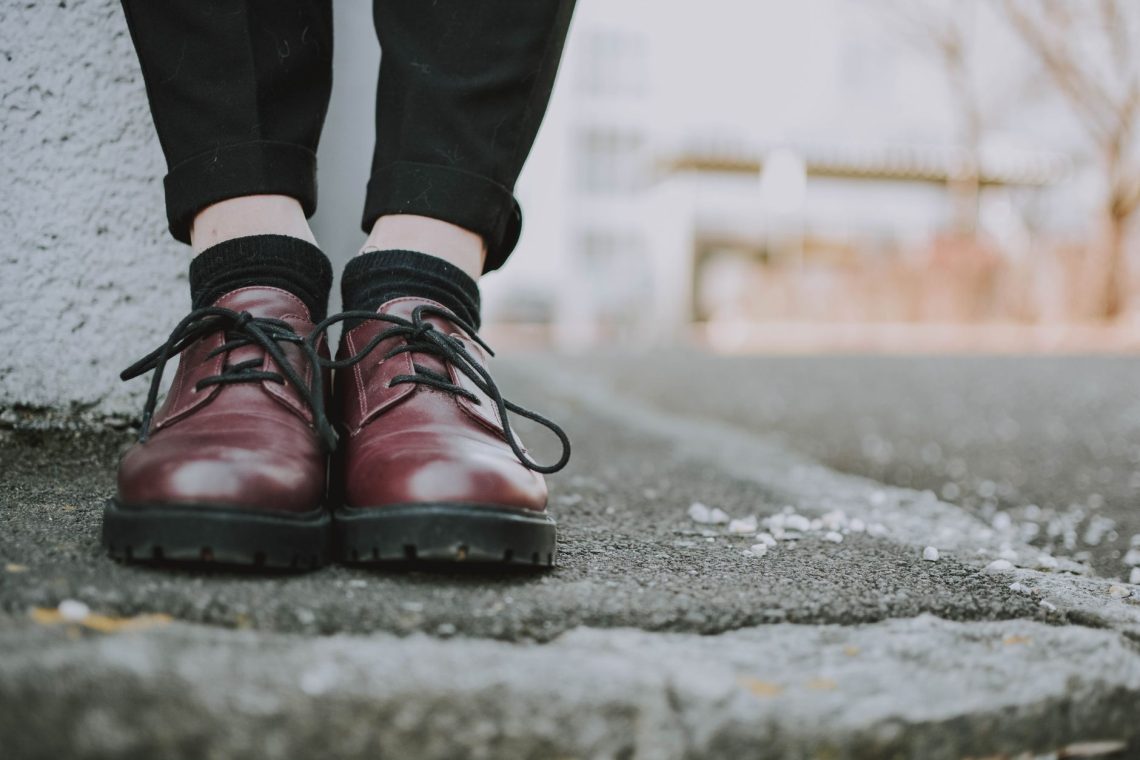
With a full break, most of your sock will be covered while you stand. A smooth ankle sock in a colour close to the trousers creates a discreet connection when the fabric moves. Navy beneath navy or charcoal beneath grey lets the trouser line remain the focus.
The catch comes when you walk or sit. A short ankle sock can reveal skin between its cuff and the raised hem. If you want continuous coverage, especially with tailored trousers and formal shoes, an ankle sock may simply be too low. Choose a longer sock that stays covered by the trouser leg when seated.
For relaxed full-break trousers worn with trainers, that brief glimpse of ankle can be perfectly comfortable visually. Keep the sock cuff flat and avoid thick fabric that bunches inside the shoe. If the hem pools heavily enough to catch under your heel, changing the sock will not solve it; the trouser length needs attention.
Half-break trousers: plan for movement
A half break offers coverage without so much fabric resting on the shoe. It works well when you want ankle socks to take a supporting role, but expect them to appear as you move. Try the outfit while walking across a room rather than judging it only from a still, front-facing view.
For a quiet result, match the sock to the trousers or choose a nearby shade. Matching it to the shoe instead can make the footwear look more substantial, which may suit a dark trainer beneath lighter trousers. Neither approach needs an exact colour match; similar depth and tone are usually enough.
If you enjoy a visible sock, introduce one clear contrast. A muted green ankle sock beneath stone trousers can add interest without competing with the rest of the outfit. Keep an eye on the cuff: a tiny, uneven sliver of colour may look accidental, whereas a clear glimpse as you walk feels more deliberate.
Slight-break and no-break trousers: decide on the gap
As the hem rises, the relationship between sock and shoe becomes more obvious. With a slight break, an ankle sock may be mostly concealed at the front but visible at the sides. With no break, the cuff can sit close to the hem, creating an awkward narrow band of skin between them.
There are three useful ways to handle this:
- Let the ankle show: use a genuinely hidden liner with a low-cut shoe for an uninterrupted bare-ankle effect.
- Let the sock show: choose an ankle sock whose cuff sits clearly above the shoe, accepting that some skin may show above it.
- Cover the gap: switch to a longer sock if you want a continuous line of fabric beneath the trousers.
The second option often feels at home with casual trousers and trainers. A fine white or cream sock can provide a crisp edge, while a tonal version is softer. For smarter tailoring, a longer fine-gauge sock is often easier to wear than a short cuff that repeatedly slips below the hem.
Cropped trousers: make the ankle area intentional
Cropped trousers give socks a visible role. If your aim is a bare-ankle look with loafers or low trainers, choose liners that remain hidden around the entire shoe opening. Ordinary ankle socks can peek out at the heel or sides, even when they seem invisible from above.
If you want the sock to show, consider its proportions against the crop. A short cuff, a broad area of bare leg and a high trouser hem create several horizontal lines. That can look playful, but it may feel busier than you intended. A slightly lower hem or a taller sock can simplify the arrangement.
Wide cropped trousers give a visible sock more space around it; slim crops put the cuff directly on display. With either shape, keep both socks at the same height. Avoid repeatedly rolling the cuffs to force a match, as a bulky ridge can distract from an otherwise clean outfit.
Use the shoe to refine the choice
Trainers
Trainers are an easy starting point for visible ankle socks. A ribbed cuff can echo their casual feel, while a smoother sock keeps the finish quieter. Check the height of the shoe collar: a sock that barely clears it may disappear on one side and show on the other. Give the cuff enough room to read clearly.
Loafers and low-cut shoes
Low-cut shoes reveal more of the sock across the foot. For a hidden effect, the liner must follow the opening closely enough to stay out of sight. For a visible effect, a fine ankle sock can work with relaxed trousers, although a longer sock is useful if you dislike exposed skin above the cuff.
Lace-ups and chunkier shoes
A higher vamp covers more of the foot, so an ankle sock may disappear easily while standing. Check for rubbing around the collar and heel when walking. Chunkier shoes can also lift the trouser hem and change its break, so assess the complete outfit before deciding that your usual trouser length works.
Finish with a standing, walking and sitting check
Put on the shoes you intend to wear, let the trousers settle, then look at the front, sides and back. Walk a few steps and sit down. Notice whether the cuff slips, the hem catches, or a strip of skin appears where you wanted coverage. These small checks are more useful than following a fixed rule about sock colour.
Finally, judge the outfit as a whole. If the trousers already have a strong pattern or an unusual cut, a quiet sock gives them room. If everything else is simple, a visible cuff can add character. Let ankle socks disappear when you want a smooth transition; let them show when their colour, texture and height contribute something you actually want to see.