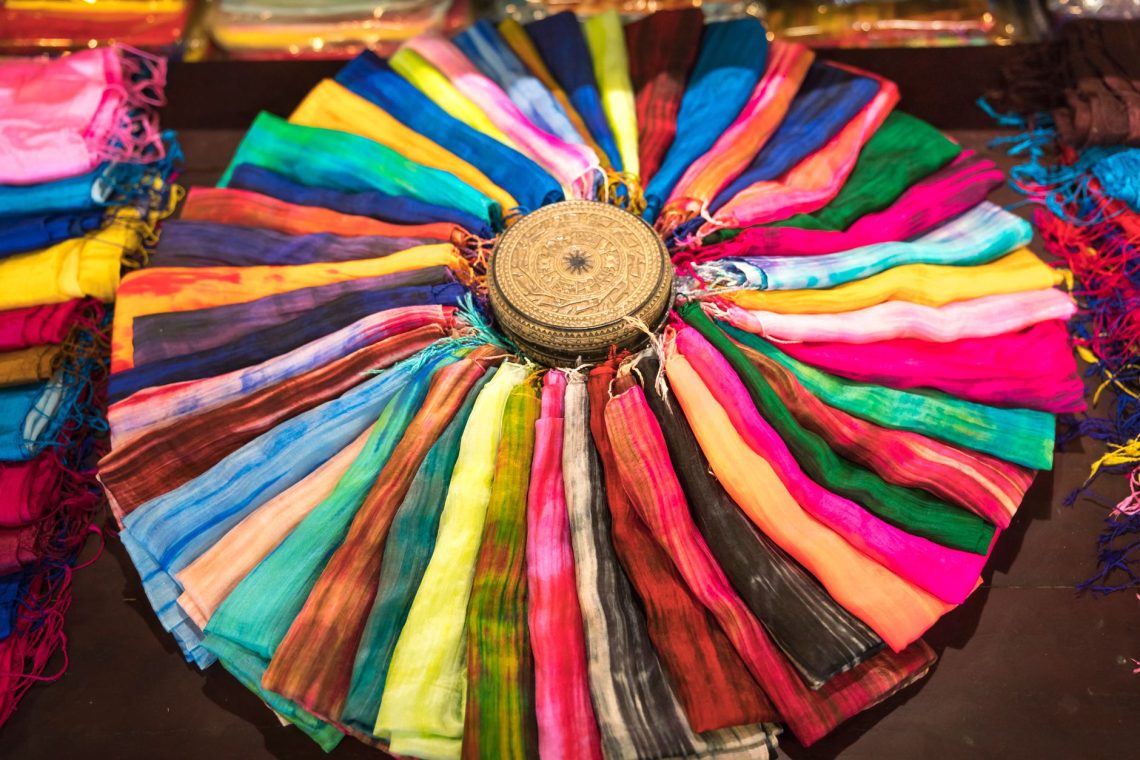
A scarf can be lovely in isolation and oddly difficult to wear. Perhaps the colour looked wonderful on a hanger, the print was a holiday purchase, or the generous length promised elegance but keeps catching on your coat buttons. None of that makes it a bad scarf. It simply means it needs a closer look before earning its place in your drawer.
Editing scarves is easier when you stop treating every unworn piece as a mistake. Some deserve another chance, some have a specific job, and others could be useful to somebody else. Set aside a quiet half-hour, bring your everyday coat and a couple of favourite tops, and work through the collection without rushing towards an empty drawer.
Start with the scarves you actually wear
Before spreading everything across the bed, pull out the scarves you reach for regularly. Look for what they share. They might be soft rather than crisp, narrow enough to tuck inside a collar, or mostly plain. Perhaps you like a colourful scarf, but only when the pattern has plenty of space around it.
These favourites provide better clues than an imagined wardrobe. If your daily outfit is a jumper and a practical coat, a delicate square may need a different role from a warm wool scarf. Neither is automatically more useful; usefulness depends on your clothes and how you spend your days.
Now gather the remaining scarves from hooks, bags and drawers. Group them loosely by purpose: warmth, lightweight layering, and decorative finishing touches. Comparing like with like helps you notice duplicates without assuming that every scarf must do the same job.
Find the reason each one stays unworn
Pick up one scarf at a time and finish this sentence: “I would wear this if…” Be specific. “If it were less scratchy” points to a different decision from “if I remembered it existed”. A practical obstacle may be fixable; a persistent dislike usually needs less negotiation.
- Comfort: does it itch, feel heavy, slip constantly or make your neck too warm?
- Proportion: is there too much fabric beneath your coat, or too little length for the way you tie it?
- Colour: do you enjoy it beside your face, with the clothes you own?
- Condition: are stains, pulls or damaged edges stopping you wearing it?
- Habit: is it hidden away, or associated with an outfit you no longer wear?
Try the scarf on before deciding that the colour is wrong. Lay it beside a familiar top in daylight, then fold it so a different part of the print shows. A busy border can look quite different from the centre. You are checking whether you enjoy the effect, rather than trying to obey a rigid colour rule.
Give promising scarves a proper outfit trial
A scarf draped over nightwear is being asked to do an unfair amount of work. Put on an ordinary outfit, including the neckline and outerwear you would realistically choose. Then try one simple arrangement: a loose loop, a flat fold inside the coat, or a small knot at the side.
Move around for a minute. Sit down, put your bag over your shoulder and fasten your coat. If the scarf needs continual adjusting, that matters. An arrangement that looks attractive while you stand still may be irritating on the walk to the shops.
For a printed scarf, choose one colour already in the fabric and repeat it in your top or jacket. For a thick scarf, try a less bulky fold rather than adding another loop. A small square may sit more comfortably with an open collar than a high neckline. Keep the experiment simple enough to repeat on a busy morning.
If you find an outfit you like, take a quick photograph for yourself. You have given the scarf a clear use, which is more helpful than putting it back with a vague promise to become more adventurous.
Keep the pieces with a clear purpose
Keep a scarf when it feels comfortable, works with your clothes and has a recognisable role. That might be your dependable winter layer, a light covering for breezy evenings, or the finishing touch for an occasional dress. A piece does not have to be worn every week to justify its space.
Be more questioning when several scarves fulfil precisely the same role. Try them with the same coat and compare comfort, ease and condition. Keep the ones you actively prefer, rather than retaining every slight variation because it might theoretically be useful.
Sentimental scarves deserve a separate decision. If one reminds you of a person or a particular trip, you can keep it as a keepsake without insisting that you wear it. Store it thoughtfully with other meaningful pieces, especially if seeing it among everyday accessories creates a small pang of guilt.
Restyle only when the new use suits you
Restyling works best when it solves a real problem. It becomes another form of clutter when every unwanted scarf is assigned an elaborate future project. Choose one or two possibilities that fit your existing habits.
Try a smaller accent
A lightweight square that feels fussy at your neck might work folded into a narrow band around a ponytail, secured over your usual hair tie. Alternatively, knot it loosely around a bag handle for a little colour. Check that the fabric will not trail, snag or rub against rough hardware.
Change the fold before changing the scarf
A long scarf can become less cumbersome when worn flat beneath a coat with the ends tucked in. A large square can be folded into a triangle and then rolled into a band. Adjusting how much fabric is visible may make an assertive print feel easier to wear.
Consider alterations carefully
If size is the only obstacle, ask a local alterations service whether shortening or narrowing it would leave a neat finish. Consider the placement of the pattern and the type of edge before cutting. Avoid turning a scarf you already dislike into a sewing task simply because the fabric seems too nice to release.
Donate scarves somebody else can enjoy
A scarf is a good candidate for donation when it is clean, wearable and no longer right for you. An unwanted gift or an expensive purchase can still belong in this group. Its original cost does not make it more comfortable or more compatible with your wardrobe.
Check the care label and clean it appropriately before passing it on. Inspect the whole length, including folded sections and fringes. Ask your chosen charity shop whether it accepts scarves and whether it has any condition requirements. Do not assume that a badly stained or damaged piece can be sold.
For scarves that are beyond wearing, check locally available textile collection arrangements and what they accept. Keep these separate from donations so that unusable items do not accidentally go into the same bag.
Make the final drawer easy to use
Return your keepers so you can see them without unravelling a pile. Fold scarves loosely in a shallow drawer, or use a smooth hanger for suitable everyday pieces. Avoid packing them tightly or hanging delicate fabric where it could catch. Follow any storage guidance on the care label.
Give uncertain scarves a small, defined trial group. Keep them visible beside your current accessories and try each with a complete outfit over the next few suitable occasions. If the same objection returns, accept the answer. The aim is a collection that helps you get dressed, with room for the scarves you are pleased to pick up.