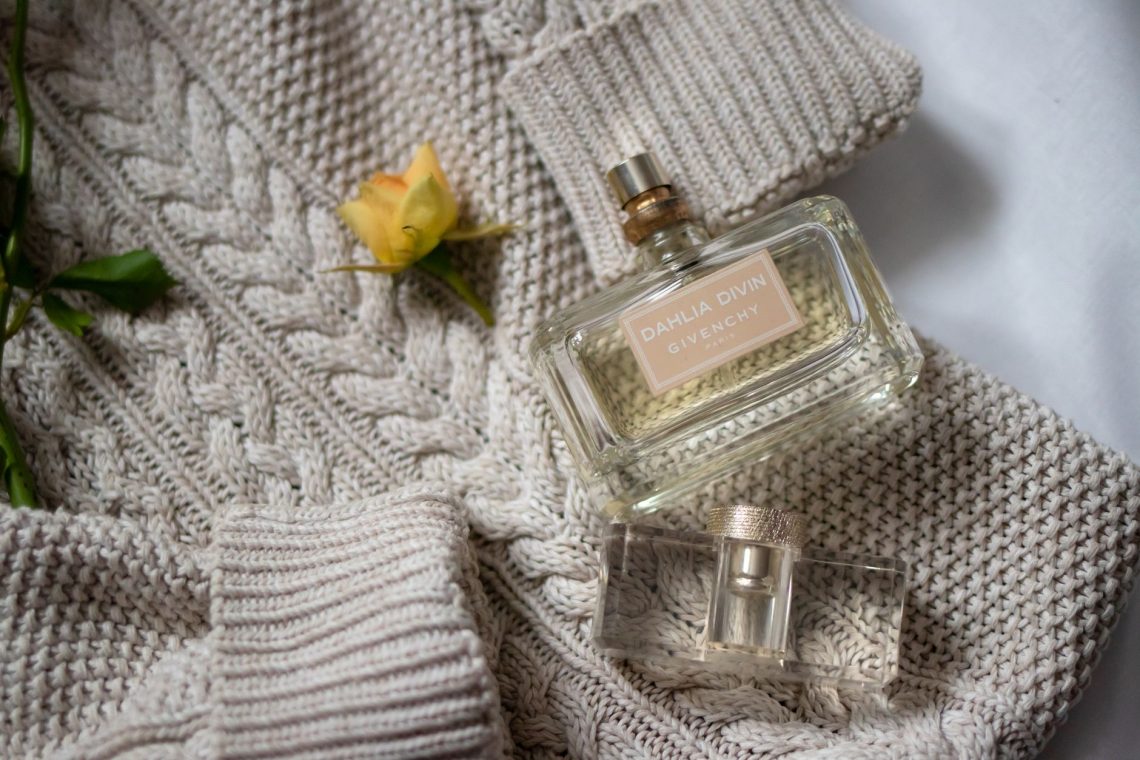
A cream jumper and a favourite fragrance make a lovely pairing until a stray spray lands on the cuff. Silk blouses, ivory cardigans and pale scarves leave little room for careless application: even a small mark can interrupt an otherwise polished outfit. The easiest way to protect them is to make perfume part of getting ready before delicate clothes come anywhere near the bottle.
The aim is simple: put scent on a small area of skin that your outfit will leave uncovered, allow it to dry, then keep that area away from the fabric. A little planning around sleeves, necklines and accessories is more useful than trying to rescue a mark afterwards.
Start with the outfit, then choose your placement
Before applying perfume, look at what will actually touch your skin. A low neckline leaves different options from a silk shirt buttoned to the throat. A short sleeve exposes the forearm, while a slouchy jumper may slide over the wrist whenever you move. Choose placement for the clothes you are wearing that day, rather than automatically spraying the same points.
Think beyond the garment itself. A scarf can brush the sides of your neck; a cardigan thrown over your shoulders can meet scented upper arms. If you are wearing a high neck and long sleeves, there may be no convenient exposed spot. It is perfectly reasonable to use less fragrance or leave it off for that outfit.
- Open neckline: consider a small application on exposed upper chest skin, away from the edge of the garment.
- Short sleeves: an exposed forearm may work if it will stay clear of cuffs and folded layers.
- Long sleeves or scarf: avoid wrists or neck areas that the fabric will repeatedly cover.
Apply perfume before putting on delicate clothes
Hang the silk blouse or pale knit somewhere away from your application area. Do not leave it draped over the chair beside you while you spray. Fine droplets can travel beyond the patch of skin you meant to scent, particularly if you wave the bottle around or spray into the air.
Apply to clean, dry skin while wearing something washable, or before dressing. Hold the bottle as directed on its packaging and aim deliberately at your chosen spot. Begin with a light application. You can assess the scent once it has settled; adding several sprays immediately creates more wet perfume to manage.
Let the area become fully dry before dressing. Do not use a fixed countdown as a guarantee: the amount applied and the formula make a difference. Look for any visible wetness and give it more time if necessary. Drying reduces the chance of an immediate wet transfer, but it does not make scented skin incapable of leaving residue on fabric.
Be selective about wrists and neck
Keep wrists clear when wearing long cuffs
Wrists are convenient perfume points, but they are awkward companions for silk cuffs and pale ribbing. Sleeves shift as you reach for a bag, wash your hands or pull on a coat. A cuff that sits safely above the wrist in front of the mirror may slide straight over it later.
If you choose an exposed forearm instead, check its position with your arms bent as well as relaxed. Avoid applying perfume just above the cuff and assuming that narrow gap will remain open. Do not rub fragranced wrists together, then smooth your jumper or adjust your blouse: that simply adds another route from skin to clothing.
Leave room around collars and scarves
With an open neckline, choose a modest patch of exposed skin with space between it and the fabric. Avoid spraying down into the neckline after dressing. Although the bottle may be aimed at skin, the collar and front of the garment sit directly in the path of drifting droplets.
The sides and back of the neck are less useful when you plan to wear a silk scarf, a high collar or a knit that hugs the nape. Behind the ears is not automatically a solution either; scarves, collars and hair can still touch that area. Follow the contact points of your actual outfit.
Skip the perfume cloud
Spraying a cloud and walking through it gives you little control over where the fragrance lands. If you are already dressed, the front of your outfit becomes part of the landing area. Spraying from further away is no promise of protection; it can spread droplets across a wider area.
Keep the application close to the intended skin area in accordance with the bottle instructions, with clothes out of the way. Avoid spraying perfume onto a brush or into your hair as a workaround for a covered neckline. Scented hair can rest on shoulders and collars, bringing the fragrance back into contact with the clothes you wanted to protect.
Treat oils and solid perfume with the same care
A rollerball or solid perfume offers more precise placement than a spray, but precision is not the same as freedom from marks. An oily or waxy finish can transfer when a cuff, scarf or neckline rubs against it. Use a small amount on an exposed area and let the product settle according to its instructions.
Keep your fingertips clean after applying a solid fragrance. It is easy to touch the pot, then fasten silk buttons or tug a cream sleeve into place. If your usual routine includes body lotion, let that absorb before applying perfume and dressing too. A rich layer of lotion underneath fragrance can leave skin feeling coated even when there is no visible spray left.
Make touch-ups a separate step
Reapplying while dressed deserves the same care as the first application. Move away from hanging clothes and place scarves or removable layers somewhere separate. Expose the intended skin area fully rather than spraying beneath a sleeve or through a gap in a collar.
If you cannot reach a suitable area without risking the fabric, wait. A quick spray inside your jumper is difficult to control, and a fresh application to the neck immediately before wrapping on a pale scarf defeats the original preparation. Carrying a smaller bottle changes convenience, not the need for careful placement.
If perfume reaches the fabric
Stop applying it and resist rubbing the spot. Check the garment’s care label before adding water, soap or any stain treatment. Silk and knitwear vary in fibre, dye and finish, so a household remedy that suits one item may damage another. Pale fabric can also make the edge of a wet patch conspicuous.
For a dry-clean-only piece, seek advice from a professional cleaner and explain that perfume caused the mark. For washable clothing, follow the care instructions and use only an appropriate treatment, checking it on a hidden area first. Avoid adding heat while you are deciding what to do.
A simple getting-ready routine
- Check the neckline, sleeves and accessories for places that will touch scented skin.
- Move delicate garments away from the spray area.
- Apply a little perfume to a suitable exposed patch of clean, dry skin.
- Allow it to dry fully, then dress with clean hands.
- Check the fit in motion before adding your scarf, cardigan or coat.
You do not need to scent every traditional pulse point for fragrance to be part of your outfit. One considered placement can fit your clothes far better than a familiar sequence of sprays. Keep the bottle away from the fabric, leave space around its edges and let the garment guide your routine.