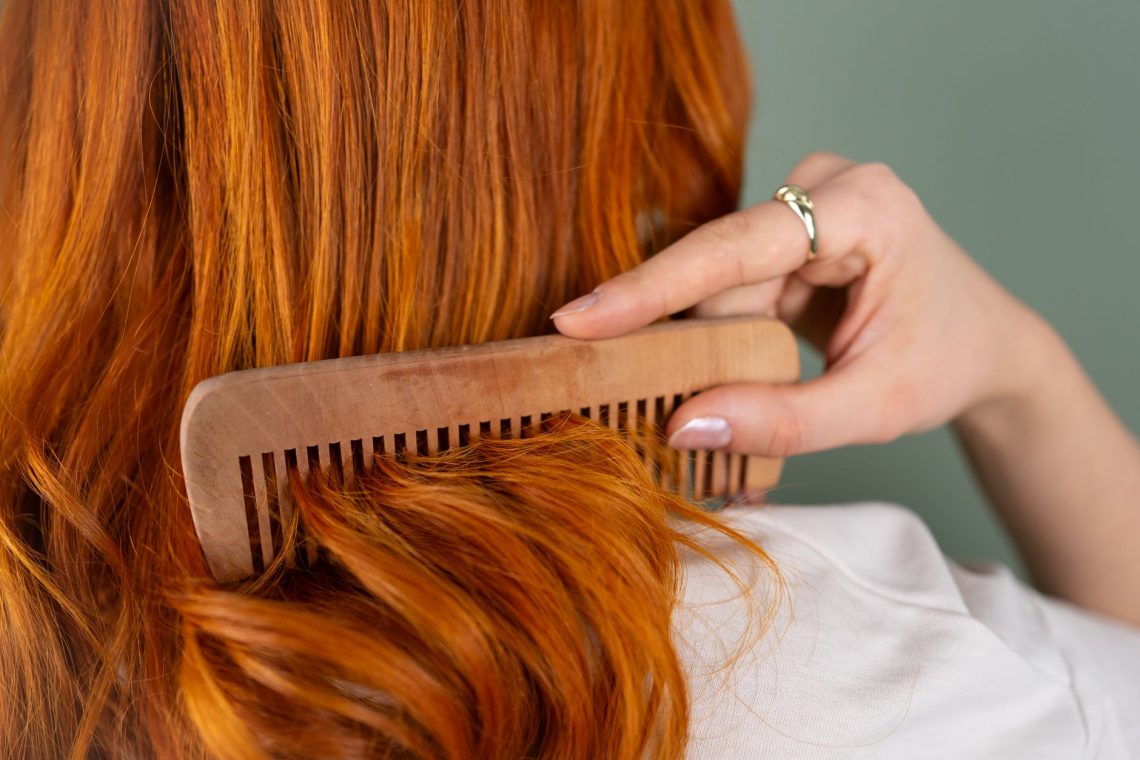
A knot in curly or wavy hair rarely improves when you pull harder. What begins as a small snag can become a tug of war, especially when you are rushing through the back of your head. A gentler approach starts with choosing the right moment to detangle, giving strands enough slip and working through small sections without forcing a tool through resistance.
There is no single wet-or-dry rule that suits every curl pattern, strand thickness and styling routine. The useful question is this: in which condition can you separate your hair with the least pulling? Here is how to find that point and build a patient routine around it.
Should you detangle curly or wavy hair wet or dry?
For many people with curls, detangling wet hair with conditioner is the easiest option. Water helps you distribute the conditioner, while its slippery feel lets strands move past one another. This can be particularly helpful when curls have wrapped together or formed knots near the ends.
Wet hair still needs careful handling. Being soaked does not make it safe to yank, and a brush should never be used to drag a stubborn knot down the length. Think of conditioner as help with movement, rather than permission to use more force.
Some waves, particularly loose or fine waves, are easier to separate gently before washing. Others become fluffy and tangled when brushed dry. If your dry hair catches, stretches or needs repeated strokes, stop and try dampening a section and adding a little conditioner instead.
Choose by how your hair responds, rather than by its curl label alone. A method that works on loose waves may be uncomfortable on tighter curls, and two people with similar-looking hair can prefer different routines.
When a little dry detangling makes sense
Before washing, use your fingers to lift apart obvious tangles if they separate easily. This is useful for freeing hair caught around an accessory or loosening a few crossed strands. You do not need to brush your whole head until it is smooth. If you meet a compact knot, leave it for the conditioned stage.
When to start with wet, conditioned hair
If your hair tangles into clusters, feels rough when dry or resists gentle finger separation, begin in the shower or over a basin. Wet it thoroughly and apply conditioner before attempting a full detangle. Damp hair with a suitable leave-in can also work between washes, provided it has enough slip and you are not repeatedly soaking and brushing the same area.
Gather what you need before you begin
Have your conditioner, sectioning clips and chosen tool within reach. Fingers are useful for identifying knots; a wide-toothed comb or flexible detangling brush can follow once the larger tangles are open. Choose a tool with smooth teeth or bristles, and check for rough seams or damage that could catch hair.
You will also want enough time to pause. Detangling while standing under running water can make you rush, so consider turning the water off while you work. If a section becomes less slippery, wet it again or add a little more conditioner rather than trying to finish it by force.
A patient, step-by-step detangling method
- Divide your hair into manageable sections. Start with four loose sections, then make them smaller wherever your hair is dense or especially tangled. Clip them without pulling tightly at the roots. Keeping finished and unfinished hair apart makes it easier to work methodically.
- Coat the section with conditioner. Smooth it through the lengths and ends, following the product directions. Gently squeeze it into areas that feel dry or resistant. The section should feel slippery enough for strands to slide, rather than sticky or barely coated.
- Find the ends first. Hold the section above the area you are working on, without winding it tightly around your fingers. Use your other hand to separate the lowest tangles. Supporting the hair helps limit pulling at your scalp, but it does not make forceful brushing safe.
- Open knots with your fingers. Feel for the strands forming the tangle and ease small pieces away from its edges. Avoid pulling the whole knot downwards. Sometimes turning the section over reveals a loose strand that you could not see from the front.
- Introduce your comb or brush gently. Once the ends are free, make short, controlled passes through that lower portion. Move your starting point a little higher only when the tool passes comfortably. Keep progressing upwards until you can move through the section without catching.
- Keep the finished section separate. Lay it aside, clip it loosely or make a loose twist if that suits your hair. Move to the next section and repeat. Rinse according to your conditioner instructions, handling the lengths gently so they do not immediately tangle again.
You do not need a fixed number of brush strokes. Once a section is free of tangles, stop. Repeatedly brushing it for the sake of an extra-smooth finish adds handling without helping you remove another knot.
What to do when a knot will not move
Put the brush down. Isolate the knot from the surrounding hair and add a little conditioner directly to it. Support the section, then gently loosen the outside strands with your fingertips. Work in good light if possible, and take a break if your hands become tired or you feel tempted to pull.
A tight knot may need several small attempts. Do not scrape at it with your nails or use sharp household objects to prise it apart. If a single strand has tied into a tiny knot that will not release, avoid snapping it off; a hairdresser can advise on trimming it cleanly.
For a large matted area, especially one close to the scalp, seek help from a hairdresser experienced in detangling. Tell them that preserving length is your priority and discuss the approach before they begin. Continuing through pain is a reason to stop, not a necessary part of the process.
Adjust the method for your waves or curls
For fine waves: use small amounts of conditioner to start and add more where needed. Keep sections loose and avoid gripping them tightly. If a brush disrupts your waves, reserve full detangling for wash time and use your fingers for small tangles between washes.
For dense curls: smaller sections can make the interior easier to reach. Check underneath each section rather than smoothing only its surface. Apply conditioner where you actually feel resistance, including the nape, which can be easy to miss.
For lightened or frequently heat-styled lengths: take extra care with areas that feel fragile. Use your fingers first, keep tool passes gentle and stop if strands appear to be breaking. A trim may help with damaged ends that repeatedly catch, but detangling cannot repair a split strand.
Help prevent the next tangle
After washing, squeeze out excess water gently rather than rubbing your lengths together with a towel. Apply your usual leave-in or styling product as directed, then let your curls or waves settle without repeatedly running your hands through them.
At bedtime, arrange your hair loosely in a way that feels comfortable and avoids tight tension. A smooth pillowcase or suitable hair covering may help reduce friction. Remove jewellery that catches at the nape, and take care when freeing hair from collars, scarves and bag straps.
How often you detangle depends on your hair and routine. Aim to address tangles before they become compact, without brushing every time a curl looks untidy. The best cue is resistance: pause, add slip, reduce the section size and start again at the ends. Progress should feel gentle, even when it is slow.