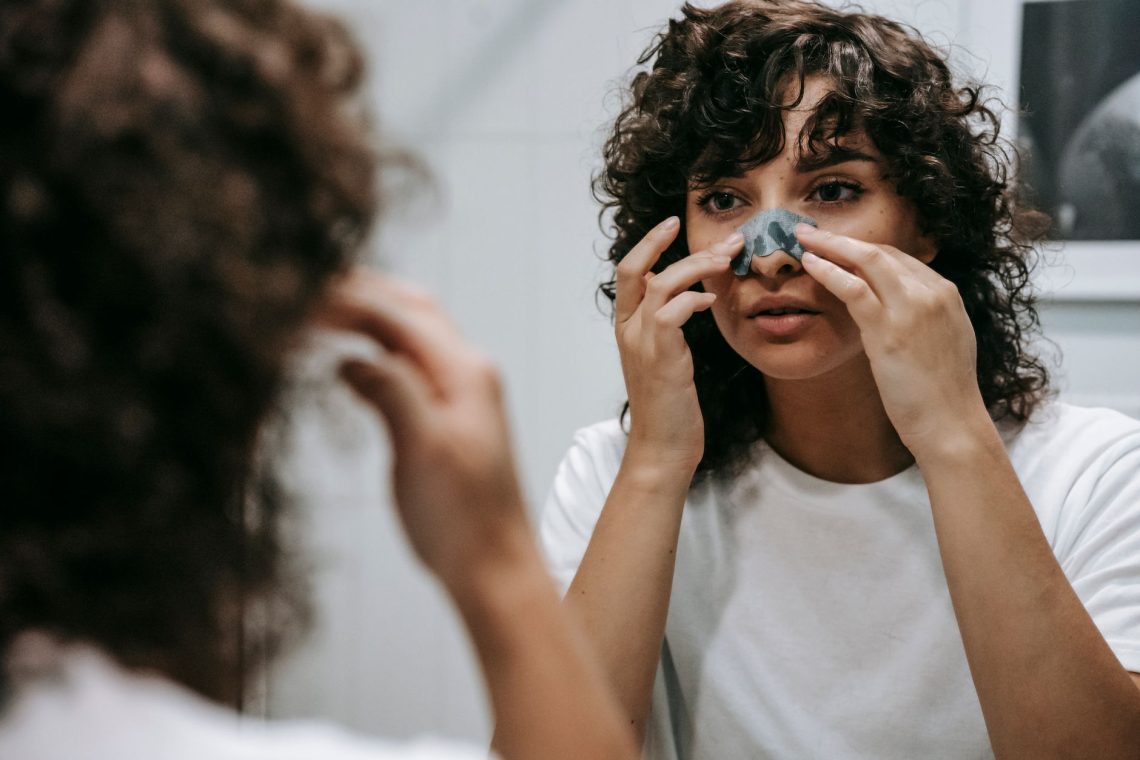
The skin beside your nostrils can feel tight even when the rest of your face feels comfortable. A little flaking may catch around the creases, foundation can cling to it, and another wash can leave the area feeling even drier. It is tempting to scrub away the loose skin, but a gentler approach is usually the more comfortable place to start.
Think of this as a small adjustment to your beauty routine: less rubbing, fewer products on the affected patch and a little more attention to how you cleanse and moisturise. The aim is comfortable skin, rather than an instantly smooth finish at any cost.
Start by noticing what touches the area
Before adding anything new, consider the everyday contact the skin around your nose receives. There is cleanser, of course, but also tissues, towels, make-up brushes and perhaps a favourite exfoliating toner. A routine that feels fine across your cheeks may feel quite different in the folds beside your nostrils.
You do not need to work out the exact reason for every flake to make your routine gentler. Start by noticing whether the tight feeling appears after washing, removing make-up, blowing your nose or applying a particular product. That gives you a useful place to make one change.
- Check whether you rub the creases repeatedly when cleansing.
- Notice whether a scrub, toner or other treatment leaves the area stinging.
- Look at how often you wipe your nose during the day.
- Consider whether you have recently introduced several products together.
Keep your observations simple. Changing everything at once makes it harder to tell what feels comfortable and what does not.
Cleanse without chasing a squeaky finish
Use lukewarm water and a gentle cleanser that you already find comfortable. Massage it lightly with your fingertips, paying attention to the sides of the nose without digging your nails into the creases. There is no need to keep going over the same patch until every visible flake disappears.
Rinse carefully so cleanser does not sit in the folds, then pat with a soft, clean towel. Leave out cleansing brushes, rough flannels and facial scrubs on the tight area. Even a soft cloth can feel abrasive if you use it with pressure or make repeated passes.
If your evening cleanse removes make-up and sunscreen comfortably, avoid adding extra cleansing steps simply because your routine normally includes them. In the morning, consider whether a gentle rinse feels sufficient, rather than automatically repeating a thorough evening routine.
Take care with make-up removal
Give your usual make-up remover time to loosen the product before wiping. If you use cotton pads, keep the pressure light and avoid dragging a nearly dry pad across the nostrils. Follow the remover’s directions, including rinsing where advised. Persistent rubbing to remove one last trace of foundation can leave the area feeling sore.
Make moisturising a precise, gentle step
After cleansing, apply a modest amount of moisturiser while your skin is still slightly damp. Use a fingertip to spread it gently over the outside edges of the nostrils and into the nearby facial creases. The goal is a light, comfortable layer, rather than a thick deposit sitting in the fold.
A plain, fragrance-free cream is a sensible starting point if your usual scented lotion feels uncomfortable. You do not need a separate nose product or an elaborate collection of ingredients. Choose something intended for facial skin, follow its directions and stop using it if it causes discomfort.
If the area feels dry again later, try a small additional amount on clean skin. Avoid repeatedly rubbing cream through the same patch throughout the day. Keep products on the external skin rather than pushing them inside your nostrils.
Introduce unfamiliar products slowly
When trying a new moisturiser, follow any patch-testing guidance on the packaging and begin on a small area. Do not introduce a new cleanser, cream and treatment together. Familiar products that already feel comfortable are often the simplest choice while you pare back your routine.
Give exfoliation and strong treatments a break
Visible flakes can make exfoliation seem like the obvious next step. Resist picking, peeling or buffing them away. Pulling at a loose edge may leave the skin underneath feeling tender, and scrubbing can turn a small cosmetic concern into a much more uncomfortable patch.
Temporarily keep exfoliating acids, scrubs, retinol products and strong spot treatments away from the tight or flaky area. Take care when applying them elsewhere, too: a generous sweep across your face can carry product into the creases beside your nose without you noticing.
Once the skin feels comfortable again, reintroduce optional treatments gradually and according to their instructions. There is no need to make this little patch tolerate every product you enjoy using on the rest of your face. You can leave it out of an exfoliating step.
Reduce friction from tissues and towels
If you are wiping your nose frequently, small changes in technique are worth making. Choose soft tissues and blot gently where possible. Avoid a brisk sideways rub across the same patch, especially when the skin already feels tight.
With towels, use a light pat rather than polishing your face dry. Keep a clean, soft face towel to hand so you are not reaching for whichever rough cloth is nearest. The same principle applies after a shower: gentle contact is enough.
You can also notice habits that happen without much thought, such as rubbing the side of your nose while working or resting your face against your hand. You do not need to monitor every movement; simply avoid unnecessary touching when the area feels tender.
Adjust make-up instead of building coverage
Foundation often makes flakes more noticeable when it gathers around their edges. Begin with moisturised skin and allow the cream to settle before applying make-up. Then use less base around the nose than you might normally reach for.
Press on a thin layer with a clean fingertip or gently dab with your usual clean applicator. Repeated buffing can disturb loose skin. If the first layer catches, adding more foundation or powder is unlikely to create the smooth result you want.
- Keep heavy powder away from visibly dry patches.
- Use concealer sparingly, only where you want coverage.
- Skip products that sting when applied to the area.
- Leave the patch bare if make-up feels uncomfortable.
Continue your usual daytime sun protection, choosing a facial sunscreen you find comfortable and following its application instructions. Avoid vigorous rubbing around the nose when applying it.
Keep the routine easy to repeat
A useful evening routine can be as straightforward as gentle make-up removal where needed, careful cleansing and moisturiser. In the morning, cleanse lightly as needed, moisturise and apply sun protection. Consistency is easier when you are not juggling several new steps or trying to remove every flake before leaving the house.
Keep your expectations modest: the immediate aim is to avoid further discomfort. If the area feels worse after a product or step, stop and reassess rather than assuming you need to push through the sensation.
Know when a beauty routine needs outside advice
Not every flaky patch is simply dryness. If the skin keeps becoming sore, repeatedly cracks or bleeds, develops swelling or weeping, or does not settle with gentle care, ask a pharmacist or GP for advice. Mention any products you have recently started using and whether the problem returns in the same place.
For everyday cosmetic care, keep the focus on a light touch: cleanse gently, moisturise comfortably and give the skin a break from friction and unnecessary treatments. You can return to a more involved routine when the area feels ready, without rushing to scrub away its texture.