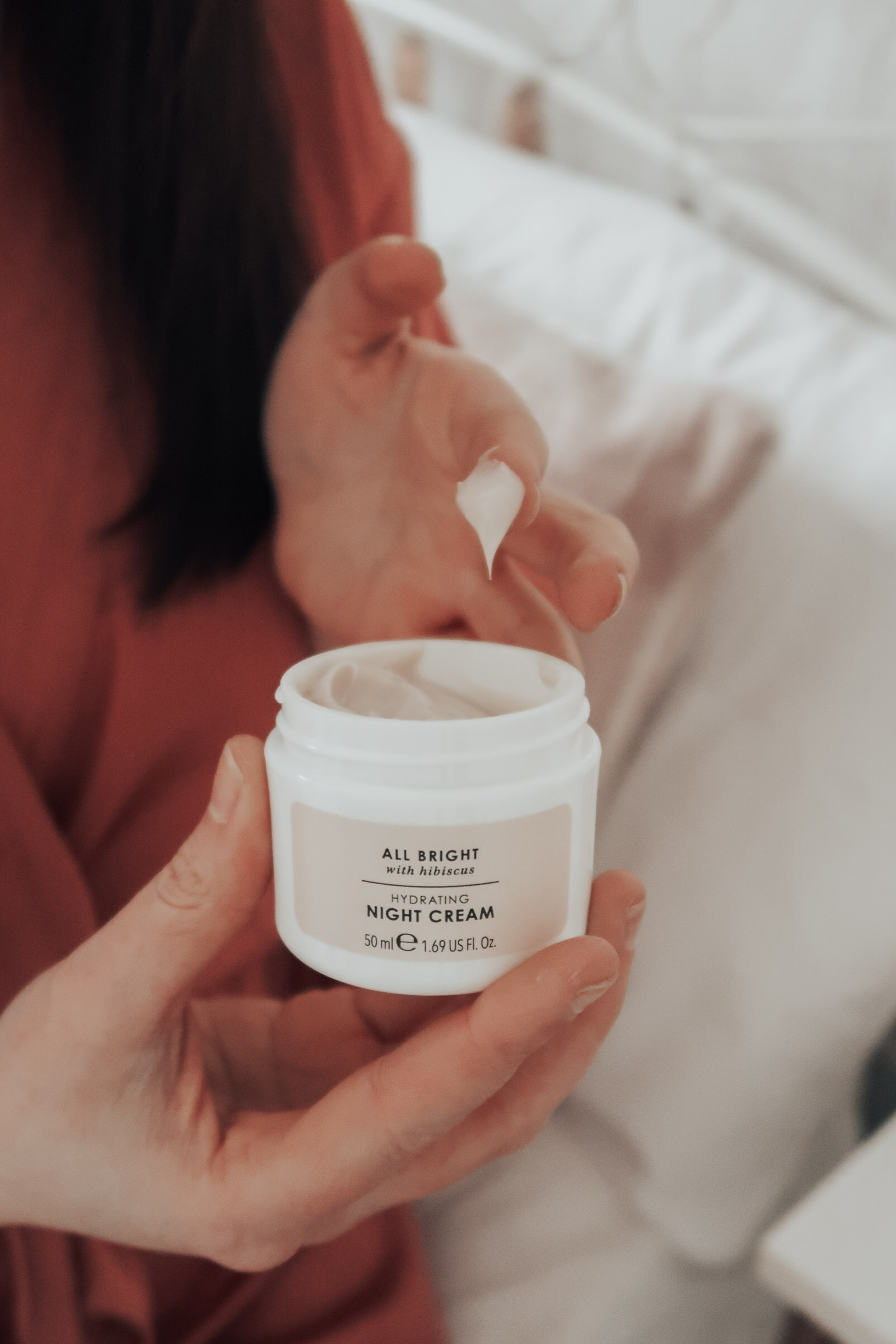
Before establishing an evening skincare routine, I never really thought about how useful a night cream could be. We hear so much about morning skincare that the evening routine can feel like an afterthought. I used to put far more thought into what went under my makeup than what I applied before bed.
Yet the end of the day is a lovely opportunity to give your skin some attention. Once makeup, sunscreen and the day’s grime have been washed away, moisturising is a simple way to leave your face feeling comfortable. For me, that is the appeal of a night cream: a nourishing final step that makes an evening routine feel complete.
You do not need an elaborate routine or a shelf full of products to enjoy that benefit. A gentle cleanse and a suitable moisturiser are a perfectly sensible starting point. Here are my reasons for making room for a night cream, plus how to choose and use one without overcomplicating things.

What makes a night cream different?
Night cream is still moisturiser. Many formulas have a richer texture than the lotion you might choose for daytime, but that is not a rule: some are lightweight, while some day creams are quite substantial. The right texture depends on your skin and preferences, rather than the name on the jar.
One advantage of applying a richer cream in the evening is that you do not have to think about how it sits under foundation. You can choose the finish that feels comfortable, whether that is a soft cream or a lighter lotion. It should not need to leave your face feeling heavily coated to be useful.
A separate night cream is also optional. If your usual moisturiser suits your skin and its directions allow evening use, it may already do the job. I see night cream as a useful way to make moisturising a habit, rather than a compulsory extra purchase.
1) It provides extra hydration
That feeling of tightness after cleansing is a good reason to pay attention to your moisturising step. A night cream can help skin feel softer and more comfortable, particularly when your daytime lotion feels a little too light by bedtime.
When reading ingredient lists, you may see glycerin or hyaluronic acid in hydrating formulas. You do not need to collect every fashionable ingredient; start with a product whose texture and overall formula suit you. Vitamins and an impressive sounding label are not, by themselves, reasons to choose one cream over another.
Try applying your cream after gently patting your face with a towel, while the skin is still slightly damp, unless the product instructions say otherwise. There is no need to leave your face dripping wet. Spread a small amount evenly, then assess whether any areas still feel uncomfortable before adding more.
2) It can help skin feel calmer
After a day of makeup, changing temperatures and time outdoors, a gentle evening routine can feel especially welcome. The aim is comfortable skin, so avoid treating cleansing as a scrubbing session. Use lukewarm water, remove your cleanser properly and pat rather than rub with your towel.
If your face is feeling sensitive, keep your choice straightforward. A fragrance-free moisturiser may be a sensible starting point, and there is no need for your night cream to double as an exfoliating treatment. A tingling sensation is not something you need to chase.
Introduce one new product at a time so it is easier to notice what agrees with your skin. Follow any patch-testing directions on the packaging and stop using a product if it causes irritation. Persistent redness or discomfort deserves advice from a qualified professional, rather than another layer of cream.
3) It helps with dry-feeling skin
This is probably the most obvious reason to reach for a nourishing night cream. If your cheeks feel rough or your skin feels tight by the evening, a richer texture may be more comfortable than your usual light lotion. Ingredients such as ceramides, squalane or shea butter are worth looking out for in moisturising formulas.
You can also adjust where you apply it. Combination skin does not necessarily need the same amount everywhere: try a thinner layer across the forehead and nose, with a little more on dry cheeks. The goal is to respond to how your skin feels, rather than cover every area with an equally thick layer.
Seasonal changes are another reason to reassess your routine. If your usual cream feels insufficient when the heating is on, you might prefer something richer for a while. Conversely, if it feels heavy during warmer weather, use less or switch to a lighter formula. You do not have to stick with one texture all year.

4) It gives blemish-prone skin a moisturising step
Having blemishes does not mean you have to skip moisturiser. If you dislike the feel of a thick cream, a lightweight lotion or gel-cream may be a better evening option. Look for a formula intended for your skin type, and consider products labelled non-comedogenic, while remembering that no label guarantees a perfect match.
It is important to keep expectations realistic here. An ordinary night cream is not an acne treatment, and a richer texture will not automatically make spots disappear. Its role in the routine is moisturising, so choose it for comfort rather than promises of clear skin by morning.
If you already use a blemish treatment, check its directions before adding products containing exfoliating acids or other active ingredients. A simple moisturiser can make the routine easier to manage. For persistent or painful acne, speak to a pharmacist or GP about suitable treatment instead of repeatedly changing creams.
5) It helps skin feel ready for the next day
I know we are talking about evening skincare, but part of the appeal is how your face feels the following morning. When skin feels comfortably moisturised, getting ready can be a nicer experience. It is a small bit of preparation that fits neatly into the end of the day.
That does not mean your night cream replaces your morning routine. Assess what your skin needs when you wake up, apply daytime moisturiser if needed and use suitable sun protection. There is no need to pile on extra layers simply because you used a richer cream the night before.
How to fit night cream into your routine
- Cleanse first. Remove makeup and sunscreen with a cleanser suited to your skin, following its directions.
- Keep additional steps purposeful. If you use a serum or treatment, follow its instructions for application order and whether skin should be dry.
- Apply a modest amount of cream. Smooth it gently over your face, avoiding the immediate eye area unless the product is suitable there. Include your neck if comfortable.
- Let the routine settle. Apply it while getting ready for bed so you have time to notice whether you need less or more next time.

Finding a night cream you enjoy using
Before buying, think about your skin type, the texture you enjoy and what your existing moisturiser is missing. Dry skin may welcome a richer cream; oily skin may prefer a lighter lotion. Recommendations can help you find options, but someone else’s favourite will not necessarily be yours.
I have tried different night creams without finding one permanent soulmate, and that is fine. The useful part is having a manageable evening habit. Choose something comfortable, give yourself time to judge how it fits your routine, and keep the focus on moisturising rather than building the longest possible skincare line-up.