When formal invitations are rare, occasion shoes can become an awkward purchase: too special for ordinary days, yet somehow wrong for the next outfit. The answer is to start with the clothes you actually wear and choose a pair that feels comfortable beyond the bedroom mirror. A useful formal shoe collection can be very small, sometimes just one dependable pair.
Think of this as building a small shoe wardrobe around a reliable starting point. Colour, shape and fit should work together, so you can get dressed for a wedding, dinner or ceremony without buying footwear from scratch each time.
Start with the occasions you really attend
Before browsing shoes, picture your likely invitations. A wedding with drinks on a lawn asks different things of footwear from a restaurant dinner. A ceremony involving stairs, pavements and standing around needs more practical thought than an evening spent mostly seated.
Check the dress code first. Your most versatile shoe still needs to suit the event, and a very formal invitation may require something outside your usual wardrobe. Avoid buying for every possible scenario, though. Build around the occasions that genuinely recur in your life.
Write a short list of what your shoes need to do:
- Work with the formal clothes you already own.
- Stay secure while walking and standing.
- Suit the surfaces and weather you are likely to encounter.
- Feel polished enough for your usual invitations.
If you already own something suitable, try it on before deciding you need a replacement. A clean, a polish or a repair may make an overlooked pair useful again.
Choose colour with actual outfits beside you
There is no single neutral that works equally well for everyone. Black is useful when your occasion wardrobe includes black tailoring, dark dresses or sharp contrasts. It can feel quite strong against pale, delicate fabrics, so judge the whole outfit rather than assuming it always disappears.
Deep brown may sit comfortably with cream, warm navy, olive and earthy colours. Burgundy offers another possibility alongside navy, charcoal and some pinks. Neither needs to match your clothing exactly; the aim is a combination that looks deliberate.
Consider your own version of a skin-tone neutral
If you want shoes that draw less attention with bare legs, look for a shade close to your skin tone. That might be deep chocolate, caramel, tan, rose-brown or pale beige. A label saying “nude” tells you little about whether the colour works on you.
Try the shade beside both your skin and your clothes. A colour that looks unobtrusive with one dress may seem conspicuously orange or grey with another. If you usually wear dark tights or trousers, a darker shoe may serve you better.
Keep metallics quiet if versatility matters
A muted metallic can work with several occasion outfits, especially when your jewellery already follows a similar tone. Brushed pewter or soft bronze may be easier to repeat than a bright, mirror-like finish. Hold the shoes beside your clothes and check them in daylight as well as indoor lighting.
As a practical buying rule, ask a prospective pair to work with three outfits you could realistically wear. If every combination requires another purchase, the shoes are not doing much useful work.
Pick the shape you can comfortably wear
Heel height is a preference, not a measure of how dressed up you are. A neat flat, polished lace-up or simple loafer can look considered with suitable tailoring. A low heel may offer the line you want with a dress while feeling easier to manage than a higher style.
For heels, consider the base as well as the height. A broader heel offers more contact with the ground, but the shoe still needs to feel balanced on your foot. Narrow heels can be awkward on grass or between paving stones. Think about the route from your transport to your seat, not just the venue photographs.
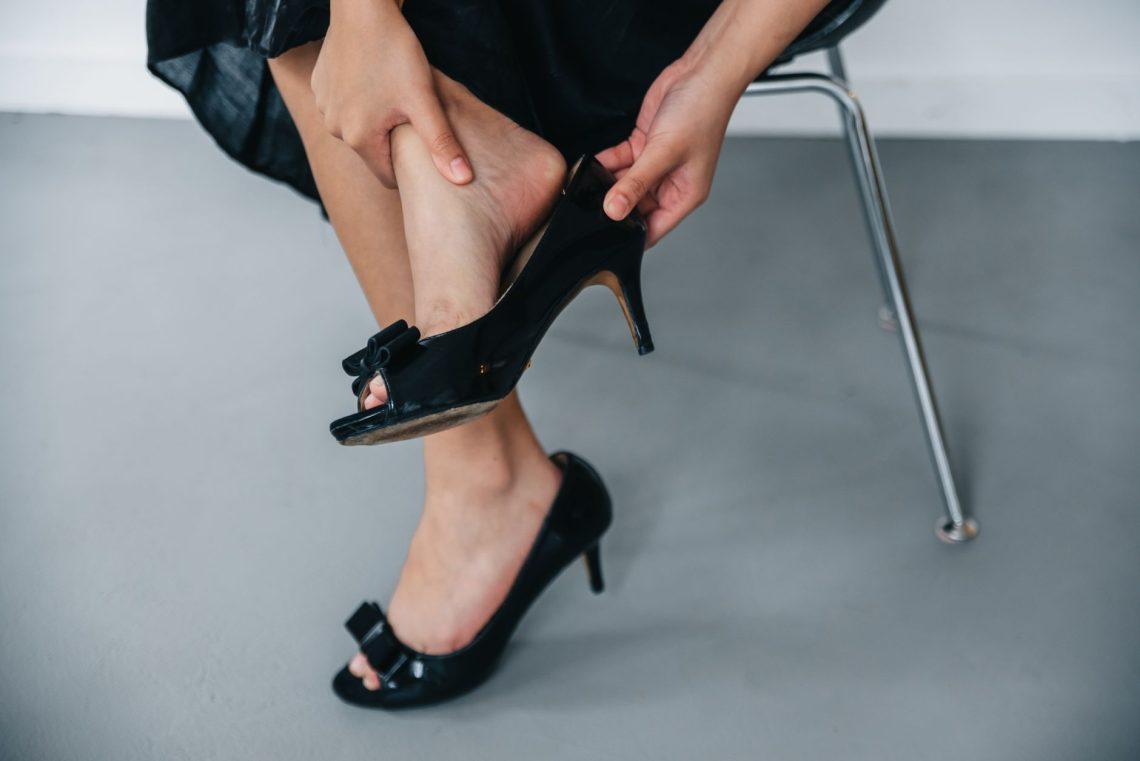
Look at the toe shape honestly. A pointed shoe should have enough space for your toes behind its tapered end. An almond or softly squared toe may feel easier, depending on your foot. A delicate appearance is of little use if you spend the evening trying to relieve pressure.
Make the fitting more demanding than a quick try-on
Try shoes with the socks, tights or hosiery you intend to wear. If you use an insole or orthotic, bring it along and check that the shoe still holds your foot properly. Fit both feet, and choose a time when you have been moving around rather than relying only on a brief morning fitting.
Fasten the shoes as you would for the event, then walk, turn and stand still. Check whether your heel lifts, your toes grip to keep the shoe on, or a strap presses into your foot. With a slingback, notice whether the strap stays in place without being overtightened.
- Your toes should have room without feeling squeezed together.
- Your heel should feel secure without rubbing.
- Your foot should not slide towards the front.
- You should be able to walk naturally rather than shorten every step.
Do not buy a painful pair on the promise that it will stretch into comfort. Materials may soften with wear, but that is different from correcting the wrong size or shape. Check the returns conditions before trying shoes at home, and keep them on clean indoor flooring while deciding.
Let the finish provide the formality
When one pair needs to work hard, a simple finish is usually easier to combine than prominent decoration. Smooth leather, understated stitching and discreet fastenings can sit comfortably beside several fabrics. Patent offers a glossier effect, while suede brings a softer appearance but needs care around wet conditions.
Pay attention to the small details: a clean heel covering, tidy edges and a fastening you can manage easily. Elaborate bows, oversized buckles and crystals can be lovely, but they become a strong part of every outfit. Choose them because they fit your wardrobe, rather than because occasion shoes seem obliged to sparkle.
Your bag does not have to match exactly. Repeating a colour elsewhere, or keeping both accessories similarly understated, can make an outfit feel coherent without searching for an identical shade.
Add a second pair only for a clear reason
Wear your first pair before deciding what is missing. If it handles your dinners, ceremonies and indoor celebrations comfortably, you may already have enough. A small collection succeeds when its contents earn their space.
A second pair makes sense when it solves a repeated problem. You might need a closed shoe for cooler weather alongside an existing sandal, or a smart flat for events involving substantial walking. If your first pair is dark and your occasion clothes are often pale, a softer neutral could broaden your options.
Choose a difference that changes what you can wear or where you can comfortably go. Two almost identical pairs in neighbouring shades may leave the same practical gap.
Rehearse the outfit, then store the shoes well
Before the invitation arrives, try your shoes with a complete outfit, including hosiery and the correct trouser or skirt length. Walk around indoors and sit down. Notice whether a hem catches, a strap rubs or the shoes feel different after standing for a while.
After wearing, remove surface dirt using a method appropriate to the material and let the shoes dry naturally if damp. Store them clean and dry, with tissue or suitable supports to help preserve their shape. Check heel tips, soles and fastenings before the next event so repairs are not a last-minute scramble.
The most useful formal pair is the one you can picture wearing again, with clothes already waiting in your wardrobe. Get the colour and comfort right, and an occasional invitation becomes much easier to dress for.