A long coat over a dress can look beautifully considered until the first flight of stairs, wet pavement or hurried walk to the station. Then a trailing skirt becomes something to manage. The answer is not always a shorter coat or a higher heel. It is choosing two lengths that work together, with enough clearance for the way you actually move.
Start with the dress, the shoes and the ground beneath them. Your coat should frame that combination without catching the skirt, pressing it towards the pavement or making you shorten every step. Here is how to get the proportions right while keeping both hems clear.
Set the dress length with your shoes on
Try the dress with the exact footwear you intend to wear. A skirt that clears the floor in heeled boots may brush it in ballet flats, while a soft dress can settle differently once you have walked around. Stand naturally rather than stretching upwards to make the hem look better.
For everyday walking, the longest part of the dress needs visible space beneath it. Check the back as well as the front, especially with bias cuts, uneven hems and dresses that dip behind the heels. If fabric touches the floor while you are standing still, it will not become easier to handle outdoors.
Alter the dress for the shoes you wear most often. If you alternate between very different heel heights, one hem length may not suit both. Choose your main pairing, then reserve the other shoes for a different dress rather than relying on posture or a belt to keep fabric raised.
Choose a length combination with a clear intention
A coat that covers the dress
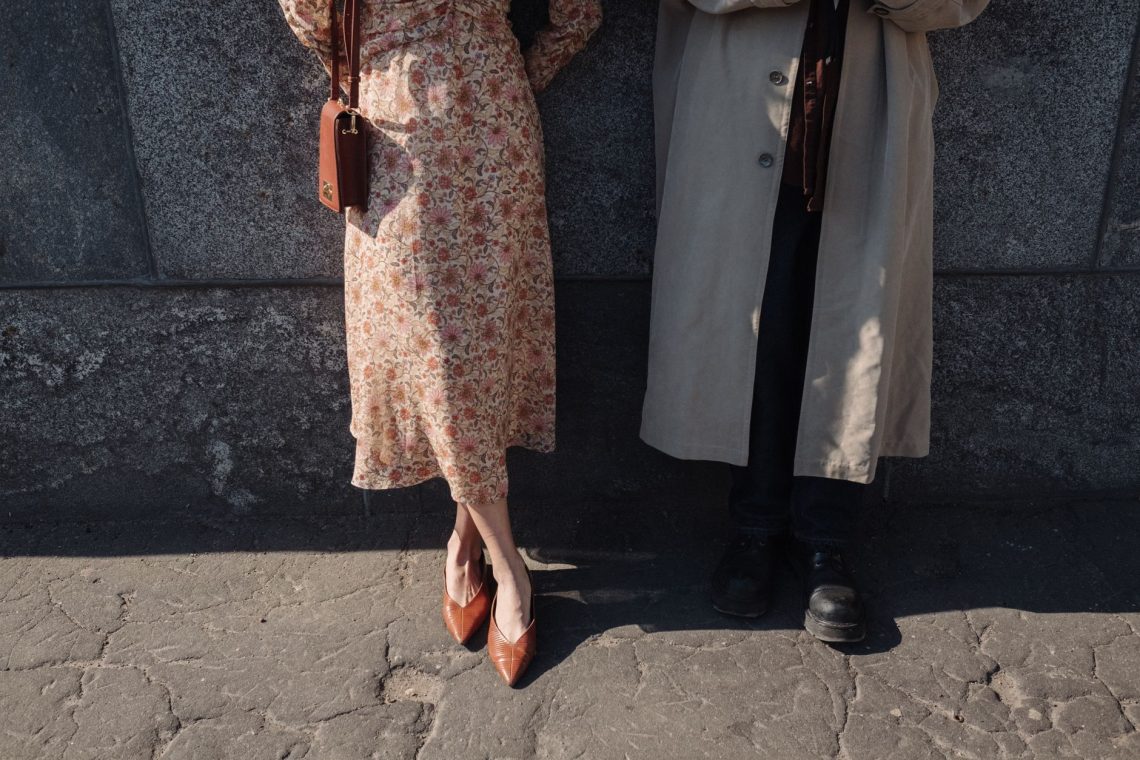
A dress finishing above the coat hem gives a clean outline, particularly with knee-length and shorter midi styles. The coat becomes the visible outer shape, so check its own clearance carefully. A long coat still needs to stay above the ground when you step off a kerb or sit down.
This pairing works especially well when the dress is relatively slim beneath a straight or gently flared coat. Leave room for the skirt to move without bunching. If the coat pulls across your thighs when fastened, extra length will not solve the problem: you need more ease through the lower half.
A dress that shows beneath the coat
A visible section of dress can look deliberate and feel easier to walk in than two hems ending together. Try a calf-length coat over a longer midi, or an ankle-skimming dress beneath a coat that stops higher on the calf. The change in length gives the outfit a distinct layered shape.
Look at where that exposed section falls. A narrow strip of a very full skirt may flare abruptly beneath a close-fitting coat. Either open the coat to release the skirt or choose a coat with more width at the hem. The aim is a smooth transition between the two shapes.
Coat and dress hems that nearly meet
Similar lengths can look polished, but they need checking in motion. If the dress repeatedly peeps out and disappears as you walk, the effect may feel fussy. A small alteration to either garment can create a clearer difference, though there is no need to change a combination that hangs comfortably and moves well.
Match the coat’s shape to the skirt’s movement
Length is only half the decision. A narrow coat over a wide skirt can trap fabric around your knees, lifting one section while pushing another down. When you unfasten it, the dress may fall unevenly until you straighten it again.
- For a straight dress: try a straight coat with enough room to take a normal stride when fastened.
- For an A-line dress: look for a coat that opens out below the waist or has sufficient width through the skirt.
- For a full skirt: choose a generous coat shape, or wear the coat open if the weather allows.
- For a fluid slip dress: check that the lining does not grip the fabric and pull the hem out of place.
A back vent can help a coat move with you, but it cannot compensate for an overly tight fit. Remove any temporary tacking stitches intended to hold a vent closed during transport, checking that you are cutting those loose stitches rather than the garment’s construction seams.
Use shoes for stability, then consider the silhouette
Choose a heel height you can walk in comfortably before deciding whether it improves the proportions. A high heel may lift a dress clear of the floor, but that is little help if you become unsteady or switch into flats halfway through the evening.
Ankle boots, loafers and flats can all work with long layers when the dress is hemmed appropriately. With boots, check that a flowing skirt does not catch on buckles or rough zip edges. With an open-backed shoe, watch for fabric slipping beneath your heel as you step.
If you like the visual lift of a heel, a stable block heel may suit your outfit. Still assess the dress at its lowest point, not just where the front hem sits above the shoe. Footwear should support the outfit, rather than act as a temporary fix for excess fabric.
Check belts, bags and pockets for hidden interference
A coat belt can change how the layers hang. Fasten it, then look behind you: drawing the coat tightly around the waist may pull its front upwards and alter the fall at the back. Underneath, a loose dress can gather or twist if it gets caught as you tighten the belt.
Settle the dress first, put on the coat and fasten it without dragging the inner layer upwards. If you belt the dress itself, use that for shape rather than as a way to shorten a hem. Fabric tucked above a belt can work loose during the day.
Check your bag in its usual position too. A crossbody bag can hold the coat against one hip, while a bag carried low may catch a floaty skirt. Put your hands in the coat pockets and walk; the outfit should still hang comfortably in this ordinary position.
Do a walking check before leaving
A mirror shows the starting point. Movement tells you whether the combination will be practical. Test the outfit with the coat both open and fastened if you expect to wear it either way.
- Walk at your normal pace and turn around without looking down.
- Take a longer stride and check for pulling across the knees.
- Step onto a stair, keeping the dress clear of your leading foot.
- Sit down, stand up and let both layers settle naturally.
- Check the back hem again for twisting, catching or contact with the floor.
If you need to hold the dress up throughout this check, adjust the length or change the pairing. Briefly gathering a skirt for stairs is different from carrying it along every pavement.
Make the final choice for the weather
For damp days, choose the dress with more ground clearance and avoid letting a delicate hem hang below the coat near puddles. A shorter midi under a long coat is often easier to manage than an ankle-length skirt exposed beneath it. In wind, check how an open coat and full skirt move together before heading out.
The most successful combination lets you forget about the hem once you leave home. Give the dress room, keep both layers clear of the ground and make sure your usual stride feels natural. When those practical details work, the proportions tend to look more relaxed too.