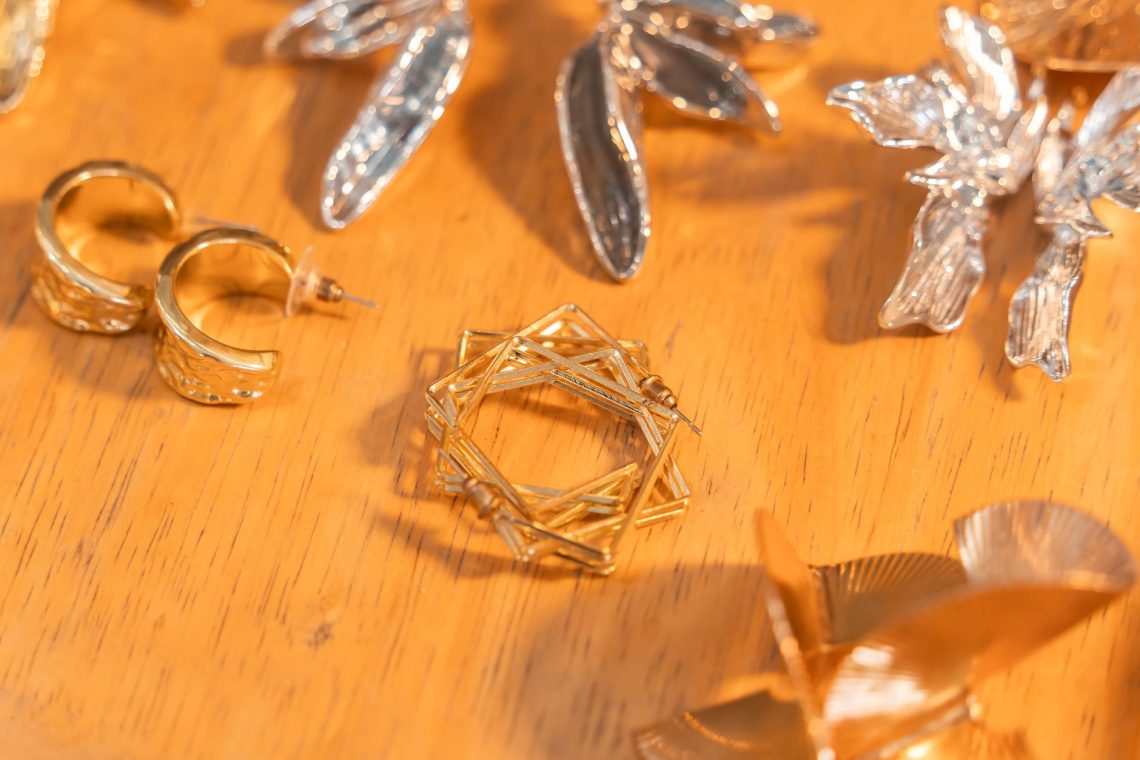
Gold-tone and silver-tone jewellery can change the mood of an outfit without changing the clothes themselves. A fine gold-tone chain might bring warmth to a white shirt, while a silver-tone pendant can give the same shirt a sharper finish. Neither is automatically smarter, more flattering or easier to wear. The useful difference is how each finish works with the colours, textures and details already in your outfit.
You also do not need to choose one metal and stick to it forever. A small collection containing both can be more useful than a drawer full of matching pieces. Here is how to choose between them, mix them comfortably and keep everyday accessorising simple.
What gold-tone and silver-tone actually mean
The word tone describes appearance rather than a guarantee of metal content. Gold-tone jewellery has a gold-coloured finish; silver-tone jewellery has a silver-coloured finish. Depending on the piece, that colour may come from plating, a coating or the material itself. Check the description if you want to know what sits underneath the surface.
This matters because colour alone tells you little about durability, care or suitability for sensitive skin. Two necklaces that look similar may have different constructions and care instructions. If you have a known metal sensitivity, use the stated materials to guide your choice rather than assuming either colour will suit your skin.
For styling, however, you can start with what you see: a warmer yellow finish or a cooler, more neutral-looking one. Then consider whether it is bright, brushed, antiqued or highly polished. Those details can affect an outfit as much as the metal colour.
How each finish changes an everyday outfit
Gold-tone adds a warm focal point
Gold-tone pieces often sit comfortably with cream, camel, chocolate, olive and rust. Try small hoops with a cream knit, or a simple pendant against a brown T-shirt. The colours share a warmth that makes the combination feel easy, even when the jewellery is noticeable.
That does not mean gold-tone belongs only with warm colours. Against navy, charcoal or a crisp blue shirt, it creates contrast. A single sculptural earring or chunky ring can make a plain outfit feel more deliberate without requiring extra layers or a dressier pair of shoes.
Silver-tone can bring a crisp edge
Silver-tone jewellery works easily alongside grey, white, blue and black. A smooth bangle with a charcoal jumper or a short chain with a white T-shirt gives a clean, uncluttered effect. It can also echo the cool sheen of zips, buckles and watch cases.
Use it with warmer colours when you want a little separation. Silver-tone earrings against a caramel blouse can feel fresh because they do not blend into its colour palette. These are starting points, not rules: the most useful question is whether you enjoy the overall balance when you look in the mirror.
Leave the strict skin undertone rules behind
You may have heard that warm skin undertones require gold and cool undertones require silver. That can be a helpful experiment, but it is too restrictive as a wardrobe rule. Your hair colour, neckline, make-up, clothing and the finish of the jewellery all contribute to what you see.
If you want to compare, hold a piece of each colour near your face in the same natural light, wearing the top you intend to style. Look at the whole combination rather than searching for a supposedly correct answer. You might prefer gold-tone hoops with a peach blouse and silver-tone drops with a blue dress, even on the same day.
There is also no need to diagnose your undertone before buying a bracelet. Jewellery worn at the wrist is seen alongside sleeves, bags and other accessories as well as skin. Personal preference is a perfectly sound reason to choose a finish, particularly for a piece you will wear often.
Choose the effect before choosing the metal
When an accessory feels wrong, its colour may not be the problem. A very shiny, oversized necklace can overwhelm a soft neckline in either finish. Equally, a tiny pendant may disappear against a patterned blouse, whether it is gold-tone or silver-tone.
Before swapping metals, check these three details:
- Scale: decide whether the jewellery should be a quiet detail or the main feature.
- Surface: a brushed finish looks softer, while a polished surface catches more light.
- Shape: rounded hoops, angular cuffs and delicate chains each bring a different character.
For a relaxed outfit, start with one visible piece and build from there. A plain shirt, straight-leg jeans and loafers may need only medium hoops. If you add a necklace, give it room at the neckline so it does not compete with buttons, a collar and a busy print.
How to mix gold-tone and silver-tone simply
Mixed metals are easiest to wear when the arrangement looks intentional. You do not need equal amounts of each colour or a specially designed two-tone piece. Start with jewellery you already reach for and introduce one contrasting element.
- Choose a main finish. Wear your usual silver-tone earrings and watch, for example, then add a gold-tone ring.
- Repeat a visual detail. Similar chain thicknesses, rounded shapes or smooth surfaces can connect pieces of different colours.
- Leave some space. A mixed ring stack may be enough without layered necklaces and several bracelets as well.
- Check the whole outfit. Step back from the mirror to see whether the jewellery feels balanced with your clothes.
If you enjoy layered necklaces, try two lengths with a clear gap between them. Keep their weight reasonably similar for a gentle mix, or make one pendant the obvious focus. Check that the chains sit comfortably together and are not constantly catching on each other.
A wedding band or sentimental piece can stay exactly where it is. Treat it as part of your everyday starting point rather than something that dictates every other accessory. You can wear a silver-tone necklace with a gold ring without needing to explain the combination.
Do your bag buckles and shoe details need to match?
Matching every piece of hardware can make getting dressed unnecessarily complicated. Small jean rivets, a discreet bag clasp and a watch buckle do not all need to share one finish. Their size and position usually matter more than perfect colour coordination.
Pay closer attention when a metal detail is prominent. A large belt buckle sits near a long pendant, so the two will be seen together. You could echo its colour for a calm effect, or repeat the contrasting finish elsewhere, perhaps in a ring. If the outfit starts to feel busy, remove one accessory before replacing everything.
Three combinations to try with your own wardrobe
- A white shirt and dark jeans: add gold-tone hoops for warmth or a silver-tone chain for a crisp finish. Keep the other jewellery small.
- A camel jumper and black trousers: try a silver-tone cuff as a contrasting detail, or a gold-tone pendant that sits clearly against the knit.
- A navy dress and flat shoes: wear one pair of noticeable earrings in either finish. Add a contrasting ring if you want to introduce a second metal.
Keep your everyday choices easy
Build a small rotation around the pieces that feel comfortable and work with your usual necklines. A pair of earrings, a chain and a ring in finishes you enjoy will offer plenty of combinations. Keep them somewhere visible and separate enough to avoid tangles.
Follow each piece’s care instructions, particularly for plated or coated finishes. Put jewellery on after applying beauty products, and store it dry. Ultimately, choosing between gold-tone and silver-tone is about the effect you want today. Start with one piece, look at the whole outfit and stop when it feels finished.