Culottes offer the ease of a skirt with the practicality of trousers, but their cropped, wide shape can make an outfit feel unexpectedly bottom-heavy. The answer is rarely to abandon them or reach automatically for towering heels. A clear waist, a considered hem and shoes that work with the gap beneath it can make all the difference.
You do not need to look taller to wear culottes well. If, however, you want a longer-looking leg line, think about how the eye travels through the outfit. Strong horizontal breaks interrupt that journey; softly connected colours and clean proportions help it continue. Here is how to put that into practice without sacrificing comfort or your own style.
Start with where the hem lands
Culottes can finish anywhere from below the knee to above the ankle, and a few centimetres can change their proportions considerably. Rather than choosing a length because it suits someone else, look at where the hem sits on your own calf. A hem across its fullest part may emphasise width, especially when the fabric stands away from the body.
Try a length that finishes just below that point, where the leg begins to narrow, or a longer cut that reveals the ankle. Neither is a universal rule: the width of the trouser leg and the shoes underneath matter too. The useful test is whether the hem looks deliberate and leaves enough space for your footwear to make sense.
Try culottes on with the shoes you actually intend to wear. Pin the hem under temporarily and compare two lengths in a full-length mirror. Keep both trouser legs even when assessing the result; an uneven fold can make a promising alteration look awkward.
Give the waist a clear starting point
A visible waistband tells the eye where the legs begin. This is particularly useful with culottes because the wide leg already creates volume below the hips. A mid-rise or high-rise pair can establish that starting point comfortably, provided the waistband sits smoothly rather than digging in or rolling over.
Choose a tuck that suits the fabric
A full tuck works well with a fine T-shirt, lightweight blouse or close-fitting knit. Spread the tucked fabric evenly around the waist, then lift your arms and let a little ease return above the waistband. The aim is a clear outline with room to move, rather than a top pulled tightly down.
For a fuller shirt, try a small front tuck. Tuck the central section above the fastening and let the sides fall naturally. Check the side view: if the untucked back hangs well below the hips, it may obscure the proportions you are trying to create. A shorter shirt or a full tuck might work better.
Bulky jumpers can bunch inside a waistband and distort the front of the trousers. Instead, choose a jumper that ends around the waist, or fold its hem under if it stays comfortably in place. You can also wear a shorter cardigan buttoned as a top. A visible waist does not require a tight fit or exposed skin.
Let the fabric fall, rather than spread
Drape is the difference between culottes that skim downwards and culottes that project outwards. If you want a fluid line, look for fabric that falls from the hip without clinging. Lift a section gently and release it: does it settle into soft folds, or hold a broad, rigid shape?
Neither behaviour is inherently wrong. Crisp cotton and structured denim can look excellent, but their shape needs balancing. A neat top and an uncluttered shoe often give that volume enough definition. With softer tailoring or a fluid woven fabric, a relaxed blouse can work because the trousers already suggest movement down the body.
Check pleats and pockets while standing and sitting. Pleats should lie reasonably flat at the waist before opening into the leg. Pockets that gape or fabric that pulls across the front can interrupt the fall, even when the hem length is right. Try another size or cut before assuming the style itself is the problem.
Choose shoes that continue the line
The most useful shoe is not necessarily the highest one. Its shape, colour and position beneath the hem can matter just as much as heel height. Begin with footwear you can walk in comfortably, then consider how much visual interruption it creates.
Flats: keep the front light
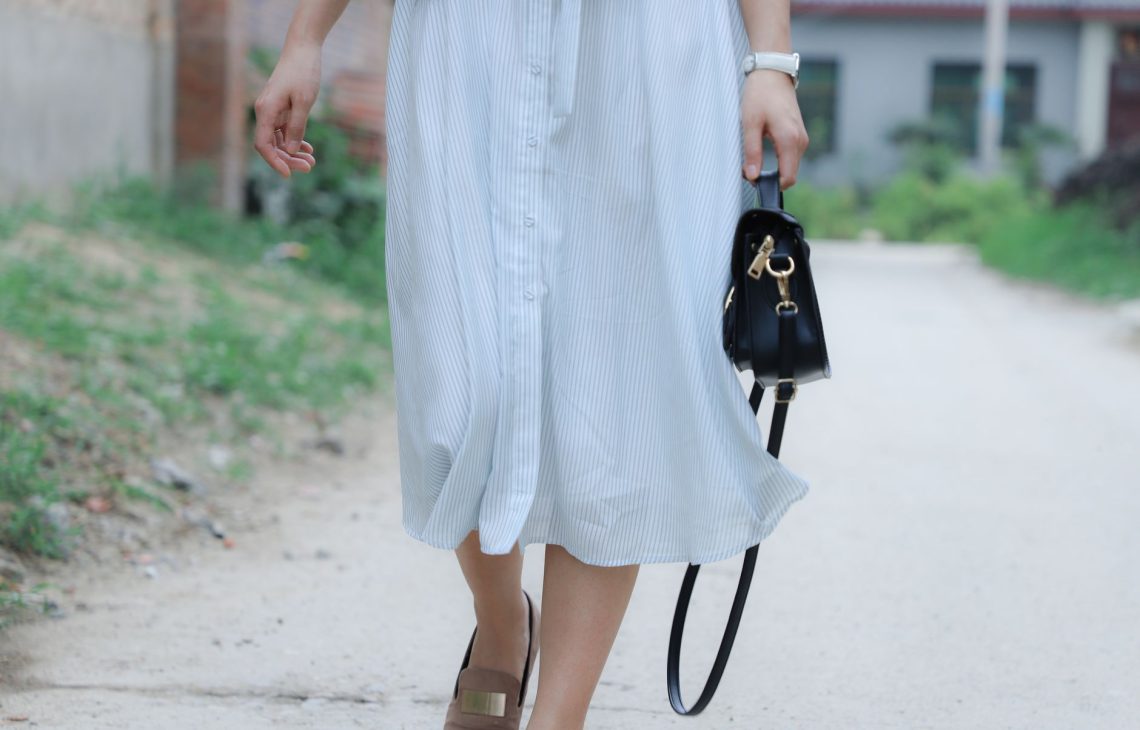
A pointed or almond-shaped flat can draw the eye forwards beyond a wide hem. A low-cut front also leaves more of the top of the foot visible, which can make the exposed section below the culottes feel longer. Ballet flats, simple loafers and neat slip-ons can all work; compare their outlines beneath the trousers.
If you prefer a substantial loafer, give it a little breathing room. A hem that almost touches a chunky shoe can look congested, particularly with stiff fabric. Showing a clear section of ankle, or choosing a slightly narrower culotte leg, may bring the outfit back into balance.
Sandals and heels: watch the straps
An open sandal with a simple front can feel light beneath wide trousers. A low block heel offers a little lift, while a slim wedge can work with fluid summer culottes. You do not need a high heel to make either combination look considered.
An ankle strap creates a horizontal line, but that does not make it off-limits. A delicate strap close to your skin tone will usually be less conspicuous than a broad contrasting one. If you love a bold strap, keep the top half simple and let the shoe become an intentional feature.
Boots: make the gap intentional
For cooler weather, try boots with a shaft that disappears beneath the hem. A close fit around the ankle helps avoid extra bulk, while a similar colour to the culottes creates continuity. When wearing ankle boots that stop below the trousers, check whether the small strip of skin between them looks purposeful. Adjusting the hem or choosing a different boot height can resolve an awkward gap.
Use colour to soften the breaks
Similar colours can connect separate pieces without requiring an exact match. Navy culottes with dark blue shoes, or cream trousers with pale beige flats, allow the eye to move through the lower half with fewer interruptions. Shoes close to your own skin tone offer another option when your ankles and feet are exposed.
You can extend that idea upwards with a top in a related shade, then add interest through texture or jewellery. Equally, a contrasting top can work beautifully if the waist remains clear. Treat colour continuity as a useful tool, rather than a requirement to dress entirely in one shade.
Build an outfit, then check it in motion
For an easy daytime combination, try fluid culottes, a tucked cotton T-shirt and almond-toe flats. For a smarter outfit, pair softly tailored culottes with a fine knit and low block heels. In cooler weather, a short cardigan, longer culottes and fitted boots can create a connected line without complicated layering.
Add your jacket last. One that finishes near the waist makes the proportions easy to read; a longer jacket can work when worn open so the waistband remains visible. Walk, sit down and check the side view before deciding. If something feels heavy, change one element at a time: the tuck, the shoe or the hem. Often, one small adjustment is enough to make culottes feel like a natural part of your wardrobe.