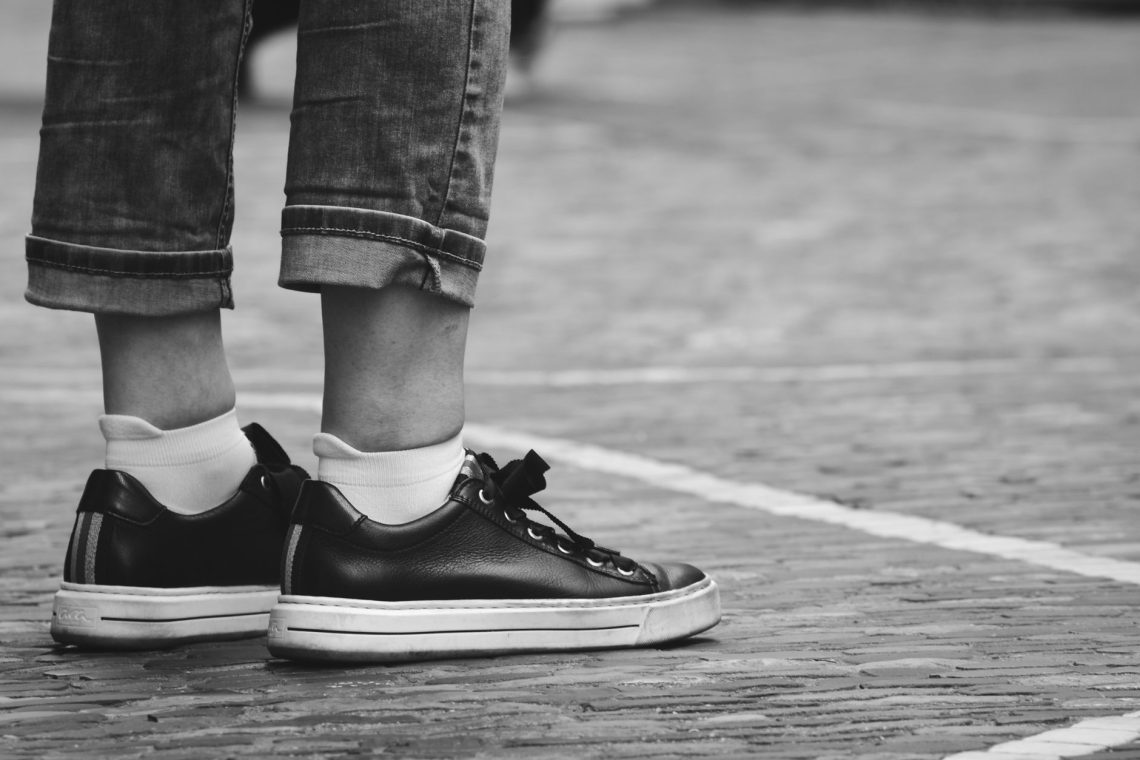
A monochrome outfit can look beautifully considered, yet sometimes it feels as though something is missing. The shirt and trousers work together, the proportions feel right, but the overall effect is a little flat. Before adding jewellery or changing your bag, look down. Shoe colour can give a single-colour outfit depth, sharpen its mood or introduce the one point of contrast it needs.
The choice is not simply between matching shoes and bright ones. A slightly darker shade, a softer neutral or a different finish can be enough. The useful question is whether you want the shoes to continue the outfit or interrupt it. Once you decide that, getting dressed becomes much easier.
Decide what you want the shoes to do
Think of monochrome dressing as working within one colour family rather than finding an exact match for every item. Navy trousers with a blue knit can still read as a single-colour look, just as ivory jeans and a cream blouse can. Small variations often make the clothes feel more natural together.
Shoes can support that quiet variation or become a distinct focal point. Neither approach is automatically more interesting. A tonal shoe might draw attention to the shape of wide-leg trousers, while a contrasting shoe can give a simple dress a more playful feel.
Before choosing a pair, consider the occasion and the part of the outfit you most want to notice. If the dress has a sculptural sleeve or the trousers have an unusual cut, quieter footwear gives those details room. If the clothes are deliberately simple, shoes can provide the emphasis.
Use tone-on-tone shoes to create depth
Tonal dressing works best when it has some variation. Shoes in exactly the same colour and texture as the rest of the outfit can look polished, but they may also disappear. Moving a little lighter or darker helps define the footwear without breaking the overall line.
Go darker for a grounded finish
Try chocolate shoes with a camel outfit, burgundy with muted rose, or deep navy with mid-blue. The darker shade gives the eye a clear stopping point. This is particularly useful with loose trousers or a flowing skirt, where a stronger colour at the foot can balance the volume above.
Keep the relationship visible. Chocolate and camel share warmth; navy and mid-blue share a clear colour family. You do not need to describe the shades precisely, but they should look as though they belong in the same conversation.
Go lighter for a softer effect
A lighter shoe can make a tonal outfit feel less weighty. Cream loafers with beige trousers or pale grey trainers with charcoal separates soften the transition to the floor. This can be useful when a darker matching shoe makes an outfit feel more formal than you intended.
Check the light shade against the clothes in daylight. A yellow-toned cream may sit comfortably beside warm beige but seem disconnected from a cool, greyish taupe. You do not have to follow rigid undertone rules; simply place the pieces together and notice whether one suddenly looks dull or oddly coloured.
Let finish add interest when colour stays quiet
With an all-black outfit, shoe colour offers less obvious room for tonal variation. Texture and shine can do the work instead. Black suede has a softer appearance than polished leather, while patent shoes introduce a sharper reflection. Each changes the feel of the outfit without adding another colour.
For example, a black cotton dress with black suede flats feels understated. Swap them for glossy black loafers and the same dress gains a more defined finish. With black satin trousers, matte leather shoes can provide enough contrast without competing with the fabric.
The same principle applies to other colours. Tan suede beside a smooth camel skirt, or cream leather beneath textured ivory trousers, creates distinction within a restrained palette. Before buying shoes in another shade, try changing the surface.
Choose one contrast with a clear purpose
A contrasting shoe works particularly well when the rest of the outfit is easy to read. A plain navy dress, a grey trouser suit or matching brown separates creates a calm background. One different shoe colour then feels deliberate because it has space around it.
Contrast does not have to mean neon or a saturated primary colour. White shoes against navy provide a crisp break. Deep red shoes beneath an oatmeal outfit introduce richness. Silver shoes with grey offer a flash of light while staying close to the outfit’s cool character.
- For a crisp finish: try white or ivory shoes with a darker monochrome outfit.
- For warmth: consider red, rust or burgundy against a neutral base.
- For a playful accent: try a clear blue, green or pink with simple black, grey or cream clothes.
- For subtle contrast: choose a neutral outside the outfit’s colour family, such as tan shoes with navy.
You can repeat the shoe colour in a small accessory, but there is no need to match your bag to it. If the aim is a single contrast, a bag close to the clothing colour keeps the shoes as the main accent. Several equally strong colours can make that original decision harder to see.
Judge colour alongside shape and coverage
The amount of shoe on show changes how strongly a colour reads. Red ankle boots beneath cropped trousers create a larger block than red slingbacks beneath a long skirt. A bright, chunky trainer may draw more attention than a delicate sandal in the same shade.
If you like a contrasting colour but feel overwhelmed by it, try less coverage before abandoning the idea. A low-cut flat or an open sandal can introduce a smaller amount. Equally, if your chosen colour barely registers, a loafer or boot may give it the presence you wanted.
Hem length matters too. Wide trousers that nearly cover the shoes might reveal only a coloured toe as you walk. Cropped trousers make the entire shoe part of the outfit. Check the combination while moving, especially if a skirt or trouser hem shifts substantially with each step.
Try three outfits from the same wardrobe
Start with an outfit you already enjoy and change only the shoes. Keeping everything else fixed makes it easier to see what colour actually contributes.
- Continue the colour: wear navy trousers and a navy top with navy loafers. Notice the uninterrupted line and whether the different fabrics provide enough interest.
- Shift the tone: try the same clothes with lighter blue shoes. The outfit still feels related, but the footwear becomes easier to distinguish.
- Add a contrast: switch to burgundy flats or ivory trainers. Notice how the accent changes the mood as well as the colour balance.
Use the same exercise with cream, grey, brown or black. Take a full-length look from a little distance rather than judging only your feet. The most appealing shoe in isolation is not always the pair that makes the whole outfit work.
Make the final choice feel intentional
If a combination feels unsettled, adjust one thing at a time. A very bright shoe may need a simpler bag. A pale shoe may work better when the trouser hem exposes a little more of it. An almost-matching shade may become more convincing when its texture is clearly different.
Choose tonal shoes when you want continuity with a little depth, and a single contrast when you want a visible accent. Then make sure the shape suits the clothes and the pair is comfortable enough for your plans. Shoe colour earns its place when it makes an outfit you already like feel more complete.