An outfit can look settled in the mirror, then feel oddly unbalanced when you catch your reflection on the way out. A quick photograph gives you another way to assess it: where a hem falls, how much volume a jacket adds and whether your shoes work with your trousers. The useful photograph is one that shows the clothes clearly, without an angle doing all the styling for you.
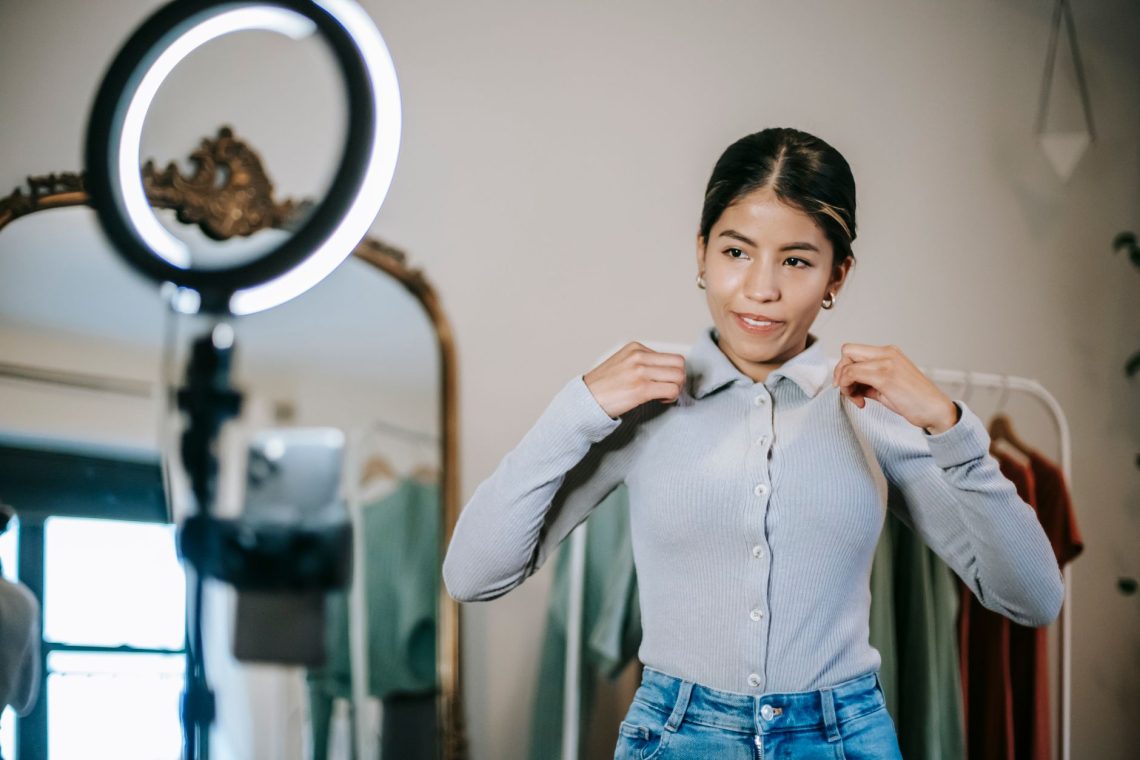
You do not need a studio or a beautifully decorated room. A phone, a stable place to put it and a little daylight are enough. Set up one dependable spot and you can make an outfit check part of getting dressed, rather than turning your hallway into a photo shoot.
Start with the styling question
Before reaching for your phone, decide what you want to see. Perhaps you are choosing between a tucked and untucked shirt, wondering whether a midi skirt works with ankle boots, or checking the length of a blazer over wide trousers. One clear question makes the photograph useful and keeps you from inspecting every tiny crease.
Put on the whole outfit, including the shoes and any layer you will actually wear outside. A trouser hem can sit differently with trainers than with heels, while a shoulder bag can change the line of a loose coat. Empty bulging pockets and let the fabric settle before taking your first picture.
Find soft light that reveals the clothes
Stand facing a window, with the phone between you and the light where possible. If the window is slightly to one side, turn your position until both sides of the outfit are reasonably clear. Soft daylight makes it easier to distinguish the edge of a sleeve, the waistline and the shape of a trouser leg.
Avoid standing with a bright window directly behind you. Your clothes may become a dark outline, which is particularly unhelpful when you are trying to judge a black jacket over a black dress. Move around the room until you can see the separate layers without brightening the image heavily.
Direct sunshine can produce strong patches of light and shadow across an outfit. Try stepping back from the window or drawing a sheer curtain. If you are dressing after dark, use the most even room lighting available and avoid placing a single bright lamp immediately below or above you. Treat colour comparisons cautiously under artificial light.
Choose a quiet background
A plain wall, closed door or uncluttered stretch of wardrobe works well. You need enough contrast to see the outline of your clothing: a pale blouse can disappear against a white door, just as dark trousers can merge with a shadowy hallway. Changing your position may help more than changing the camera settings.
Clear the immediate floor space so your shoes and hems are visible. You do not need to tidy the whole room; simply move anything that crosses your outline or distracts from it. Leave a little space between yourself and the background if the room allows, especially when a coat or full skirt needs room to hang naturally.
Set the camera straight, then step back
For a useful full-length starting point, place the phone around waist height and keep it upright, with the lens facing straight ahead. Rest it securely on a shelf or use a stable phone stand. Avoid balancing it on a precarious pile that could fall as you walk away.
Step back until your entire outfit fits, leaving a little room above your head and below your shoes. Use the ordinary camera view rather than an ultra-wide setting if you have enough space. Photographing from very close range can exaggerate whichever parts of the outfit are nearest the lens, making proportions harder to judge.
Check that the phone is not tilted sharply upwards or downwards. A low, upward angle may make legs appear longer; a high, downward angle can emphasise the upper body and shorten the lower half. Those effects can be enjoyable in a fashion photograph, but a level view is a more consistent starting point for choosing clothes.
Use a timer for a relaxed front view
Set the self-timer, walk to your spot and stand as you normally would while waiting for someone. Keep your shoulders relaxed, your feet comfortably placed and your arms slightly clear of your waist. You want to see the garment’s shape without pulling it into position.
Take a straightforward front photograph before trying a pose. Crossing your legs, arching your back or pushing one hip far out can alter the apparent line of a skirt or trousers. If you always need to hold a jacket open for the outfit to look balanced, check how it hangs when your hands are free.
Add a side view and a movement check
A front photograph cannot show everything. Turn sideways for a second image to see how a blazer sits over your hips, whether a shirt bunches at the back or how a dress falls from the waist. Keep the camera position and your distance from it the same.
Then take a few ordinary steps, sit down briefly and stand again. You can photograph the outfit once the clothes have moved, or record a short video to watch the fabric settle. This is especially helpful for floaty skirts, long cardigans and layered hems that look different in motion.
If you use a mirror, keep it consistent
A full-length mirror is a convenient alternative when there is nowhere to prop up your phone. Clean obvious smudges, check that the mirror is secure and stand far enough away to include your shoes. A mirror leaning at an angle can change the apparent proportions, so bear that in mind before making decisions about length.
Hold the phone as level as you comfortably can and keep it from hiding the waist or neckline you are assessing. Use the same mirror, standing position and phone height when comparing two outfits. If one image is taken from above and the other from below, you are comparing camera angles as well as clothes.
Read the picture for balance
Look at the whole silhouette first, then return to the question you started with. Useful things to check include:
- Where the outfit divides: notice the waistband, jacket edge and any contrasting layers.
- How the volume is distributed: see whether you like the relationship between loose sleeves, a full skirt or wide trouser legs.
- What happens at the ankle: check the gap between hem and shoe, or how the fabric rests over the footwear.
- Whether details remain visible: a belt, collar or necklace may be hidden beneath another layer.
There is no compulsory ratio to achieve. An oversized shirt with loose trousers can be exactly the look you want. The photograph helps you decide whether the combination feels intentional to you; it does not supply a rule about how your body should look.
Change one thing, then leave the house
If something feels unresolved, make one adjustment and photograph it from the same spot. Try a smaller front tuck, roll the sleeves once, swap the shoes or remove a layer. Comparing similar pictures makes the effect easier to see than changing several pieces at once.
Keep the image unfiltered while you decide. Heavy editing can hide texture and blur the edges you need to assess. Once you have answered your styling question, put the phone down. Save a favourite combination if it will help on another busy morning, then enjoy wearing the clothes beyond the camera frame.