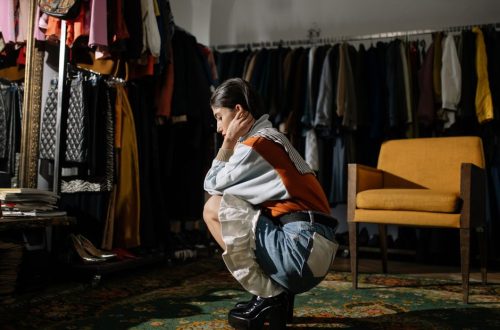
The first pair of wide-leg pants many curvy shoppers try ends up abandoned on a chair. The waistband feels right, but the legs look too big. The hem drags under one shoe. A tucked shirt creates a bump at the stomach, while an untucked top hides the waist completely. That frustrating try-on does not prove wide-leg pants are unflattering. It usually proves the cut, rise, fabric, or length is wrong.
Wide-leg pants can create a long, clean line and give your hips and thighs more room to move. The trick is to control the three points that shape the outfit: the waist, the visual starting point of the leg, and the hem. Follow the checks below and you can build outfits that look intentional instead of oversized.
Why wide-leg pants work on curvy figures
The shape is about balance, not hiding
A wide leg does not add width in a simple side-to-side way. It creates one continuous column from the hip or upper thigh to the ankle. That line can skim curves instead of stopping at the widest point, which often makes a straight or clingy trouser feel more noticeable. A firm waistband gives the eye a clear starting point, and the roomy leg gives the body space below it. This is why a pair with a defined waist can look more balanced than a supposedly slimming narrow leg.
Start by measuring your natural waist, fullest hip, and preferred inseam. The waist-to-hip difference matters more than the number on the label. If a waistband fits your waist but pulls across the seat, the pants will tilt backward and create extra folds in front. If the hip fits but the waist gaps by more than about 1 inch, the waistband needs tailoring, a contoured cut, or a belt with enough structure to hold it in place.
Choose the right rise
A high rise usually works best when you want the leg to begin above the fullest part of the stomach. Aim for a waistband that sits at your natural waist or just below it, not one that cuts across soft tissue when you sit. A mid rise can work well with a cropped jacket or a longer top, but it needs a smooth front and enough room through the hips.
Watch the fabric weight
Fabric changes the shape more than the label does. Midweight denim, twill, ponte, and suiting wool hold a straight line. Thin jersey can cling at the inner thigh, while very stiff canvas can stand away from the hip and make the whole outfit feel boxy. For a first pair, choose fabric with enough drape to fall from the hip and enough recovery to keep the waistband from stretching out.
My verdict: check proportion before judging the pants
The waist-to-hem test
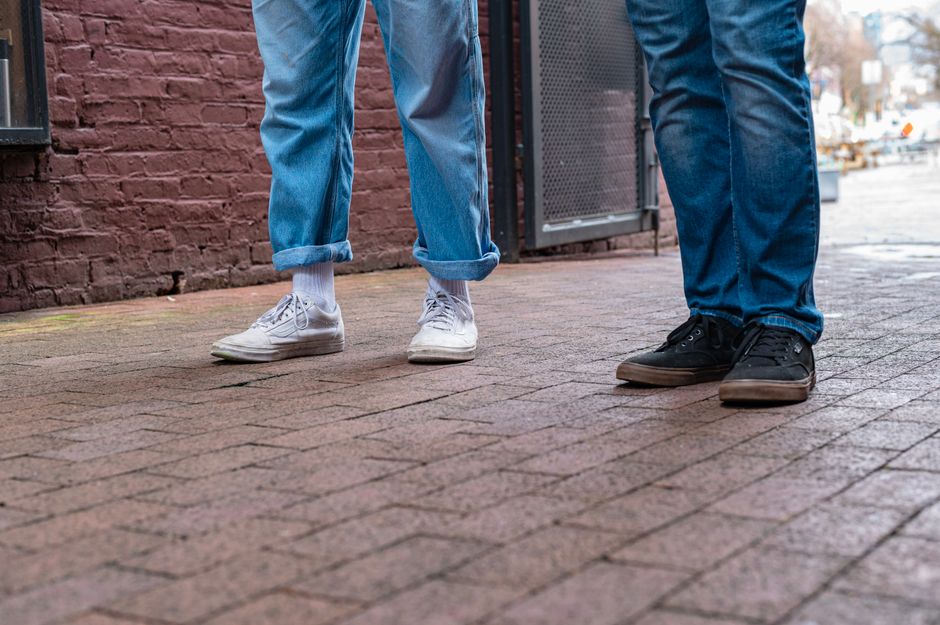
My strongest styling rule is simple: wide-leg pants look polished on a curvy figure when the waist is clear and the hem is deliberate. Stand in front of a mirror wearing the shoes you plan to use. If the waistband disappears under a loose top and the hem stops at the widest part of your calf, the outfit will probably look shorter and heavier than it needs to. Raise the visual waist with a full tuck, a half tuck, a cropped top that ends near the waistband, or a jacket that finishes above the hip. Then make the hem either full length, ending within half an inch of the floor, or cropped at a narrow point just above the ankle bone. Do not settle for a random middle length.
The movement test
Walk, sit, bend, and place your hands in the pockets before buying. The pants should glide over the hips without pulling into horizontal lines, and the front crease should stay mostly vertical. If the fabric twists toward the inseam, the cut is not giving your hip enough room. If the pockets gape, the pants are too small across the hip even if the waistband closes. For most curvy figures, a slightly larger size with a quick waist alteration looks better than a smaller pair that strains at the seat.
How to style the top half without losing your shape
Use a controlled volume formula
Pairing a very wide leg with another oversized piece can work, but it requires a visible anchor. The easiest formula is fitted or softly shaped on top, wide through the leg, and structured at the shoulder. A ribbed tank under an open button-down, a tucked knit polo, or a short cardigan gives the outfit a clear center. A blazer with a defined shoulder also balances a wide hem, especially when the blazer ends around the high hip instead of the widest part of the thigh.
- Mark the waist: Tuck in at least the front third of your top, or wear a belt in a color close to the pants.
- Control the hem: Choose shoes before finalizing the length. A 1.5-inch block heel can change the break of the fabric more than a new top can.
- Repeat one line: Match the color of your shoe to the pants for a longer leg line, or repeat the shoe color in a bag or jacket for visual balance.
- Keep details intentional: If the pants have pleats or cargo pockets, use a plain top. If the pants are plain, a striped knit or statement necklace can carry the outfit.
When a cropped top helps
A cropped top is not required, but it can solve the problem of a long torso getting lost inside full-length pants. Look for a hem that lands at the waistband rather than several inches above it. If you prefer more coverage, layer a cropped denim jacket over a longer tank. The jacket creates a short top line while the tank keeps you comfortable.
Use this fit table before you buy
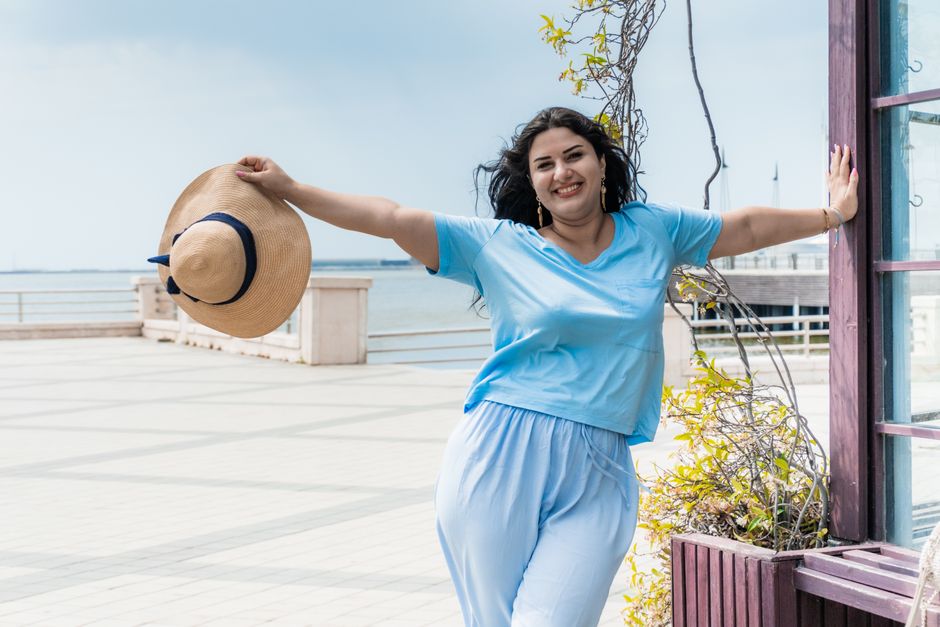
The fastest way to avoid a disappointing pair is to compare measurements, not vague labels such as relaxed, curve, or oversized. Measure a pair you already like while it lies flat, then compare the retailer’s garment measurements. The numbers below give you a useful starting range for a polished wide-leg shape.
Fit targets for a first pair
| Fit point | Useful starting target | What to check in the fitting room |
|---|---|---|
| Rise | 10.5 to 12 inches | Waistband stays level when sitting |
| Hip ease | 1.5 to 3 inches | No pocket gape or seat pulling |
| Thigh ease | 1 to 2.5 inches | Fabric falls without gripping the inner thigh |
| Leg opening | 20 to 24 inches around | Wide enough to drape, not so wide that it swallows the shoe |
| Full-length hem | Within 0.5 inch of the floor | Hem skims the shoe without dragging |
| Cropped hem | 1 to 2 inches above ankle bone | Leg ends at a narrow point, not mid-calf |
What the numbers cannot tell you
Measurements do not show pocket placement, fabric recovery, or how the waistband behaves after an hour of wear. Sit for at least two minutes. Look for a horizontal fold under the waistband, which can signal too little rise or too little room across the stomach. Check the back view for a waistband that dips. A curved waistband should follow your body instead of forcing the pants into a straight line.
My verdict: buy the pair that passes the movement test, even if its size number is different from your usual one. The best-looking pants are the ones that keep their shape while you walk and sit.
Three wide-leg pants worth using as references
My top reference for curvy fit is Madewell’s The Curvy Wide-Leg Pant in Garment-Dyed Twill. Its listed price is $138, with a 10.75-inch rise, a 21.5-inch leg opening, and a 30-inch inseam. The cotton, lyocell, and elastane blend has enough structure for a clean line but should feel less rigid than heavy denim. It is the best example here for a casual outfit with a tucked tee, a cropped jacket, and sneakers. A sale listing may show a lower price, so check the return terms before ordering.
For work outfits
Madewell’s Curvy Emmy Wide-Leg Pant is listed at $128 and gives you a more tailored starting point. Choose it when you want a trouser with a smooth shirt front, a pointed flat, and a blazer. The verdict is clear: this is the strongest option for a first office pair because a clean front makes proportion easier to manage than cargo pockets or a gathered waist.
For softer fabric and warmer weather
Anthropologie’s Maeve Colette High-Rise Wide-Leg Full-Length Pants in Magic Fabric are listed at $130, while the Maeve Colette Linen Stretch High-Rise Wide-Leg Pants are listed at $138. Pick the Magic Fabric version for travel or long workdays because it gives a neater line with less wrinkling. Pick the linen-stretch version for hot weather when airflow matters more than a pressed finish. If you want an alternative to a full wide leg, Good American’s Stretch Ponte High-Rise Kick Flare Pants are listed at $159; they are the better choice when full-length fabric keeps pooling around your shoes.
Common fit questions, answered plainly

Should curvy figures avoid pleats?
No. Pleats are helpful when they lie flat from the waistband and open below the stomach. A single front pleat can give the hip more room without adding visual clutter. Avoid pleats that pull open when standing or point directly toward the fullest part of the body. Flat-front pants are the safer choice for a first purchase, but a well-sized pleated trouser can look sharper and feel more comfortable.
Do wide-leg pants need heels?
No, but they do need a planned hem. Full-length pants work with sneakers, loafers, boots, and low block heels when the fabric barely clears the floor. For flats, ask for a separate hem rather than folding the pants inward. A cropped wide leg works best with a shoe that leaves some of the foot visible, such as a pointed flat, slim sandal, or low-profile sneaker.
What should you do if the waist fits but the hips do not?
Try a curvy cut first. If the waist gaps slightly, buy for the hip and have the waistband taken in by a tailor. Do not size down to remove a small waist gap if that creates seat wrinkles. That trade-off is visible from every angle.
Back at the mirror, the chair-tested outfit now has a level waistband, a hem that clears the floor, and a top that shows where the waist begins. The pants were never the problem. The missing measurements were.