
A rented occasion dress is still in transit, or it has arrived and the zip will not close comfortably. Either way, the next step is to work out whether the dress can realistically work before you leave for the event. Give yourself a clear deadline for deciding, then turn your attention to an outfit you can actually wear.
For a wedding, formal dinner or party, a useful backup needs to suit the dress code, fit comfortably and work with shoes you already have. Here is how to handle a late delivery or an awkward fit without letting one dress take over the occasion.
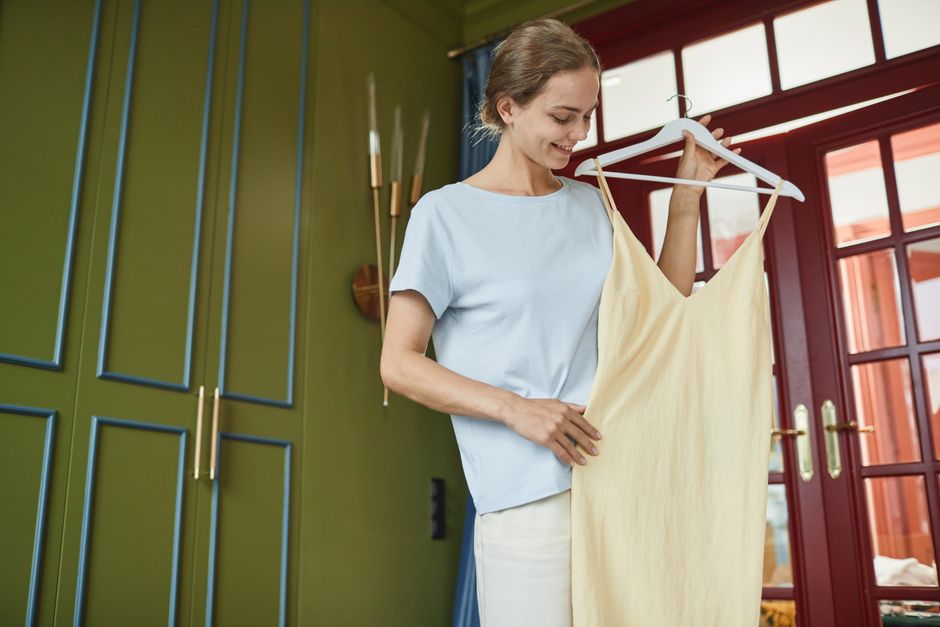
If the dress is late, check the deadline that matters
Your deadline is the time you must leave home, including any travel or overnight stay. A parcel arriving on the wedding morning is no help if you left for the venue the day before. Compare the latest tracking information with that departure time, allowing space for a proper try-on and getting dressed.
Check the delivery address, any attempted-delivery notice and the location shown in the tracking details. If the parcel is marked delivered, check the stated safe place or reception desk. Keep the order confirmation and tracking details together so you can explain the problem clearly.
Contact the rental company through its stated support channel. Give your order number, departure deadline and current delivery status. Ask what options are available for this order, rather than assuming a replacement can reach you.
- Can the company confirm anything beyond the tracking estimate?
- Is a replacement available in a suitable size and style?
- Would its expected arrival leave time to try it on?
- What should you do with the original dress if it arrives after you leave?
- What process applies to reporting a missed occasion?
Save the response. Refunds, credits, exchanges and return arrangements depend on the booking terms and circumstances; do not treat any outcome as automatic. Meanwhile, start assembling your backup instead of waiting for support to settle every detail.
Set a firm point for switching outfits
Choose a decision point based on the work still needed. If the backup needs collecting, pressing or trying with different underwear, make that decision while you still have time to do those things. A tracking estimate should not keep postponing it.
Once the backup is ready and your decision time has passed, make it your outfit. You can still receive the rental, but you no longer need to rebuild your evening around it. If it arrives with genuinely enough time to inspect and try it, reconsider calmly. Avoid a rushed change that leaves you with uncomfortable shoes or a neckline you have never checked.

Try the rental on as soon as it arrives
Unpack carefully and keep the packaging, labels and any supplied accessories together. Before dressing, look for marks, open seams, damaged fastenings or missing components. Photograph anything concerning and report it promptly, following the company’s instructions.
Try the dress with the underwear and shoes you intend to wear. A different bra can change how the bodice sits, while heel height changes where a long hem falls. Add your planned outer layer too, especially if the occasion includes time outdoors.
Check the fit while moving
Stand naturally rather than holding your breath or pulling your shoulders back for the mirror. Then sit down, walk, raise your arms and bend enough to pick up your bag. If there are stairs available, check those too.
- Bust and neckline: look for gaping, digging edges or coverage that shifts when you lean forward.
- Waist and hips: check for pulling, twisted seams and fabric that rides up when you sit.
- Fastenings: the zip, buttons or hooks should close without force.
- Length: make sure you can walk without catching the hem under your shoes.
- Lining: check that it lies smoothly and does not pull the outer fabric out of shape.
Look at the back and sides as well as the front. A quick photograph in ordinary light can help you notice a twisted strap or visible underwear. The useful question is whether you can move and enjoy the event without repeatedly adjusting the dress.
Decide whether the fit is workable
Separate a styling preference from a fit problem. A slightly different neckline may work with another bra you own. A dress that restricts breathing, will not fasten or slips down when you move needs a different solution. Your body does not need changing to accommodate a rental.
Small adjustments need care
Try simple changes involving your own accessories first: different underwear, another shoe height or a belt, if the dress shape suits one. Check that the result remains comfortable when sitting and walking. A belt should complement the garment rather than disguise severe pulling or excess fabric.
Do not assume fashion tape, safety pins, hemming products or steaming are permitted. Adhesives, punctures and heat may damage delicate fabrics. Follow the garment care instructions and rental terms, and ask the company before attempting an adjustment that could affect the dress.
Know when to stop
A too-tight bodice, badly placed waist seam or dragging hem rarely becomes comfortable through determined styling. Do not force the zip or book alterations without explicit permission. If the company offers an exchange, assess it against your actual departure deadline and the time needed for another fit check.
Report the problem clearly: where the dress does not fit, whether it has been worn beyond the try-on, and when you need a response. Ask for the next steps for your booking and keep a record of the instructions.
Build a backup that looks intentional
Begin with the invitation’s dress code and the setting. For a cocktail occasion, an existing midi dress can feel fresh with a different bag and earrings. Tailored trousers with a dressy top may suit some dinners and parties. For black tie, check the host’s guidance before assuming a more casual outfit will work.
Keep the styling focused. If the dress is plain, choose one noticeable detail, such as sculptural earrings or an embellished clutch. If you choose separates, link them through colour, fabric or proportion: fluid trousers and a softly draped top can create a coherent evening look.
Borrowing from a friend is another option, provided you can try the complete outfit before leaving. Check the fit with your own shoes and agree on care and return arrangements. If buying locally is necessary, take the shoes and underwear with you so you can assess the whole outfit in the fitting room.
Finish by checking practical details: a jacket that fits over the sleeves, a bag that holds your essentials and shoes you can manage at the venue. These small decisions help a backup feel considered.

Make the next rental easier to manage
Before booking, compare your current measurements with the garment information rather than relying on a familiar size label. Look for details about stretch, lining, closures and length. Fit comments describing movement and proportions are more useful than a simple statement that a dress looked lovely.
Where the booking allows, choose arrival before your departure day with room for a full try-on and a possible replacement. Read the procedures for delivery problems and unsuitable fit before committing. Pick a complete backup from your wardrobe at the same time.
Finally, plan the return around travel and available drop-off hours. Keep proof of handover and follow the agreed instructions even if the dress went unworn. With a wearable alternative ready, a disappointing rental becomes an outfit change rather than the defining memory of the occasion.