Why does your head feel like it’s inside an oven even with a hat on? You bought it specifically for summer. It’s making things worse.
The answer is almost always the material. Or the color. Or both. Most people grab whatever looks good without thinking about airflow, and they pay for it every time the temperature climbs above 85°F.
After years of hiking, outdoor festivals, beach trips, and one deeply regrettable week in Phoenix wearing a solid black bucket hat, here’s what I’ve learned: the hat that performs best in heat looks nothing like what most people picture when they think “summer hat.”
Why Most Hats Make You Hotter Than No Hat at All
The biggest mistake people make is buying a hat for sun coverage without thinking about heat retention. A solid canvas or cotton bucket hat with no ventilation traps heat directly against your scalp. Your head releases a significant share of your body’s heat through the scalp — block that process and you feel miserable fast.
Dark colors compound the problem. A black baseball cap absorbs solar radiation instead of reflecting it. You’ve effectively added a heat source to your head.
The hats that actually work in hot weather do two things well simultaneously: they block UV light and allow heat to escape. These goals can conflict. A tightly woven straw hat might have excellent UPF but poor breathability. A loosely woven raffia hat might let air flow freely but also let UV rays pass through the gaps.
Good hot-weather hats solve both problems through open-weave construction in the crown, light-colored or reflective materials, and a brim wide enough to shade your face and neck without being so rigid it traps heat underneath.
The Crown Is More Important Than the Brim
Most people focus entirely on brim width when shopping for sun hats. Brim matters, but the crown construction determines whether you overheat.
Look for hats with venting eyelets — small metal grommets punched into the crown that let hot air rise and escape. The Columbia Bora Bora Booney Hat ($30) has this, and it’s one reason it became a staple for outdoor workers and hikers. The Tilley LTM6 Airflo ($80) takes it further with a full mesh crown panel engineered specifically for heat venting. These aren’t cosmetic features. The difference between a vented and non-vented crown in 95°F heat is noticeable within twenty minutes.
If the crown is solid fabric with no eyelets or mesh — skip it for anything active or prolonged.
Color and Solar Heat Absorption
Lighter colors reflect more solar radiation. White, natural straw, khaki, and light grey keep the hat’s surface cooler than navy, black, or forest green. In direct sun, a black hat surface can run 10–15°F hotter than a white one at the same ambient temperature.
The exception is technical fabrics with reflective coatings that perform well even in darker shades — but this is an explicitly listed feature, not the default. If the hang tag doesn’t mention it, assume standard absorption rules apply.
UPF Ratings Explained: What the Label Is Actually Telling You

UPF (Ultraviolet Protection Factor) measures how much UV radiation a fabric blocks. UPF 50 means only 1/50th — about 2% — of UV rays pass through. UPF 50+ is the ceiling rating most testing labs use, indicating more than 98% of UV radiation is blocked.
The catch: UPF ratings are tested on flat fabric samples, not three-dimensional hats worn at angles on a moving head. A hat labeled UPF 50+ can still allow significant UV exposure if the weave is loose, the brim is narrow, or it sits far back on your head.
| UPF Rating | UV Blocked | Protection Level | Best For |
|---|---|---|---|
| UPF 15–24 | 93–96% | Good | Casual, short outdoor use |
| UPF 25–39 | 96–97% | Very Good | Regular outdoor activities |
| UPF 40–50+ | 97.5–98%+ | Excellent | Extended sun, fair skin, high altitude |
If you’re fair-skinned, spending more than two hours in direct sun, or at altitude where UV intensity is higher, stick to UPF 50+. The Coolibar Eliza Packable Sun Hat ($55) and the Wallaroo Hat Company Julia Sun Hat ($60) both carry verified UPF 50+ ratings from third-party testing — not just label claims.
What UPF Doesn’t Protect
UPF ratings only apply to the fabric itself. They say nothing about your face, ears, and neck — the areas most frequently burned. A hat rated UPF 50+ still leaves your ears completely exposed if the brim doesn’t extend over them.
The dermatology consensus for meaningful sun protection is a minimum 3-inch brim all the way around — not just in front. Most baseball caps cover roughly 2 inches forward and nothing sideways. Great for your nose. Zero coverage for your ears and the back of your neck.
The Hat Style That Doesn’t Work in Real Heat
Baseball caps. For actual hot-weather performance, they’re close to useless — minimal brim angle, zero side or neck coverage, and most have solid crowns that trap heat. The mesh-back trucker cap is marginally better for ventilation, but it still covers almost nothing that matters.
Save baseball caps for mild days and casual settings. When temperatures push above 90°F and you’re outside for more than an hour, you need a full-brim hat.
Hat Materials Compared: What Each One Actually Does in Heat

This is where most buying guides go soft. Let me break down each material and what it actually means for performance.
Natural Straw and Raffia
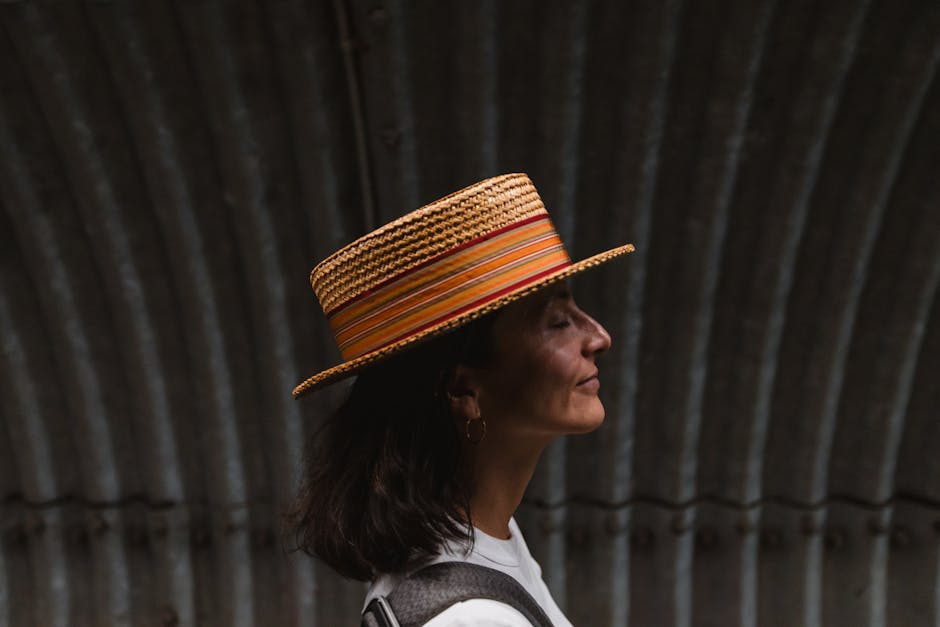
Traditional straw hats — made from toquilla palm (used in Panama hats), seagrass, or raffia — are excellent hot-weather options when constructed correctly. Natural fiber allows air movement while blocking direct sun. Authentic Ecuador-made Panama hats from Borsalino or Stetson run $100–$400, last decades, and perform brilliantly in dry heat.
Budget straw hats under $20 are often paper or synthetic “straw” that cracks, deforms in humidity, and doesn’t breathe the same way. The Scala Classico Men’s Raffia Straw Hat ($45) sits in the middle — real raffia, decent construction, reasonable lifespan for casual beach use. Not a trail hat. Not a travel hat. A beach and garden hat.
The core weakness of natural straw: most can’t get wet. Rain or heavy sweat degrades the structure. Not suitable for hiking, active sports, or humid climates where you’ll sweat through it.
Nylon and Polyester Technical Fabrics
For hiking, travel, or any situation where your hat needs to survive being stuffed in a bag or caught in a rainstorm, technical fabric hats are the right call. Nylon dries fast, packs small, and holds its shape better than natural materials after abuse.
The Sunday Afternoons Ultra Adventure Hat ($60) uses nylon ripstop with integrated mesh panels, rated UPF 50+, and includes a removable neck cape for extreme exposure situations. It’s designed for backpackers but works equally well for theme parks, outdoor concerts, or anywhere you’re walking miles in direct sun.
The Outdoor Research Seattle Sombrero ($75) is built differently — fully waterproof, meaning it handles both intense sun and unexpected downpours without losing structure. The trade-off is that waterproof fabric breathes less freely than open-weave options. Better for unpredictable mountain weather than flat desert heat.
Cotton and Linen
Cotton absorbs sweat, which enables evaporative cooling — but it also stays wet for a long time. In humid heat, a saturated cotton hat feels heavy and uncomfortable within an hour. Linen breathes better and dries significantly faster, making it the smarter choice for Mediterranean or coastal summer heat.
Neither cotton nor linen typically carries a UPF rating unless treated or woven at high density. Standard cotton is often rated around UPF 5–10 when wet — barely meaningful protection. If you’re buying cotton or linen for sun protection specifically, look for “UPF-treated” on the label.
Five Steps to Picking the Right Hot-Weather Hat
- Start with duration. Under two hours outside? Almost any hat with a reasonable brim works. Over four hours in direct sun? You need verified UPF 50+ and full-brim coverage — front, sides, and back.
- Look for crown venting. Metal eyelets or mesh panels in the crown are the sign you want. A solid crown with no ventilation is a style hat, not a performance hat. Don’t be fooled by aesthetic vents that don’t actually open to the interior.
- Match material to environment. Beach or garden? Natural straw works. Hiking or travel? Technical nylon packs better and handles weather. High-humidity city sightseeing? Lightweight linen or quick-dry nylon.
- Measure brim width honestly. A 2-inch brim shades your face. A 3-inch brim starts covering your ears. A 4-inch or wider brim gives full face, neck, and partial shoulder shade. Most sun hats marketed to women measure 3–4 inches; most marketed to men measure 2–2.5 inches — which is rarely enough for serious sun exposure.
- Check the fit system. A hat that blows off in wind is useless. Look for interior sweatbands that keep the hat anchored, adjustable chin straps for hiking and beach use, and snap-brim construction that holds a forward angle toward the sun rather than riding back on your head.
The Most Common Questions About Hot Weather Hats

Does hat color matter more than material?
Both matter, but in different ways. Color affects how much solar radiation the hat’s surface absorbs. Material determines how much heat escapes from inside. A light-colored hat with a solid, non-breathing crown will feel cooler on the outside but trap heat against your scalp. A dark hat with excellent mesh venting might be hotter to the touch but keep your head cooler through airflow. Given only one variable to optimize: I’d prioritize crown venting over color every time. But light colors plus good venting is the ideal combination.
Are packable hats worth buying?
Yes — but only if they actually recover their shape. Cheap packable straw versions crumple and stay crumpled. Quality options like the Wallaroo Julia or Coolibar Eliza use materials engineered to spring back after being rolled or crushed in a bag for 12 hours. Worth paying more for this if you travel.
When should you just wear a cap and use sunscreen instead?
When you’re moving frequently between indoor and outdoor environments, or when the context makes a wide-brim hat impractical — a structured 4-inch brim hat at a casual lunch draws attention. For those situations, a lightweight linen bucket hat or a cap with SPF 50 sunscreen on ears and neck is a reasonable compromise. It’s not ideal sun protection, but it’s realistic for daily life.
What’s the best hat under $40?
The Columbia Bora Bora Booney Hat at $30 is my honest answer. Venting eyelets, adjustable chin cord, UPF 50 rating, lightweight nylon, packs flat. It’s been in Columbia’s lineup for years because it consistently works. Not glamorous. Doesn’t matter — your scalp doesn’t care about glamorous at 95°F.
Hot Weather Hat Picks by Situation
| Hat | Price | Material | UPF | Packable | Best For |
|---|---|---|---|---|---|
| Columbia Bora Bora Booney | $30 | Nylon | 50 | Yes | Hiking, best budget pick |
| Wallaroo Julia Sun Hat | $60 | Poly/Nylon blend | 50+ | Yes | Travel, beach, everyday wear |
| Coolibar Eliza Packable | $55 | UPF-treated poly | 50+ | Yes | Sensitive skin, medical sun protection |
| Tilley LTM6 Airflo | $80 | Nylon/Mesh crown | 50+ | No | Extended outdoor use, durability |
| Sunday Afternoons Ultra Adventure | $60 | Nylon ripstop | 50+ | Yes | Backpacking, multi-day outdoor trips |
| Scala Classico Raffia Straw | $45 | Raffia | Not rated | No | Beach, casual garden use |
| Outdoor Research Seattle Sombrero | $75 | Waterproof nylon | 50+ | No | Sun and rain combo, fishing |
- Best pure heat performance: Tilley LTM6 Airflo — the mesh crown is the real differentiator
- Best for travel: Wallaroo Julia — packable, recovers shape, looks put-together
- Best budget pick: Columbia Bora Bora Booney — hard to beat at $30 for actual function
- Best for beach aesthetics: Scala Classico raffia — just don’t wear it on a trail or in a rainstorm
- Best if skin sensitivity is a factor: Coolibar Eliza — brand built specifically around medical-grade sun protection