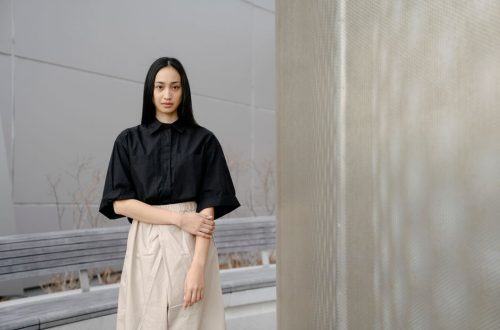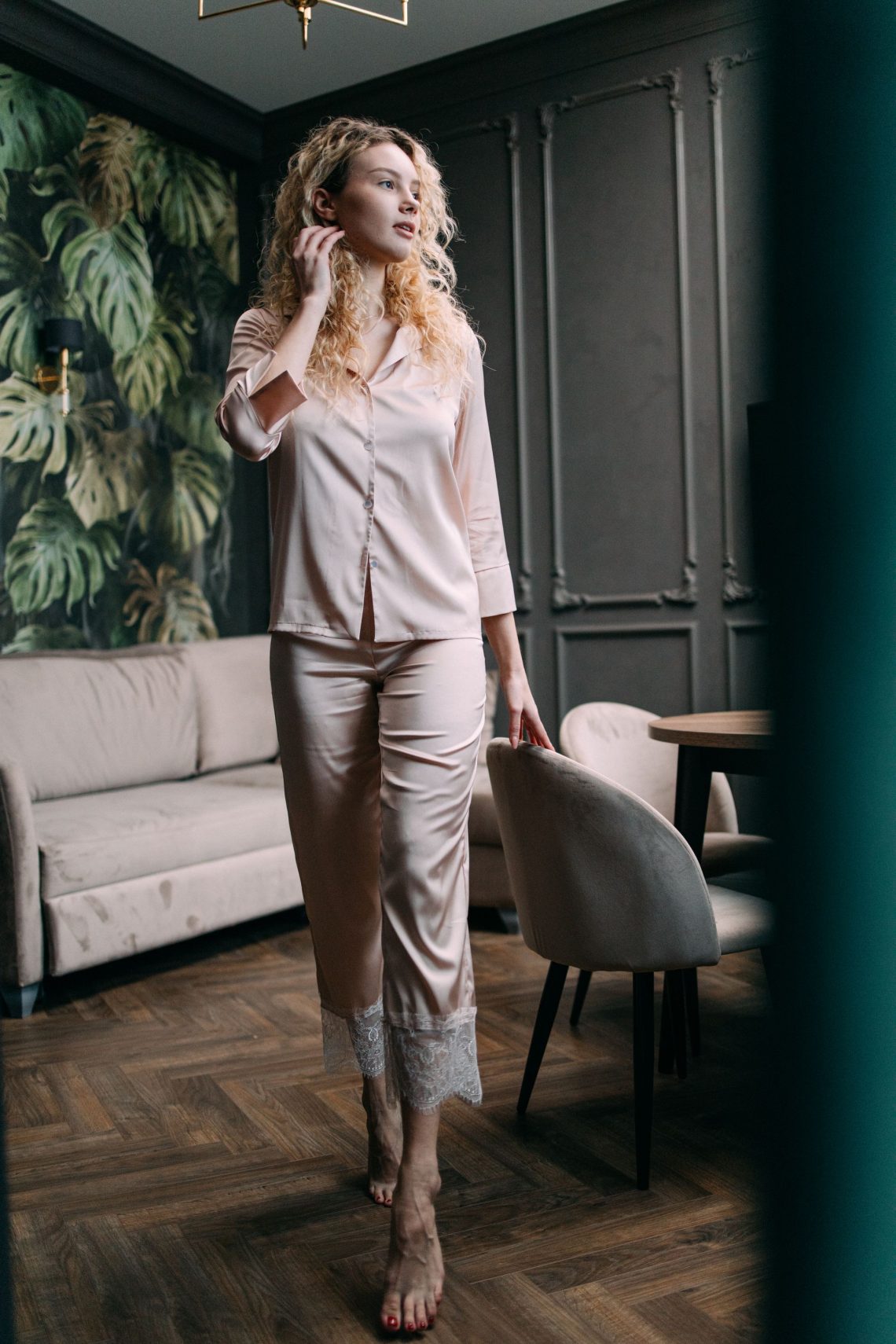
A coat-style pyjama set is one of the simplest pieces of loungewear to understand, and one of the easiest to get slightly wrong. Instead of a pullover top or a one-piece, it opens down the front like a shirt or a light jacket — usually with buttons, sometimes with a tie or a hidden snap — and is worn with matching trousers, or as a robe over a camisole or T-shirt. The appeal is practical as much as visual: it is easy to put on, easy to layer, and it looks finished enough to wear beyond the bedroom. This guide explains what the style actually is, which fabric and construction details are worth checking, and the mistakes that most often lead to a set you rarely reach for.
Why Coat-Style Pyjamas and Loungewear Exist
Coat-style sets sit between sleepwear and casual home clothing. A button-front satin or cotton shirt with matching trousers can be slept in, worn with coffee at the table, or layered under a knit for a quiet evening at home. A robe in the same family — silk, satin, cotton waffle, or a mid-weight knit — does the same job with a wrap front.
They make particular sense if you prefer not to pull a top over your head, if you like to adjust how open or closed the front sits, or if you want one outfit that can move from bed to a late breakfast without looking like you have just woken up. They are less ideal if you sleep very hot and prefer a short, loose T-shirt, or if you dislike any fastening at the waist or chest.
What “Coat-Style” Actually Means
The name refers to the opening, not to outdoor clothing. Look for a full or three-quarter front opening, most often a button placket, sometimes a wrap with a tie belt; a shirt-like collar, a shawl collar, or a simple rounded neck; matching or coordinating trousers, or a robe long enough to wear on its own; and a straight or slightly relaxed cut through the body, rather than a tight blouse.
Some sets add piping along the collar and cuffs, a breast pocket, or a contrast facing. Those details affect how polished the set looks, but they are not a quality guarantee on their own. What matters is whether the opening lies flat, whether the trousers sit comfortably at the waist, and whether the fabric feels right for how you actually spend your evenings.
Fabric: Start From How You Live, Not From a Label
There is no single best fabric for loungewear. Choose for climate, skin, and how the piece will be used.
Cotton and cotton blends are breathable, easy to wash, and usually the most straightforward for everyday wear. A mid-weight poplin or lawn works well for a button shirt; a jersey or interlock is softer if you want something closer to a T-shirt.
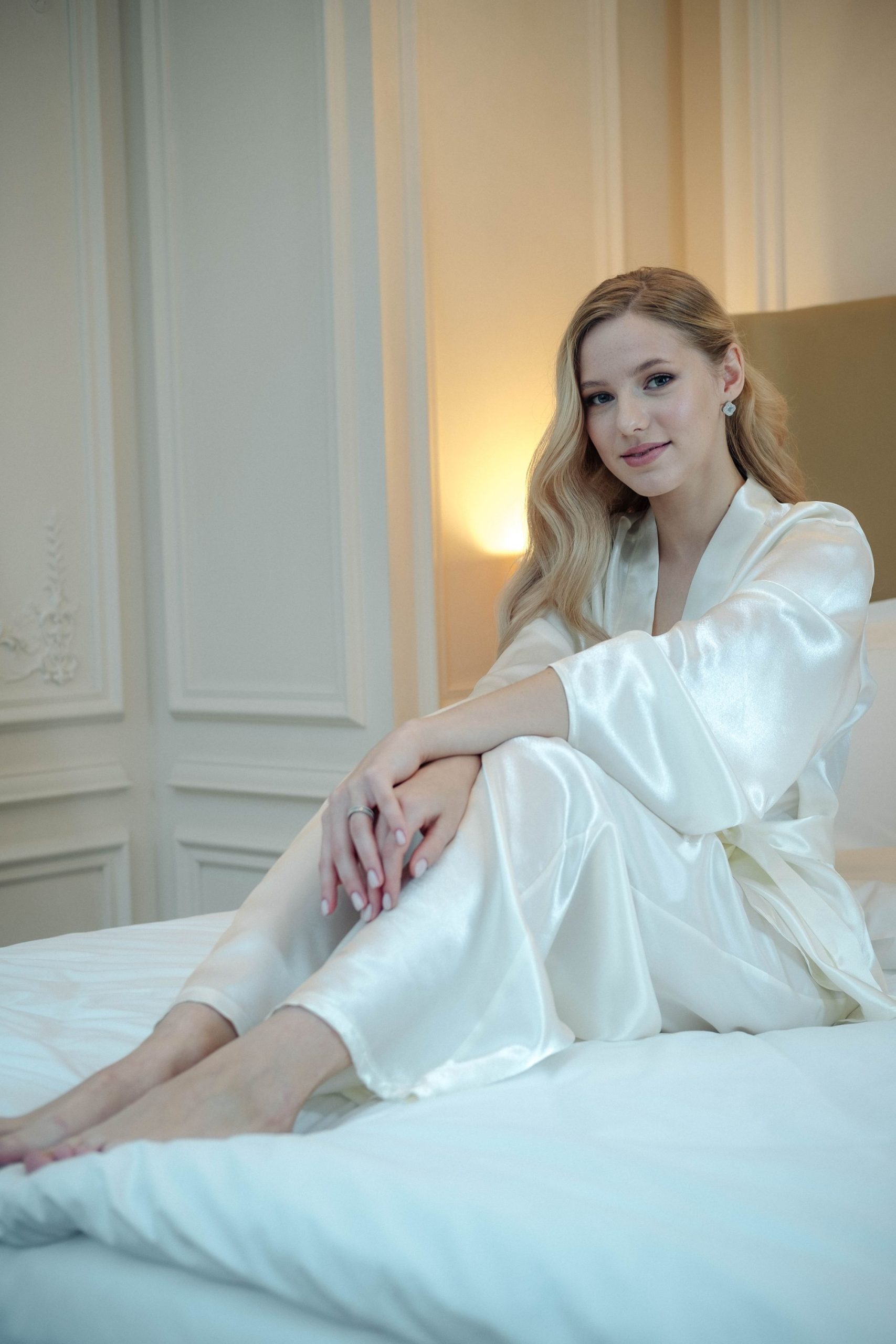
Silk and silk-like satins drape well and feel cool against the skin, which is why they are common for coat-style sets. They can be slippery, show water spots, and often need gentler washing than cotton. “Satin” describes the weave, not a fibre — it may be silk, polyester, or a blend — so read the care label rather than assuming.
Modal, viscose and other viscose-family fabrics are soft and drape easily. They can stretch out at the knee or seat if the trousers are very loose and the fabric is light. Knits, including lighter sweatshirt or waffle knits, suit cooler rooms and all-day lounging. They wrinkle less than a crisp cotton shirt but can look bulkier through the button band. Fleece and heavier brushed fabrics are warm, but a full coat-style layer in fleece may be too much for sleep if your bedroom is already heated.
Ignore marketing terms that are not backed by a fibre list or a care label. Weight, drape and breathability are better judged in person, or from a clear product description of the fibre and the weave, than from words such as “luxury” or “hotel quality”.
Fit and Construction
A coat-style set only works if the front opening behaves. Button spacing and security matter more than almost any other detail: gaps at the chest or midriff are the most common complaint with this style. The placket should be wide enough, and the buttons set closely enough, to stay closed when you sit or reach. If you are between sizes, this is usually the reason to size up rather than the shoulder measurement alone. Wrap robes should have a belt that stays tied and enough overlap that the front does not fall open when you sit down.
The shoulder seam should sit at the edge of your shoulder, not halfway down the arm. Sleeves that are too long will slide into a cup of tea; sleeves that are too tight at the bicep will pull the placket open. For trousers, look for an elastic waist, a drawstring, or both. A flat, unyielding waistband is harder to live with at home. Check whether the hem reaches the top of the foot or pools on the floor — either can be fine, but it should be a deliberate choice.
On lightweight fabrics, a narrow, even hem and finished inside seams last longer and look cleaner when the shirt is worn open. Loose threads at a buttonhole or a twisted side seam are worth noticing before you buy. Side pockets on trousers are useful. A stitched breast pocket on a very light satin can pull or pucker; that is a design trade-off, not automatically a defect.

Loungewear and Sleepwear Are Not the Same Thing
Plenty of coat-style sets can do both jobs, but it is worth being honest about the one you need most. Sleepwear should feel comfortable lying down, should not have bulky seams or ties where you roll onto them, and should suit the temperature of the room you sleep in. Loungewear can be a little more structured — a sharper collar, a slightly heavier cloth, a longer robe — because you will be sitting and walking in it.
If you want one set for both, a mid-weight cotton or a soft knit is usually easier to live with than a very formal satin, which can feel cold, cling, or slide while you sleep. If you are buying a satin or silk set mainly for how it looks in the evening, it is reasonable to keep a plainer cotton set for actual nights in bed.
Common Mistakes
Buying only from a flat lay is a frequent misstep. Coat-style shirts need to be judged with the front fastened and unfastened, ideally on a person or a mannequin, so you can see whether the hem hangs evenly and whether the trousers match the formality of the top. Satin and silk also shift colour under warm indoor light and daylight, so if the exact shade matters, look at more than one photograph, or see the fabric in person.
Do not overlook the care label. A set that needs to be washed by hand or kept out of the tumble dryer is still a fair purchase if you will do that. It is a poor purchase if you will not. “One size” robes are not universal either: wrap styles vary widely in length and in how much ease they have through the hip, so check the length from shoulder to hem and the stated fit notes. Finally, decide whether you want a complete outfit or a top layer. A very thin camisole-and-short set under a robe will not wear the same way as a full button shirt and trouser set.
How to Care for Them
Follow the care label on the garment you buy. In general, close buttons before washing so the placket does not twist, turn satin and silk-like pieces inside out, and use a gentle cycle or a hand wash for delicates. Avoid overheating in a dryer if the fabric is prone to shrinking or losing its sheen. Hang or lay flat to dry when the label allows it; a light steam or a cool iron on the reverse will usually settle a cotton shirt collar. Store the set hanging if you have space, so the trousers keep their line and the shirt front does not crease along the buttons.
A Last Check Before You Buy
A good coat-style set is less about a trend and more about a short list of practical tests: the fibre and the weave suit your climate, the front stays closed when you sit, the trousers are comfortable at the waist, the care is something you will actually do, and you can picture wearing it on an ordinary evening, not only in a product photograph. If those points are satisfied, the style is one of the more useful pieces of loungewear you can own — easy to put on, easy to live in, and simple to keep looking considered.