Wondering which clothes deserve space in your wardrobe by age 30? Start with pieces that solve real dressing problems: looking polished quickly, creating outfits across seasons, and feeling comfortable during long days. You do not need a large closet. You need a small group of reliable shapes, useful colors, and fabrics that suit your routine.
How to Choose Wardrobe Staples That Last
Start with repeatable jobs
A staple earns its place by doing more than one job. A white shirt should work with jeans, tailored trousers, a skirt, and a sweater. A jacket should make a casual outfit sharper without forcing you into formal clothes. A flat shoe should handle commuting, dinners, and ordinary errands. Before buying, name at least three outfits you can make with the piece you are considering.
Color matters as much as shape. Black, navy, cream, gray, camel, and dark denim combine easily, but you do not need all six. Choose two neutral families that suit the clothes you already own. If your wardrobe is mostly warm beige and brown, a bright optic-white top may sit untouched. Soft white, ivory, or ecru will earn more wears.
Use the three-point fit test
Check the shoulder seam, the tightest point, and the hem. A blazer seam should sit close to your shoulder bone. Jeans should lie flat at the waistband without cutting into your stomach. A skirt should stay in place when you walk and sit. Try each item with the undergarments and shoes you normally wear; a fitting-room victory can become a closet failure when the real layers change.
Verdict: Buy a staple only when it passes the three-outfit test, feels comfortable after ten minutes of movement, and works with your existing colors.
Which 10 Staples Cover the Most Outfits?
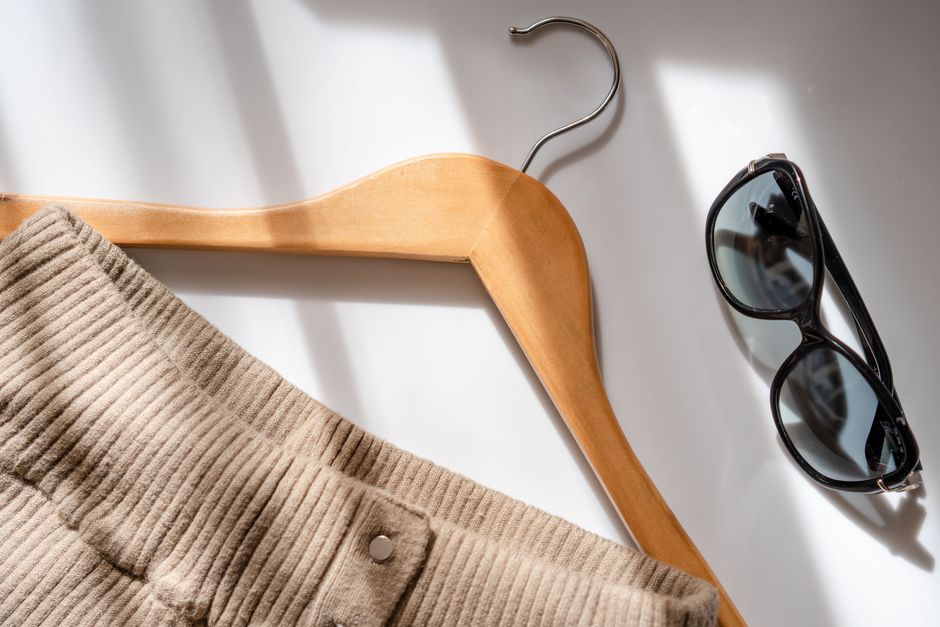
If you are building from scratch, these ten pieces give you the widest range with the least repetition. The best first purchases are the white top, straight-leg jeans, tailored jacket, dark trousers, and a comfortable everyday shoe.
The core ten
- White or ivory T-shirt: Choose a thick enough knit that it does not show every seam underneath.
- Oxford button-down: A relaxed but neat fit works open over a tee or tucked into trousers.
- Tailored blazer: Look for a single-breasted cut with enough room for a thin knit.
- Straight-leg jeans: Mid-rise denim gives a balanced base for fitted and loose tops.
- Dark tailored trousers: A flat front and clean hem suit work, travel, and dinners.
- Fine-gauge cardigan: Pick a buttoned layer that can function as a top.
- Simple midi dress: A restrained neckline and easy waist allow more styling options.
- Midi skirt: A straight or softly A-line shape adds variety without needing a special occasion.
- Leather belt: Match the buckle tone to the jewelry you wear most often.
- Loafers or refined flats: Select a pair with enough toe room for a full day on your feet.
Build your first edit
Buy the pieces in this order: tops, jeans, trousers, jacket, shoes, then seasonal layers. This sequence lets you test proportions before spending on a coat or occasion dress. Keep the first color palette narrow. Two tops, one bottom, and one jacket should already make several combinations before you add another category.
Verdict: A compact wardrobe needs balance, not ten matching basics. Combine fitted, straight, and relaxed shapes so every outfit has a clear silhouette.
What Fabric, Fit, and Color Should You Buy?
My strongest recommendation is to spend more on fit than on a famous label. A modest cotton shirt that sits correctly at the shoulder will look more expensive than a designer shirt that pulls across the chest. Inspect the fabric in daylight, sit down before buying trousers, and check care instructions before falling for a delicate finish.
Best examples for everyday basics
The Uniqlo Supima Cotton Crew Neck T-Shirt is a useful reference for a smooth, lightweight cotton basic; choose a size that skims rather than clings. For denim, the Levi’s 501 Original Jeans offer a straight leg and button fly. Choose the rigid or low-stretch cotton version if you want a firm shape, but choose a stretch version if sitting for long periods matters more than structure. The Ralph Lauren Classic-Fit Oxford Shirt shows the right direction for a wardrobe shirt: breathable cotton, a defined collar, and enough ease to layer.
Where structure pays off
For a jacket, the COS Single-Breasted Blazer is a good model to study because clean lapels and a simple front keep the piece useful beyond office dressing. The Everlane Day Glove is a practical flat reference: leather, low profile, and easy to pair with trousers or denim. For softness, the Quince Mongolian Cashmere Cardigan is a useful example of a fine knit layer, but do not buy cashmere if frequent hand-washing will make you avoid wearing it.
Skip pale fabrics that turn sheer under normal light, shoulder seams that sit halfway down the arm, and shoes that need a break-in period longer than your patience. Verdict: Choose breathable natural fibers for tops, sturdy woven fabric for jackets, and the most comfortable shoe shape you can wear for eight hours.
How Do the Staples Compare for Cost and Use?

The table below shows what each piece should do before it earns a place in your closet. Use the buying target as a fitting checklist, not as a demand to purchase every item at once.
Wardrobe staple comparison
| Staple | Best fabric target | Primary use | Buying check |
|---|---|---|---|
| White T-shirt | Midweight cotton | Layering and casual outfits | Not sheer; neckline lies flat |
| Oxford shirt | Cotton Oxford cloth | Polished everyday dressing | Buttons do not pull at the chest |
| Blazer | Wool blend or structured twill | Sharpens simple outfits | Shoulders align; sleeves show a little cuff |
| Straight-leg jeans | Denim with low stretch | Weekend and casual evenings | Waist stays up without pinching |
| Dark trousers | Wool blend or crease-resistant twill | Work and dinner | Seat lies smooth when sitting |
| Cardigan | Merino, cotton, or cashmere | Temperature control | Buttons close without strain |
| Midi dress | Viscose, cotton, or crepe | One-piece dressing | Hem allows a full stride |
| Midi skirt | Denim, wool, or fluid twill | Alternative to trousers | Waist stays level when walking |
| Leather belt | Full-grain or solid leather | Finishes and adjusts outfits | Middle hole fits comfortably |
| Loafers or flats | Leather or flexible woven upper | All-day walking | Toes move freely; heel does not slip |
What the comparison reveals
Buy the pieces with the highest weekly use first. A T-shirt, jeans, trousers, and comfortable shoes usually outperform a special dress in the first month. A blazer becomes more valuable after your base layers fit well. A belt is inexpensive in outfit terms but cannot rescue trousers with the wrong rise or length.
Verdict: Prioritize clothes that solve daily dressing problems, then add statement pieces after the basic proportions feel natural.
Which Staples Should You Buy First?
What should I buy with a small budget?
Start with one midweight T-shirt, one Oxford shirt, straight-leg jeans, dark trousers, and a comfortable flat. These five pieces create the strongest base for workdays, weekends, and informal dinners. The Uniqlo Supima Cotton Crew Neck T-Shirt and Levi’s 501 Original Jeans are clear examples of the shapes to seek, even if another brand fits your body better.
When should I skip a classic staple?
Skip a blazer if your lifestyle has no use for structured layers and buy a cardigan or chore jacket instead. Skip leather loafers if you walk on uneven streets and choose cushioned flats. Skip a midi skirt if you dislike adjusting hemlines or waistbands. A wardrobe staple is personal because it must be worn often; a famous category name does not make an unused garment useful.
What is the final buying order?
Use this ranking when you need a simple decision:
- Most versatile: white or ivory T-shirt.
- Best casual foundation: straight-leg jeans.
- Best polished upgrade: tailored blazer.
- Best workhorse bottom: dark tailored trousers.
- Best comfort layer: fine-gauge cardigan.
- Best one-step outfit: simple midi dress.
- Best finishing pieces: leather belt and refined flats.
The right wardrobe by 30 is not a fixed uniform. It is a short list of clothes that fit your real schedule, survive repeated wear, and make getting dressed easier. Buy the first five deliberately, test them for a month, and let your actual routine decide what comes next.