
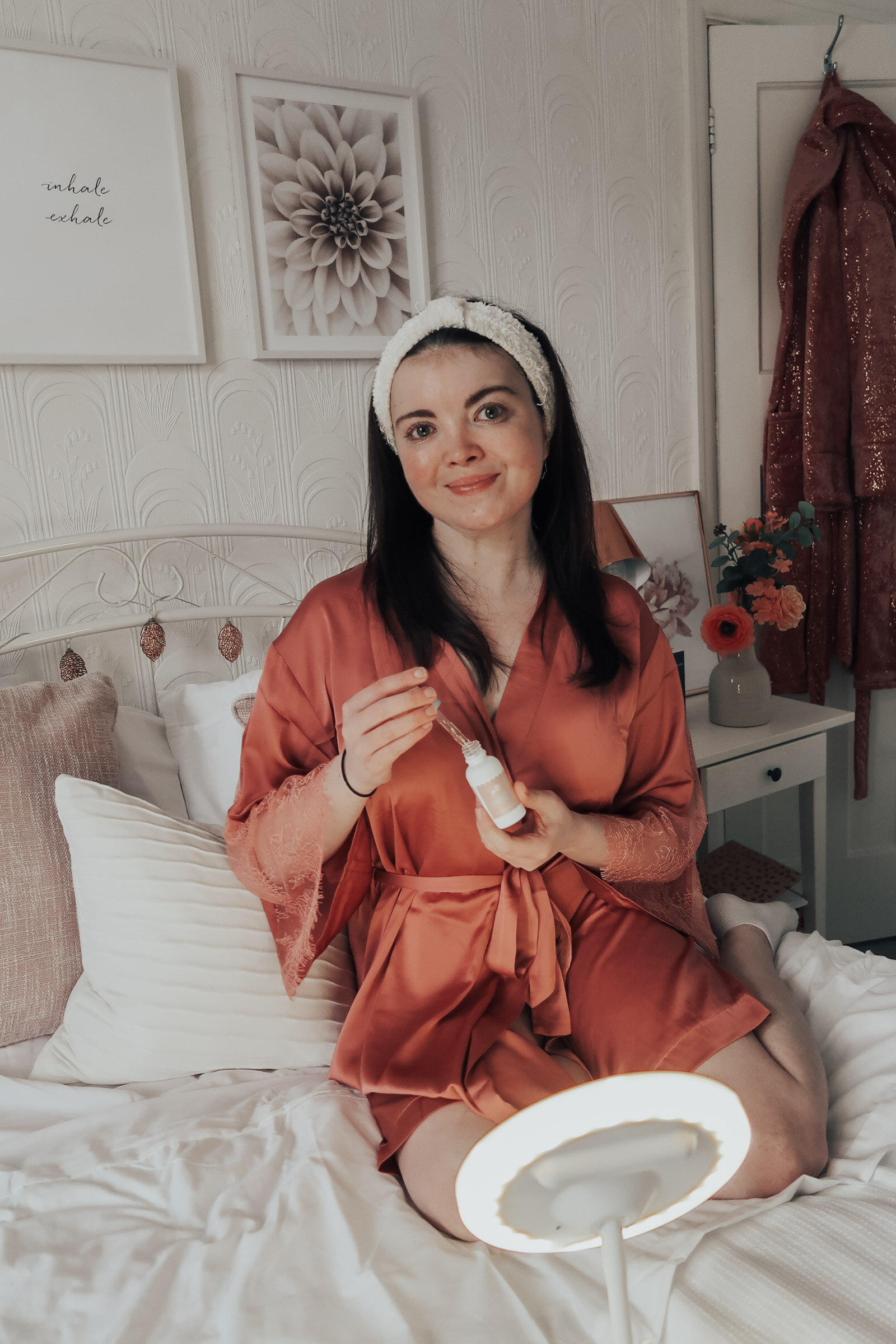
One molecule of hyaluronic acid can hold up to 1,000 times its own weight in water. That’s not marketing copy — it’s the chemistry behind why this ingredient became the backbone of modern skincare routines almost overnight.
I started using a hyaluronic acid serum two years ago because my skin felt perpetually tight and dull no matter how much moisturizer I stacked on top. Three weeks in, the texture shifted. Fine lines softened. My skin stopped feeling like it was working against me.
But here’s what nobody leads with: the serum is only half the equation. How and when you apply it matters just as much as which bottle you buy. Get that wrong and you’ll spend $30 on something that actively dries your skin out.
What Hyaluronic Acid Actually Is (And Why the Science Holds Up)
Hyaluronic acid (HA) is a glycosaminoglycan — a type of sugar molecule — that your body already produces naturally. It lives in your joints, eyes, and skin. Young skin is packed with it. By your mid-30s, production slows significantly, which is one reason skin loses plumpness and elasticity with age.
What makes HA unique as a skincare ingredient is its function: it’s a humectant. It draws moisture from its environment and holds it in place. It doesn’t add oil. It doesn’t form a physical barrier. It pulls water — either from the air around you or from deeper skin layers — into the outer layers where you actually see and feel the difference.
The molecule comes in different sizes. That distinction matters far more than most product descriptions bother to explain.
High Molecular Weight vs. Low Molecular Weight HA
High molecular weight HA (over 1,000 kDa) sits on the skin’s surface. It creates a smooth, plumping effect almost immediately — the glass-skin look you notice right after applying. This is temporary and largely cosmetic, but not useless. It makes makeup sit better and skin look more rested throughout the day.
Low molecular weight HA (under 50 kDa) penetrates deeper into the epidermis and works over time. Studies show it can improve skin elasticity and long-term moisture retention — not just surface-level plumping that fades in hours. These results take weeks to accumulate.
The best serums blend both molecular weights. The Ordinary Hyaluronic Acid 2% + B5 (~$12) uses a multi-molecular weight system — three different HA sizes plus provitamin B5 for enhanced absorption — which is a large part of why it outperforms products at three times the price. For something more targeted toward barrier repair, Paula’s Choice BOOST Hyaluronic Acid Booster (~$44) pairs multi-weight HA with ceramides, which trap moisture in rather than letting it evaporate off the surface.
What HA Will Not Do
It won’t clear acne. It won’t fade dark spots or hyperpigmentation. It won’t tighten sagging skin or address volume loss from collagen decline.
HA does one job — hydration — and does it exceptionally well. If you buy it expecting it to replace a vitamin C or retinol, the disappointment is entirely predictable. Every skincare purchase should start with: what specific problem am I solving? HA’s answer is dehydration and surface moisture retention. Nothing beyond that.
The Correct Way to Apply a Hyaluronic Acid Serum
Most of the “HA didn’t work for me” experiences trace back to application errors. The ingredient itself is almost universally effective across skin types. The technique is what varies — and the difference between right and wrong is not subtle.
Here is the exact sequence:
- Cleanse your face. Pat dry — but leave skin slightly damp. Not dripping, just not bone-dry. This is the single most important step.
- Apply HA serum immediately. Three to four drops across your forehead, cheeks, and chin. Press gently into skin. Don’t rub.
- Wait 60 seconds. Let it absorb fully. A slight tacky feeling is normal and expected.
- Apply moisturizer on top. This seals the HA and the moisture it’s drawn in. Skip this and the HA will pull moisture back out through evaporation as your skin dries — leaving you worse off than before you started.
- Apply SPF in the morning. HA doesn’t cause sun sensitivity, but it works best in skin not being actively degraded by UV damage.
Morning and evening both work. Some people apply twice daily; others use it evenings only, particularly when stacking multiple actives in the morning. Either works. What doesn’t work is inconsistency — two to four weeks of daily use is the minimum before you can fairly evaluate whether it’s changing anything.
How Much Product to Use
Three to four drops cover the entire face. Using more doesn’t improve results. HA saturates quickly and any excess sits on the surface without additional benefit. If you’re going through a bottle in three weeks, you’re overdoing it.
What to Layer It With
HA is one of the most compatible skincare ingredients available. It pairs cleanly with niacinamide, vitamin C, retinol, and peptides — no reactivity issues to worry about. The firm rule is application order: thinnest to thickest consistency. HA serum before moisturizer, every time. If you use a face oil, it goes last — after your moisturizer, not sandwiched between serum and moisturizer where it blocks absorption.
Best Hyaluronic Acid Serums: A Direct Comparison
These are the serums that consistently deliver on their promise. Prices are approximate retail and fluctuate by retailer.
| Product | Price | HA Concentration | Best For | Verdict |
|---|---|---|---|---|
| The Ordinary Hyaluronic Acid 2% + B5 | ~$12 | 2% (multi-weight, 3 sizes) | Beginners, budget-conscious routines | Best overall value — start here |
| Neutrogena Hydro Boost Serum | ~$25 | Not disclosed | Sensitive skin, pharmacy convenience | Fragrance-free, reliable, widely available |
| L’Oréal Revitalift 1.5% Pure HA Serum | ~$30 | 1.5% | Drugstore shoppers wanting a step up | Good texture, solid mid-range pick |
| Paula’s Choice BOOST HA Booster | ~$44 | Multi-weight + ceramides | Dry, mature, or barrier-compromised skin | Best for long-term barrier support |
| SkinCeuticals H.A. Intensifier | ~$108 | Multi-weight + proxylane | Anti-aging focus, clinical-grade seekers | Results are real; price is hard to justify for most budgets |
Clear verdict for most people: The Ordinary Hyaluronic Acid 2% + B5. At $12, it’s not a budget compromise — it’s genuinely one of the better-formulated HA serums at any price point. Use it for three months. If you want more barrier support after that, the Paula’s Choice Booster is the logical upgrade.
The One Application Rule That Changes Everything
Apply HA to damp skin. Seal it immediately with a moisturizer. That’s the entire system. No product in this category overrides basic application chemistry — not the $108 SkinCeuticals bottle, not anything else. Get this sequence wrong and you’ll dehydrate your skin regardless of what you spend.
Five Mistakes That Cancel Out Your Results
These are the actual reasons most people abandon HA serums before they ever see what the ingredient can do:
- Applying to dry skin in a low-humidity environment. If ambient humidity sits under 40% and your skin is bone-dry, HA will pull moisture from deeper skin layers to the surface — where it promptly evaporates. Net result: you’re drier than before you started. This is documented and real. In dry climates, apply to damp skin or run a humidifier in the room where you get ready.
- Skipping the moisturizer seal. HA attracts water but cannot prevent evaporation on its own. A moisturizer containing ceramides, dimethicone, or shea butter on top is what locks hydration in place. The serum and the moisturizer work as a system, not alternatives.
- Expecting results in three days. Skin cell turnover takes weeks. Give it four full weeks of daily use before deciding it’s not working. Most people quit at day five.
- Using it only occasionally. HA hydration at the surface level is temporary by nature. Daily use is what builds lasting improvement in moisture retention and texture over time.
- Layering a face oil directly after the serum. Oils are occlusives — they block absorption. Apply your face oil last, after moisturizer, or you’ll trap HA on top of the skin before it absorbs.
One thing worth stating plainly: oily skin still needs hydration. Oily and dehydrated are separate properties — skin can be both simultaneously. HA won’t increase oil production. It addresses water content only. If you have oily but dehydrated skin — shiny appearance but tight, uncomfortable feeling — the COSRX Hyaluronic Acid Intensive Cream (~$22) is a lightweight option that delivers moisture without congesting pores.
Also: don’t layer HA under a heavy occlusive like petroleum jelly as a shortcut moisturizer step. The correct order is humectant first, then emollient or occlusive on top. Reversing it blocks absorption completely and you get none of the intended benefit.
When to Skip Hyaluronic Acid and Buy Something Else
HA is a precision tool for one specific problem. If dehydration isn’t what your skin is actually dealing with, a different ingredient will produce better results for the same money.
For Oily or Acne-Prone Skin
Skin that’s oily and prone to breakouts, but not tight or visibly dehydrated? A niacinamide serum will do more. Niacinamide regulates sebum production, tightens pore appearance over time, and fades post-acne marks — it targets the actual underlying issues rather than layering additional moisture onto skin that doesn’t need it. The Ordinary Niacinamide 10% + Zinc 1% (~$6) costs half the price of most HA serums. Start there.
That said: oily skin can still be dehydrated. If your skin looks shiny but feels uncomfortably tight or dry in patches, that combination is oily-dehydrated — and HA absolutely belongs in that routine, just in a lighter formulation.
For Visible Aging and Deep Lines
HA softens the look of dehydration lines temporarily by filling them with water. That’s a cosmetic effect, not a structural one. For genuine collagen decline and volume loss, you need a retinoid. La Roche-Posay Effaclar Adapalene Gel 0.1% (~$30) and Differin Gel (~$35) are both available without a prescription and both stimulate actual collagen production over months of use. The correct approach for aging skin: use a HA serum for hydration support while a retinoid handles the structural work underneath.
How to Build HA Serum Into Your Full Daily Routine
What goes before the serum?
Cleanser, then HA serum — applied while skin is still slightly damp. A hydrating toner right before the serum adds an extra layer of moisture for the HA to work with, but it’s optional. Keep your routine simple until you understand what each product is doing. Complexity isn’t the same as effectiveness.
What if you have sensitive skin or live somewhere dry?
Sensitive skin: HA itself almost never causes reactions. Most irritation people attribute to “HA serums” is actually a response to denatured alcohol or synthetic fragrance in the formula — not the HA. Check the ingredient list for “alcohol denat.” or “parfum” and switch to a fragrance-free, alcohol-free version. Neutrogena Hydro Boost Serum is the reliable fragrance-free starting point for reactive skin.
Dry climate: use a heavier occlusive moisturizer over the serum — something with shea butter, squalane, or petrolatum. These create a physical seal that prevents moisture from evaporating regardless of ambient humidity. In humid climates, a lighter gel moisturizer works fine and the Isntree Hyaluronic Acid Watery Sun Gel (~$18) can pull double duty as a lightweight final morning step.
When do you actually see results?
Surface plumping: within hours of first application. Noticeable texture improvement: two to four weeks of daily use. Visible softening of dehydration lines: three to six weeks. Photograph your skin in identical lighting at weeks one, three, and six. The change is gradual enough that you’ll miss it entirely without a side-by-side comparison — and then assume nothing happened.
Skincare formulation is moving faster than most people realize. Newer HA products pair the molecule with peptides, ceramides, and barrier lipids in single bottles, reducing the steps needed without reducing results. The gap between pharmacy skincare and clinical-grade formulations is narrowing every product cycle. Getting the fundamentals right now — damp skin, daily consistency, sealed with moisturizer — puts you in a strong position to take advantage of wherever hydration science goes next.