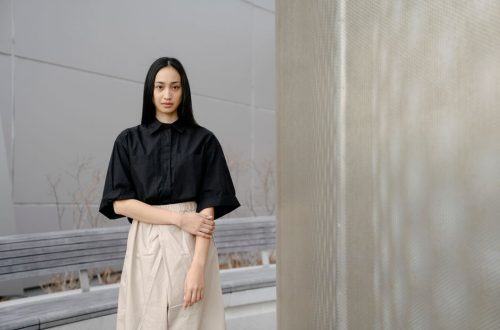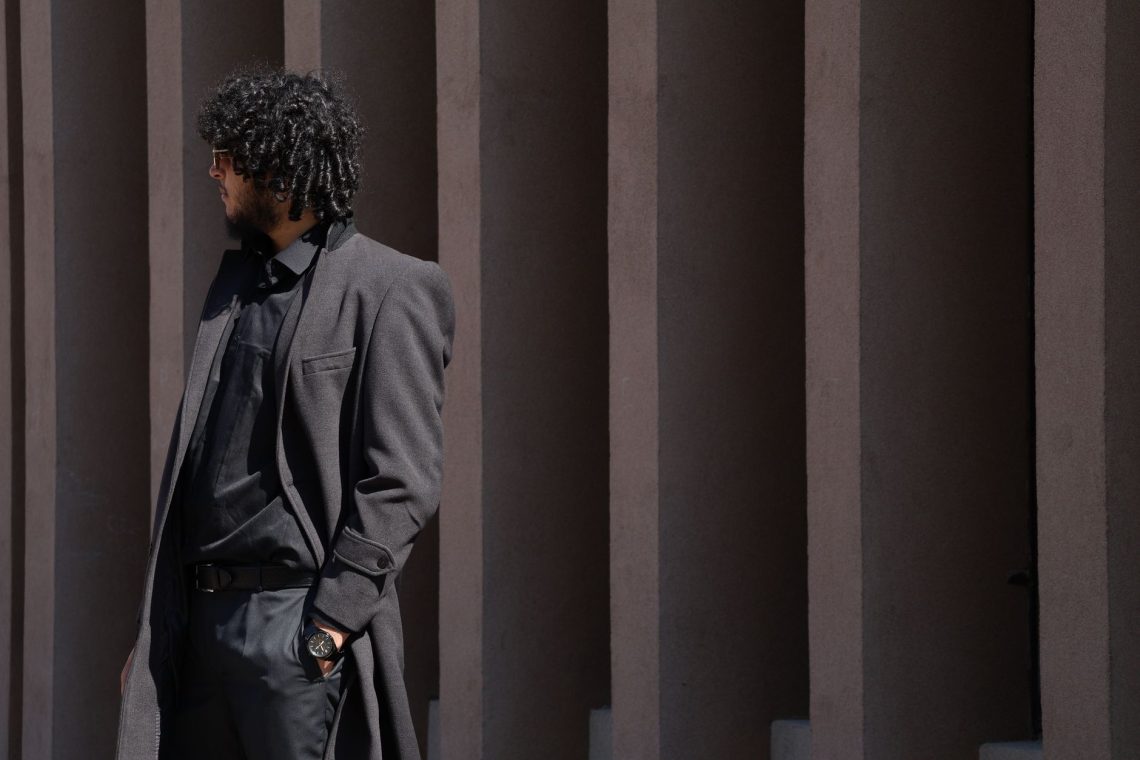
An all-black outfit can look beautifully considered in the mirror, then turn into one dark shape in a photograph. The clothes have not suddenly stopped working. Often, the camera simply has less information to pick up: a sleeve merges into a waist, a bag disappears against a coat, and details you can see in person become hard to distinguish.
The answer is to give the eye a few clear differences within the black. Texture, shape, jewellery and the direction of the light can all help. You do not need sequins, statement accessories or a completely different wardrobe. A few deliberate choices will make your outfit easier to read while keeping the simplicity that makes black so appealing.
Start with two clearly different textures
When every piece has a similar finish, black separates can blend together. Try combining something that absorbs light with something that reflects a little of it. A soft wool jumper with a smooth leather skirt, for example, gives the camera two distinct surfaces to describe.
Think beyond the labels on your clothes. A fine cotton jersey and a smooth, tightly woven trouser may look quite similar from a distance, even though they are different fabrics. Ribbing, brushed wool, velvet, pleats and crinkled finishes tend to create more visible variation. You want a difference you can notice without leaning in.
- For everyday outfits: pair washed black denim with a fine ribbed knit and polished boots.
- For work: wear tailored trousers with a softly textured blouse and a structured bag.
- For evening: combine a matte top with a satin skirt, keeping the remaining accessories simple.
Two contrasting textures are a useful starting point. If every item has a busy surface, the outfit can lose its calm. Let one fabric provide the main interest and use quieter pieces around it.
Make the silhouette easy to see
Texture helps, but shape does just as much work. A loose black top over wide black trousers can hide where one garment ends and the next begins. That can be exactly the look you want, but if the photograph feels shapeless, create one deliberate break.
Tuck the front of a jumper into a waistband, push sleeves back to reveal your wrists, or leave a jacket open so its edges frame the layer beneath. A shorter jacket over longer trousers creates a different outline from a long coat over a short dress. Neither is automatically better; the important thing is that the proportions look intentional.
When trying on the outfit, step away from the mirror. Check whether you can still see the waist, hemline or jacket opening from across the room. Those broader shapes are more likely to register in a full-length photograph than tiny garment details.
Use small areas of skin as natural contrast
An open neckline, bare ankle or visible wrist can separate sections of an outfit without adding another colour. Choose whichever detail feels comfortable and suits the weather. A shallow V-neck under a blazer may be enough; there is no requirement to wear something revealing.
Pay attention to where fabric gathers. A high neckline, long sleeves and a large scarf can create a dense area around the face. You might loosen the scarf, remove one layer or choose earrings that bring a little reflected light towards your cheeks. If you prefer full coverage, use texture and jewellery to provide that definition instead.
Give jewellery a specific job
Jewellery works particularly well against black because its outline is easy to see. Rather than adding several pieces at once, decide where the outfit needs a point of interest. Earrings draw attention towards your face, a necklace defines an open neckline, and a cuff can break up a long sleeve.
Scale matters in photographs. A delicate chain that looks lovely close up may barely register in a full-length shot. If you want the jewellery to be visible, try a slightly broader chain, a pendant with a clear shape or a pair of medium-sized hoops. The aim is visibility, not simply size.
Both gold- and silver-toned finishes can work. Choose the metal you enjoy wearing, then consider its surface. Brushed metal gives a softer glint, while polished jewellery creates a sharper highlight. Check that a pendant sits clear of a neckline rather than catching awkwardly on its edge.
Choose accessories that separate from the clothes
A black bag can disappear against a black coat, particularly when both are soft and matte. A bag with structure, visible hardware or a subtly grained finish will usually have a clearer outline. You can also carry it slightly away from your body instead of pressing it against the outfit.
Shoes offer another chance to change the finish. Polished loafers beneath wool trousers, suede boots with a smooth skirt, or satin shoes with a tailored suit can add depth without interrupting the colour scheme. Check trouser length too: a hem pooled over black shoes may obscure both pieces.
Before taking photographs, remove lint and check for accidental shine or dusty marks. Black can make these distractions noticeable. Intentional texture looks considered; a patch of fluff on a sleeve simply draws attention away from it.
Find light that reveals the fabric
For a quick photograph indoors, stand near a window and turn slightly so the light comes from one side. This can create gentle highlights along folds, seams and textured surfaces. Face the window more directly if side lighting leaves too much of your face in shadow.
Outside, open shade is a useful place to begin: try the edge of a sheltered doorway or a shaded pavement with open sky in front of you. Strong overhead sunshine can produce harsh shadows and bright reflections on shiny fabrics. Moving a few steps may improve the balance more than changing the outfit.
Avoid standing directly in front of a bright window unless you deliberately want a silhouette. Your phone may expose for the bright background and leave the clothes very dark. Move so the window lights you from the front or side instead.
Check the background and your position
Even a well-styled outfit can disappear against a dark doorway. Look for a background that gives your outline some separation, such as pale stone, a softly coloured wall or lighter foliage. It does not need to be plain, but fewer distractions make garment details easier to notice.
Then leave a little space between your arms and torso. Resting a hand lightly at your waist, holding a bag by its handle or turning slightly can reveal the jacket opening and sleeve shape. Keep the pose comfortable rather than forcing exaggerated angles. Take a front view and a slight turn, then compare how the fabrics catch the light.
Do one quick photo check before you leave
Take a full-length picture in the light you have available. Look at the outfit as a whole first: can you distinguish the top from the bottom, see the shoe shape and identify one clear focal point? If everything merges, change one thing. Open the jacket, swap a matte bag for a smoother one, or move closer to the light.
On your phone, tapping the outfit may help you judge its detail, but check that your face and jewellery do not become too bright. Resist brightening the image until black looks grey. The goal is to retain the depth of the colour while revealing the clothes.
A dependable formula is a textured base, one contrasting finish and a small metallic accent. Add a clear silhouette and light that catches the fabric, and an all-black outfit can look as expressive in a photograph as it feels when you put it on.