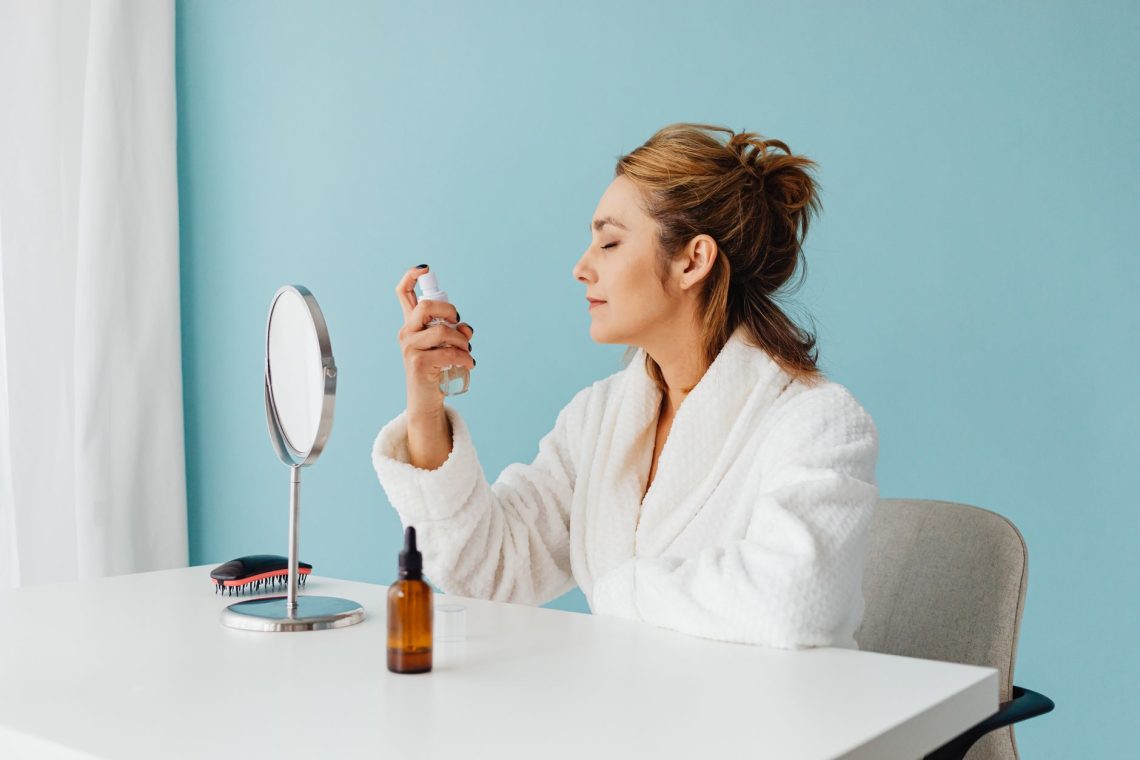
Setting spray and face mist can look almost identical on a dressing table: a bottle, a pump and a promise of a fresher finish. The useful distinction is what you want to happen after you spray. Are you trying to help your make-up stay in place, or would you like your skin to feel more comfortable?
You do not automatically need either. A well-prepared base and carefully applied make-up may be enough for an ordinary day. Here is how to tell the two apart and decide whether either deserves a place in your routine.
What is setting spray for?
Setting spray is intended to finish make-up. Depending on the formula, it may help make-up resist movement, reduce a powdery appearance or change the finish towards matte or dewy. Those are different jobs, so look beyond the name on the front of the bottle.
Some formulas contain film-forming ingredients that leave a light layer over make-up as they dry. Others focus more on making foundation, concealer and powder look less visibly separate. A spray that gives a lovely fresh finish is not necessarily the one to choose when your main concern is transfer.
Think of setting spray as an optional finishing step. It cannot reliably rescue foundation that is already separating, prevent every mark on a collar or make an uncomfortable base feel right all day.
What does a regular face mist do?
A regular face mist is primarily a skincare or comfort product. It may contain humectants, which help attract water, alongside ingredients intended to soften the feel of skin. Some offer a simple refreshing spritz; others leave a more noticeable skincare layer behind.
A mist can be pleasant when your face feels tight or when you want to dampen skin before moisturiser. That does not mean every mist provides lasting hydration by itself. Moisturiser usually remains the more useful step for keeping dry skin comfortable.
Unless a face mist specifically claims to set make-up, do not assume it will improve wear. It might temporarily soften the look of powder, but that is different from helping your base stay put.
Choose according to the problem
Your make-up fades or moves
This is a reason to consider setting spray intended for longer wear. First, notice where the problem starts. Foundation rubbing away around your nose may need a thinner application there. Concealer collecting in folds may benefit from less product. A spray is most useful once the basics are working reasonably well.
For a long event, setting spray can be an extra finishing step. Look for a clear wear-related claim rather than choosing solely because a bottle promises glow. Touching your face, wiping your mouth and rubbing against clothes can still disturb make-up.
Your foundation looks powdery
A finishing spray may soften the appearance of powder, but try adjusting your application first. Use less powder, concentrate it where you become shiny and give skincare time to settle before applying foundation.
If you already own a face mist suitable for use over make-up, a light application may improve the appearance. Try it on a quiet day first. A rich mist may change your base more than you expect, while a heavy spray can leave visible droplet marks.
Your bare skin feels tight
Reach for your skincare routine first. A face mist can be an optional layer before moisturiser, particularly if you enjoy applying moisturiser to slightly damp skin. Setting spray is not a substitute, even when it promises a dewy finish.
If tightness keeps returning, consider whether your cleanser or other products leave your skin uncomfortable. Repeated spraying may feel pleasant without addressing why your skin feels dry.
You simply want a refresh
A regular mist makes more sense here, provided you enjoy the sensation and your skin tolerates it. There is no requirement to turn a refreshing habit into an essential skincare step. If your skin already feels comfortable, skip it.
How to apply setting spray
- Finish your make-up. Unless the product gives different instructions, apply your base, colour and powder first. Allow mascara to dry before spraying.
- Read the directions. Shake the bottle if instructed and use the recommended distance. Holding it too close can deposit large droplets in one spot.
- Apply a light, even layer. Aim for a fine veil rather than a wet face. More product does not automatically mean better hold.
- Let it dry untouched. Keep your eyes and mouth closed while spraying and avoid breathing in the mist. Allow it to settle before assessing the finish.
If the nozzle splutters, check and clean it according to the packaging instructions before using it again. Large droplets can disturb carefully blended make-up. Avoid immediately buffing a wet patch; let it dry, then decide whether a small touch-up is needed.
Where face mist fits into your routine
On bare skin, a straightforward place for a hydrating mist is after cleansing and before moisturiser. Follow the product instructions and avoid introducing several new products together. That makes it easier to work out what suits you.
Over make-up, use a lighter hand. Check that the mist is intended for that use, apply it at the directed distance and let it settle. Rubbing it in can shift foundation and blush. If your make-up already looks good, there is no need to spray it simply because the bottle is nearby.
Neither an ordinary face mist nor a setting spray replaces sunscreen. Keep sun protection as a separate part of your routine and follow your sunscreen’s application and reapplication instructions.
Can you use both?
Yes, but give each a purpose. You might use face mist before moisturiser during skin preparation, then setting spray after completing your make-up. That puts the skincare step before the base and the finishing step afterwards.
Repeatedly layering face mist over setting spray is less predictable. Depending on the formulas and the amount applied, extra moisture may change the finish or disturb the make-up underneath. For a midday touch-up, start by gently blotting excess shine or repairing a small worn area instead of automatically spraying your whole face.
What to check before buying
- Purpose: choose a claim that matches your need, whether that is make-up wear, a particular finish or skin comfort.
- Finish: matte and dewy describe appearance, not necessarily how comfortable the product will feel.
- Your sensitivities: fragrance, essential oils or alcohol may influence your choice if they have bothered you before. No single ingredient tells the whole story of a formula.
- The nozzle: an even mist is easier to control than a concentrated jet, especially over finished make-up.
Try a new product on a small area first and stop using it if irritation occurs. You do not need both bottles to complete a routine. Choose setting spray when make-up wear or finish needs help, face mist when you enjoy the skincare or refreshing step, and neither when your existing routine already does the job.