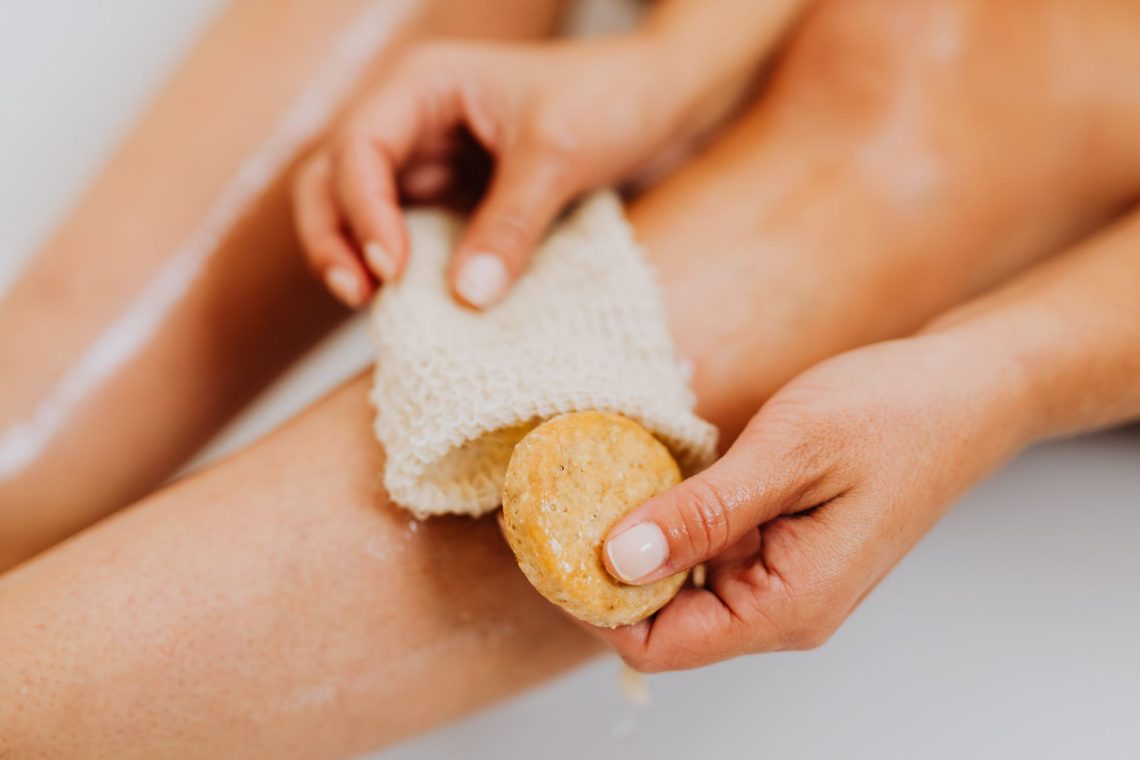
A body scrub can make a shower feel like a small occasion: warm water, a pleasant texture and a little attention paid to elbows and shins. It is also easy to let that satisfying polish become an everyday habit. When skin starts feeling tight or tender, another handful of grains is unlikely to be the missing step.
Choosing a body scrub frequency means finding a gap between sessions that leaves your skin comfortable. You do not need to exfoliate every time you wash, and you do not need every part of your body on the same timetable. Start gently, pay attention afterwards and let an uneventful routine be the goal.
Begin with one session, then leave space
If you are introducing a body scrub, try one gentle session and leave at least a week before considering another. Treat this as a cautious starting point, rather than a weekly appointment you must keep. Read the product instructions first; a scrub intended for occasional use should not become a daily shower staple.
During that gap, notice how your skin feels when you get dressed, shower and apply your usual moisturiser. Comfortable skin should not feel sore against a towel or unusually sensitive beneath clothing. If it feels dry, itchy or tender, skip the next session. A calendar reminder is useful only if it reminds you to check your skin before opening the tub.
There is no need to increase frequency simply because the first session went well. Once a week may be plenty; less often may suit you better. You can also decide that ordinary washing and moisturising give you the finish you want, without a scrub.
Check what else is doing the exfoliating
Your scrub does not work in isolation. Think about everything that rubs or exfoliates your body during the week: a textured mitt, a rough flannel, dry brushing or an exfoliating body lotion. It is easy to count only the product labelled “scrub” and overlook the rest.
Keep the first few sessions simple. Use your hands for ordinary cleansing between them and avoid layering several exfoliating steps into one shower. If your body-care routine already includes products with exfoliating acids or retinoids, follow their directions and leave the grainy scrub out while you work out how that routine suits you.
A useful rule is to change one thing at a time. Adding a scrub, a new shower gel and a fragranced lotion together makes it harder to identify what caused discomfort. Familiar products give you a clearer starting point.
Match the timing to the skin you have today
When skin feels dry or easily irritated
Do not assume that visible flakes need rubbing away. If skin already feels tight, fragile or uncomfortable, leave the scrub on the shelf and keep your washing routine gentle. Moisturise with a product you already tolerate. Reconsider exfoliation only once your skin feels settled, and accept that you may prefer longer gaps or no scrub at all.
When skin feels comfortable
If your skin is comfortable and you enjoy exfoliating, keep the session brief and the pressure light. Judge the result over the following days, rather than just by the slippery feeling immediately after rinsing. A rich scrub can leave a coating that feels soft before you have had time to notice any tenderness.
When different areas need different treatment
You can scrub your elbows without scrubbing your chest. Areas that rub against waistbands, bra straps or fitted clothing may welcome a break even when your knees feel fine. Avoid treating the whole body as one surface that needs an identical amount of polishing.
Roughness is not a request for stronger pressure. If an area stays rough despite gentle care, repeatedly grinding at it is not a useful next step. Leave it alone rather than turning a small patch into a sore one.
Make each session gentler
- Check your skin first. Skip broken, irritated, sunburnt or freshly shaved areas. Do not scrub over spots that are sore or inflamed.
- Follow the directions. If the product is intended for damp skin, wet your skin before applying it. Do not use it dry in an attempt to get a stronger result.
- Start with a small amount. Spread it with your fingertips and use light movements. You should not need to brace yourself against the sensation.
- Make one gentle pass. Avoid returning to the same patch until it feels perfectly smooth. There is no requirement to keep rubbing until the grains disappear.
- Rinse thoroughly. Use comfortably warm water and your hands to remove the product, without adding a rough mitt for a final polish.
- Pat dry and moisturise. Keep the rest of the routine familiar, then notice how your skin feels later.
The session should feel easy to stop. If you catch yourself pressing harder to make the scrub “work”, ease off. Neither a gritty texture nor an expensive-looking jar creates an obligation to use more force.
Keep scrubbing separate from hair removal
Shaving and a grainy scrub can be an uncomfortable combination, especially when you use both in one shower. Avoid scrubbing freshly shaved skin, and do not build an exfoliation session around the assumption that it must happen immediately before hair removal.
Leave space between the two and wait until your skin feels completely comfortable. After waxing, follow the aftercare instructions you have been given. If an area is still tender, postpone the scrub regardless of what your usual schedule says.
For a busy week, choose the essential grooming step and drop the optional one. You do not need to squeeze exfoliation into the evening before an event, particularly if you are also trying a new hair-removal method or body product.
Recognise when to cancel the next session
Rawness is a stop signal, not evidence of a thorough treatment. Other reasons to pause include lingering redness, unusual tightness, itching, tenderness or stinging when you apply a familiar product. On deeper skin tones, discomfort or a change in texture may be more noticeable than redness.
Stop using the scrub if it hurts during application. Rinse it off gently and leave further exfoliation out of your routine while the skin settles. Do not try to smooth away peeling with a second session, or replace the scrub with another exfoliating tool.
If soreness persists, the skin is damaged or you are unsure what is causing a reaction, ask a pharmacist or qualified healthcare professional for advice. A cosmetic routine should not require you to work through pain.
Build a routine you can comfortably skip
Keep a brief note after your first few sessions: which areas you scrubbed, what else you used and whether your skin felt comfortable afterwards. You do not need a detailed diary. A few words can reveal that your shins prefer longer gaps, or that scrubbing and shaving too close together never feels worthwhile.
Reassess when your routine changes. More frequent showers, cold weather, swimming or a new body product may be a reason to simplify things for a while. Your previous frequency is a reference, not a commitment.
The best body scrub schedule leaves room for ordinary life and ordinary skin texture. Keep the pressure light, leave generous gaps and skip a session whenever your skin feels unsettled. A comfortable finish matters far more than using up another scoop.