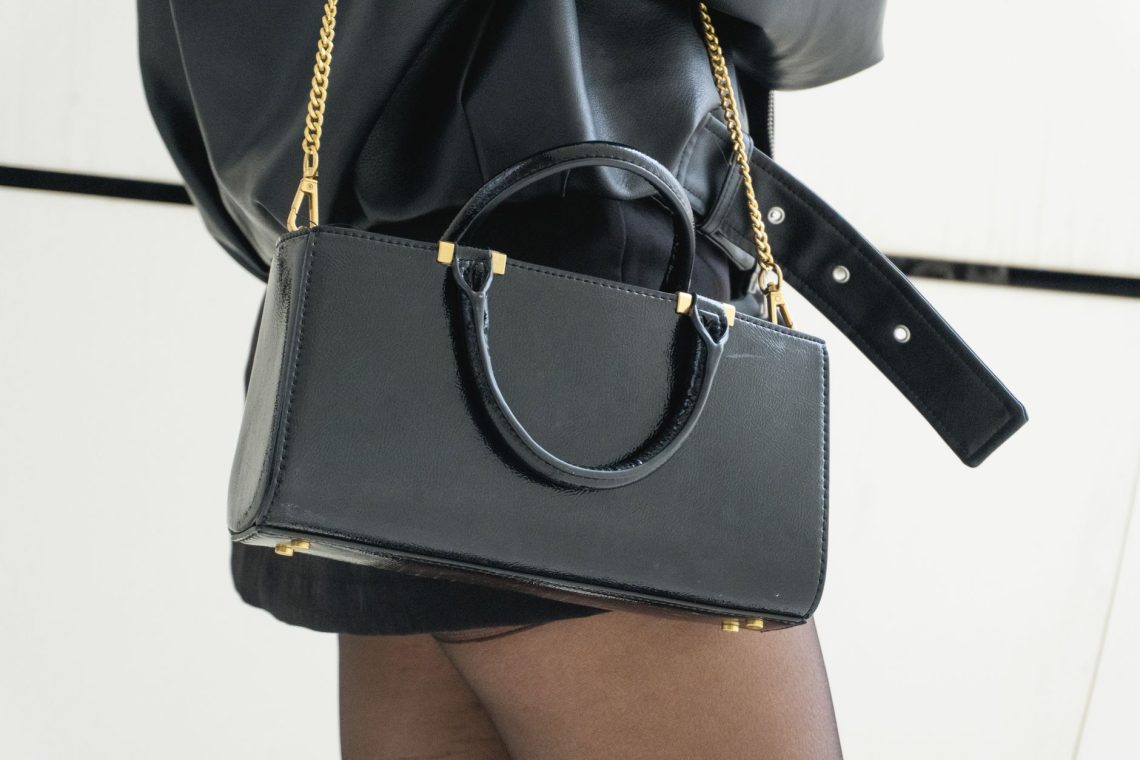
A chain strap looks lovely against a soft jumper, right up until a link catches a loop and you feel that unwelcome tug. The trouble is not always a rough chain: an open link, a turning clasp or the way the bag moves across your body can all bring metal into contact with yarn.
The best approach is to check the hardware first, then decide whether a guard, an extra layer or a different strap makes sense for your outfit. You can keep the contrast of polished metal and cosy knitwear without expecting every jumper to cope with every bag.
Find the part that is catching
Empty the bag and lay its strap on a smooth surface in good light. Work along the chain slowly, looking for links that sit unevenly, small gaps, raised edges and clasps that do not close flush. Check the joining rings near the bag as well as the section that rests on your shoulder.
Gently pass a piece of smooth, tightly woven scrap fabric over any suspect area. Avoid using your favourite jumper as a test swatch. Fabric catching on a particular point suggests a hardware problem; it does not tell you that every other section is safe for delicate knits.
If a link is bent, a ring has opened or plating is peeling, stop wearing that strap against knitwear. Ask the bag maker or a bag repair specialist about a repair. Filing the metal yourself can damage the finish and leave another rough edge, while squeezing a link with household pliers may distort it.
Notice where the snag happens
A catch at the shoulder calls for a different solution from one at your hip. Think back to the movement: were you taking the bag off, reaching into it or walking with it bouncing beside you? Sometimes the chain is smooth but a decorative charm or the clasp on a detachable strap is responsible.
- At the shoulder: cover the section that bears the bag’s weight.
- Across the chest: reduce contact along the full diagonal path.
- Beside the bag: check attachment rings, charms and exposed zip pulls.
- While removing it: lift the strap clear instead of sliding it over the knit.
Choose a guard that covers the contact area
A removable shoulder guard creates a smooth barrier between the chain and your jumper. Look for a soft leather or fabric sleeve with a smooth underside and enough length to cover the area that actually touches your shoulder. A tiny pad may make carrying more comfortable while leaving the catching links exposed.
Check the guard’s own details carefully. Rough seams, exposed hook-and-loop fastenings and sharp zip ends can create fresh snagging points. Fastenings should face away from the garment, and the guard should stay in place when the bag is carried. If it slides down the chain, it will not protect the spot you intended.
Where the chain detaches, a sleeve designed to slide over it can give a neat finish. For a fixed chain, choose a wraparound guard that closes securely without forcing the links. Do not undo permanent hardware simply to fit an accessory.
Try the arrangement over a smooth woven top before pairing it with knitwear. Move your arm, sit down and lift the bag as you normally would. Check that the guard stays centred and that its ends do not push an uncovered clasp against your clothes.
Use a scarf wrap for a short contact section
A small, smooth scarf can cover a shoulder section when the hardware is sound. Use a scarf you are comfortable exposing to friction, since the chain may mark or catch the scarf itself. Wrap it closely enough to cover the links, keeping the fabric flat rather than creating bulky ridges.
Secure the ends away from your jumper and check that the wrap cannot unravel into the chain. Avoid pins or brooches as fasteners near the knit. This is a styling adjustment, not a repair for damaged metal, and it is less useful when a long stretch of chain crosses your chest.
Put a smooth layer between chain and knit
A woven jacket or coat is often the easiest answer when you want to wear both pieces. Put the bag over the outer layer so the chain rests on that surface, keeping the jumper underneath. A blazer works well with a fine roll-neck; a trench can sit over a cardigan and straight-leg trousers.
The protective layer needs to cover the whole route of the strap. An open jacket may protect the shoulder but allow a crossbody chain to rub against the knit at the centre of your chest. Check your outfit from the front and side, then move naturally to see where the chain settles.
Choose the outer layer with the same care as the jumper. Bouclé, loose tweed, embroidery and textured trims can also catch on metal. A smooth woven surface is a more useful barrier than another fabric full of exposed loops.
A scarf draped over the shoulder can help with a small contact area, but only if it stays there. If you keep having to pull it back into place, use a fitted guard or change the strap. An arrangement that depends on standing perfectly still will become irritating quickly.
Adjust how the bag hangs and moves
Carry only what you need. A heavily filled bag presses the chain more firmly into the shoulder and can make any catch harder to release. Keeping the contents manageable also makes it easier to lift the bag clear when you take it off.
If the strap has an intended length adjustment, experiment over a woven top. Aim for a position where the bag rests comfortably without swinging against your sleeve or landing on a textured pocket. Shortening a strap is not automatically better: it may move an exposed clasp directly onto the jumper.
Use only the adjustment method designed for the bag. Improvised knots, extra clips and doubled chains can introduce more edges. When putting the bag on, guide the strap into place with your hand. To remove a crossbody bag, lift the chain away from your torso before bringing it over your head.
Know when to switch straps
Some knitwear deserves a simpler pairing. Loose crochet, open stitches, fluffy yarns, decorative loops and knits with sequins or beads offer plenty of places for hardware to catch. A smooth chain can still slip into an open stitch, so covering one shoulder section may not be enough.
If the bag accepts interchangeable straps, choose a smooth leather or tightly woven fabric strap with tidy edges. Inspect its underside, stitching and clasps too. A broad strap spreads contact, but it still needs smooth fittings positioned away from vulnerable fabric.
Check that the replacement is compatible with the attachment points and suitable for carrying the bag. The clips should close fully without being forced. If the original chain is fixed, use a separate handle only where the bag is designed for it, or choose another bag for that outfit.
For a favourite delicate jumper, switching bags can be the most relaxed choice. A smooth-handled tote or a clutch lets the knit remain the focus without requiring constant attention to a strap.
If the chain catches, stop before pulling
Support the bag immediately to take its weight off the trapped yarn. Bring the chain towards the fabric to create slack, then gently reverse the movement that caused the catch. Do not yank the jumper away or twist the chain through the loop.
If you cannot see the catch clearly, take the bag and garment off carefully if possible, supporting both as you do. Do not cut a pulled loop: it belongs to the knitted structure. Follow the garment’s care advice, and ask a knitwear repair specialist about a visible pull you cannot ease back safely.
Before your next outing, check the shoulder, chest and attachment points once more. A stable guard suits localised contact, a smooth outer layer helps with a longer stretch, and a different strap makes sense for an especially delicate knit. Choose the solution that lets you move comfortably and enjoy wearing the outfit.