A swimsuit neckline can look perfect in a changing-room mirror and feel quite different halfway through a beach day. Leaning over a towel, swimming a few lengths and settling into a low chair all ask something different of the fabric around your chest. The useful question is less “Which neckline suits my shape?” and more “What do I want this swimsuit to do?”
Start with the day you actually have planned. A morning of swimming calls for a different balance of coverage and freedom from an afternoon spent reading beside the pool. You may want one swimsuit to manage both, but choosing with your movements in mind makes it easier to recognise a good fit.
Work out what most of your day involves
Picture the ordinary moments, rather than just the photograph. Will you be swimming, climbing a pool ladder, carrying a beach bag or sitting under an umbrella? If you are likely to spend more time moving than reclining, look first for a neckline that stays close to your body without needing frequent adjustment.
For a mostly seated day, notice where edges and straps will rest when your shoulders relax. A neckline that feels secure standing up may press against your chest or pull at your neck once you curl into a lounger. Neither activity demands a particular amount of coverage: the aim is to find coverage you feel comfortable with in those positions.
- Mostly swimming: prioritise a stable upper edge, secure straps and enough room to move your arms.
- Mostly sitting: check pressure points, how the neckline lies when you recline and whether you can relax without rearranging it.
- A mixed day: choose adjustable details and test the swimsuit through both kinds of movement.
Separate neckline shape from support
A high neckline is not automatically supportive, and a low neckline is not automatically insecure. Support also comes from the underband, cup construction, lining, straps and fit through the body. On a one-piece, torso length matters too: a suit that is too short can drag downwards, while excess length can leave fabric loose around the upper edge.
Check the parts doing the work. A bikini underband should feel comfortably anchored without riding up when you lift your arms. Cups should contain your bust without cutting in or leaving empty fabric. Tightening the straps can refine the fit, but it should not be the only thing keeping the swimsuit in place.
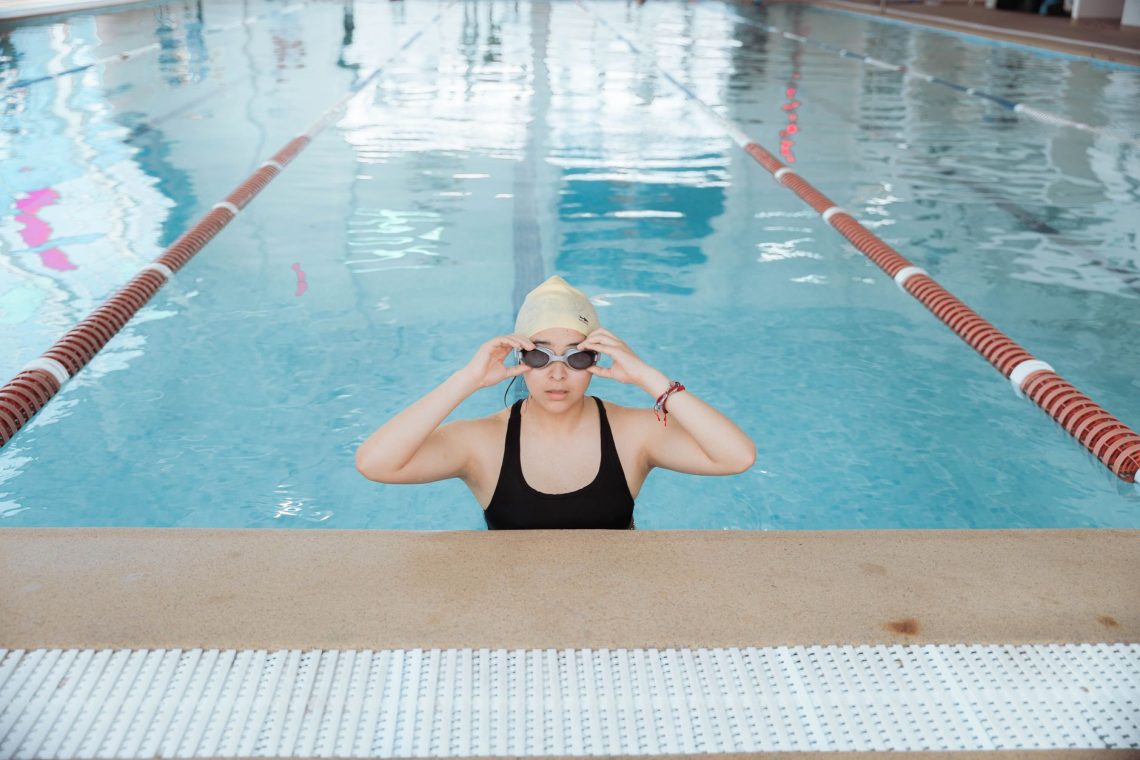
Choose a neckline for swimming
Try a higher scoop for straightforward coverage
A higher scoop can be a useful starting point if you want coverage across the upper chest while keeping the neckline clear of your throat. Look for an edge that follows your body when you reach forwards. If it stands away from your chest before you even move, a different size or cut may work better.
Pay attention to the armholes as well. A secure neckline is little help if the sides rub when you rotate your shoulders. Make a few slow swimming movements and check that the fabric stays comfortable around the front of each arm.
Check a high neck for freedom at the throat
A high-neck swimsuit can offer a covered feeling at the front, particularly when bending or reaching. The trade-off is another edge close to your neck. Turn your head, lower your chin and lift both arms to see whether it presses or pulls. Check any fastening at the back for comfort too.
Look closely at V-necks and plunging shapes
You do not need to rule out a V-neck for swimming. The important detail is how firmly the inner edges sit against you and what supports the bust beneath them. A shallower V with a secure band may feel easier for an active afternoon than a deep plunge whose edges move when you lean forwards. Judge the individual suit through movement rather than relying on the neckline name.
Choose a neckline for sitting and lounging
Check square and straight necklines while seated
Square necklines give a clearly defined edge, but that edge needs to sit comfortably when your posture changes. Sit down, let your shoulders drop and lean back slightly. Look for digging at the corners, folding across the centre or gaping near the straps. A small amount of movement is ordinary; repeated readjustment is a reason to try another cut.
Think about where a halter places tension
A halter leaves the shoulders relatively clear, but its straps place tension around the neck. That may feel fine initially and less pleasant when you settle into a chair. If you like the shape, tie or adjust it to a comfortable tension, then sit for a few minutes. If you have to pull it very tight to keep the front secure, try a different construction.
Treat strapless styles as a fit decision
A bandeau can feel appealing for lounging because there are no shoulder straps to consider. Check that it stays in place through a gentle reach and a forward lean without feeling restrictive across the top. If it comes with removable straps, try them on too: they give you another option when your afternoon includes a swim.
Do a changing-room movement check
Keep underwear on and follow the shop’s fitting guidance. Once the swimsuit is positioned and adjusted, give yourself a few minutes to assess it. Pulling everything into place immediately before each mirror check can disguise a fit that needs too much attention.
- Stand naturally. Let your arms hang and breathe normally. Notice any pinching or loose edges.
- Reach overhead. Lower your arms and check whether the neckline and underband return to a comfortable position.
- Lean forwards. Look for unwanted gaping or shifting without holding the fabric in place.
- Rotate your shoulders. Move your arms slowly as if swimming and notice rubbing or pulling.
- Sit and recline slightly. Relax your posture and check for pressure at your neck, chest and ribs.
These checks cannot tell you exactly how a swimsuit will feel in water, but they can reveal obvious problems before you commit. If the neckline only works while you stand very straight, it may not suit the day you have planned.
Make a mixed-day swimsuit work harder
For swimming followed by lounging, adjustable shoulder straps can help you fine-tune the fit. Set them so the neckline lies comfortably against you, then repeat the movement check. Avoid loosening them so far for sitting that the front loses its secure fit when you stand up.
You can also separate swimming coverage from what you wear around the pool. A loose shirt or beach dress is easy to add when sitting, so the swimsuit underneath can be chosen for movement. If you want more chest coverage in the water, choose a swimming garment designed to provide it rather than relying on a cover-up.
The right neckline lets you pay attention to your day. Choose the amount of coverage you enjoy, check how the whole swimsuit supports it, and spend as much time sitting during a fitting as you do looking in the mirror. A suit that stays comfortable through your ordinary movements is the one you are more likely to reach for again.