A jacket can have the right colour, a lovely cloth and sleeves that are nearly perfect, yet still feel wrong across the shoulders. Because this area supports the rest of the garment, a small mismatch can affect the collar, sleeves and overall silhouette. The solution is not always to take the shoulder seam in.
If you are wondering how to alter the shoulder of a jacket that almost fits, start by identifying what is actually wrong. Some problems are manageable for an experienced alterations tailor; others involve rebuilding enough of the jacket that choosing a different cut makes more sense. Here is how to tell the difference before anyone reaches for the scissors.
Check the fit with your usual layers
Try the jacket over the sort of clothes you intend to wear beneath it. A blazer worn over a fine blouse needs a different amount of room from one intended for a substantial jumper. Empty the pockets, settle the jacket on your shoulders and stand naturally, with your arms relaxed.
Look at the front, side and back in a mirror, or ask someone to take photographs at shoulder height. Avoid pulling yourself into an unusually upright pose: the jacket needs to suit the way you actually stand.
- Check the shoulder line. On a conventionally fitted jacket, the sleeve usually begins close to the end of your shoulder. An extended or dropped shoulder may deliberately sit further out.
- Look at the collar. Notice whether it rests against your neck, stands away or bunches beneath the back of the collar.
- Inspect the sleeves. Look for dents below the shoulder, twisting or diagonal drag lines.
- Move gently. Reach forward as though holding a steering wheel, then relax. Some restriction is normal in structured tailoring, but you should be able to carry out ordinary movements comfortably.
Fasten the button intended to be worn closed. If the fronts pull sharply apart or the lapels bow, the body may be too tight. That tension can distort the shoulder area, so assess the whole jacket before blaming one seam.
Work out which shoulder problem you have
The shoulders look too wide
Excess width may leave the sleeve hanging beyond your natural shoulder, sometimes with a hollow or dent beneath the outer edge. However, width alone is not a diagnosis. Padding, sleeve construction and the relationship between your upper arm and the armhole can create similar effects.
Ask yourself whether you dislike a fault or simply dislike the design. A deliberately broad blazer will not become a neat, close-fitting jacket through a tiny adjustment. Its lapels, chest and sleeves were cut to work with that broader outline.
The shoulders feel too narrow
A jacket that pulls across the upper back, feels restrictive around the upper arms or seems to perch on the shoulders may be too small. Letting it out depends on spare fabric inside the relevant seams, and there may be little available where it is needed.
Do not assume a tailor can add shoulder width because the waist has room. These are different parts of the pattern. If the shoulder and upper sleeve both feel tight, trying another size or cut is usually the more promising starting point.
One side sits differently
Many people have shoulders that differ slightly in height or slope. A jacket may consequently look clean on one side and creased on the other. A tailor might consider adjusting the internal support or altering how the garment sits, rather than removing equal amounts from both sides.
A roll below the back collar can also involve posture, shoulder slope or the balance of the jacket. Describe what you see and how it feels, but let the tailor establish the cause.
Understand what a tailor may be able to change
Narrowing a structured jacket’s shoulders is substantial work. Depending on its construction, the tailor may need to open the lining, remove the sleeves, reshape the shoulder and armhole, then refit the sleeves. Padding and internal supports may also need attention.
The sleeve must still work with the altered opening. Moving the shoulder point changes how the sleeve falls and can affect its apparent length. This is why a shoulder alteration should be discussed alongside the upper sleeve and cuff position.
Sometimes the appropriate work is more local. A tailor may be able to adjust a collar, change modest padding or reset a sleeve to improve its hang. These options address particular fit issues; they are not interchangeable shortcuts for making any jacket fit.
Soft, unlined jackets can be easier to access, but simple construction does not guarantee a simple alteration. Leather, heavy topstitching, checks, stripes and decorative shoulder details can make changes more visible or difficult. Show the actual garment when requesting advice.
Prepare for a useful fitting
- Bring your intended outfit. Wear the right layer and bring any alternative layer you regularly use. This gives the tailor a realistic starting point.
- Explain your preferred silhouette. Say whether you want a softly relaxed shoulder or a sharper, closer line. Bring a photograph if that communicates your preference more clearly.
- Point out symptoms. Show the dent, tightness or slipping collar. Avoid insisting on a specific seam adjustment before the construction has been assessed.
- Ask what else will change. Discuss the sleeves, collar, armholes and any effect on pattern matching. Ask whether the proposed result preserves the jacket’s character.
- Agree the scope and quote. Establish which work is included, whether another fitting is needed and what improvement is realistic before authorising it.
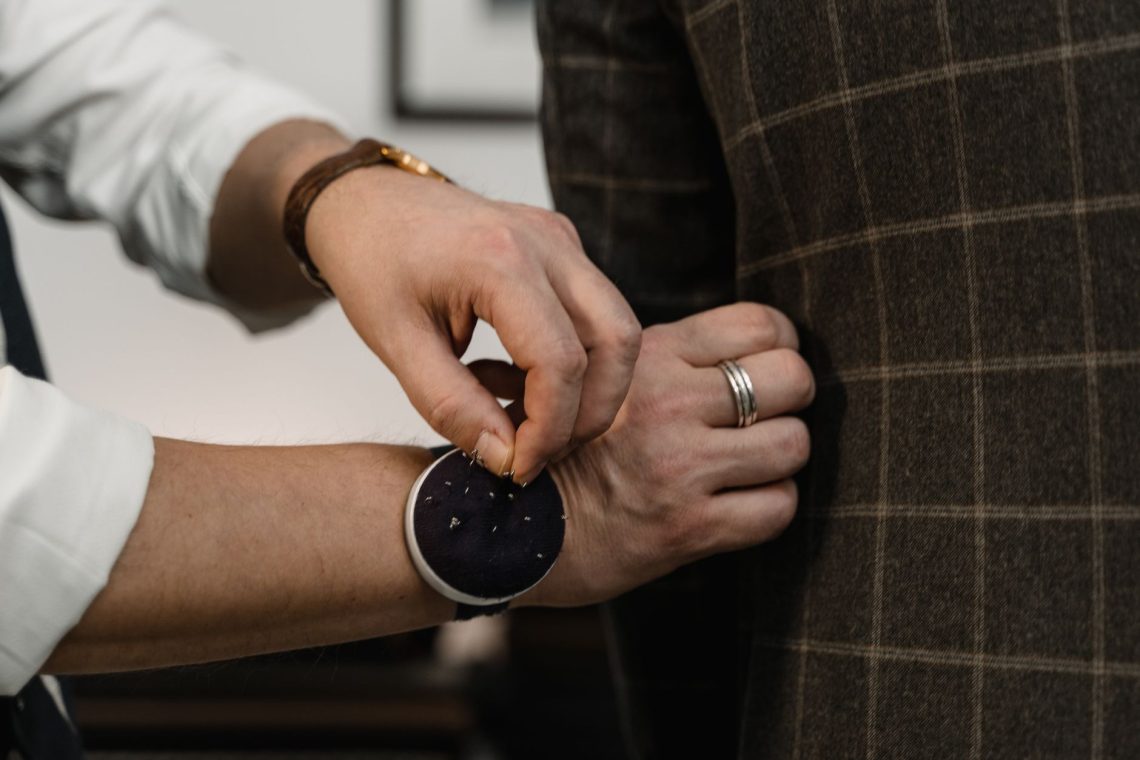
Pinning can help illustrate a proposed shape, but it cannot fully demonstrate how a reconstructed shoulder will behave. Ask the tailor to explain any uncertainty. Keep your arms relaxed during assessment, then check movement when invited.
Decide whether the alteration is worthwhile
A shoulder alteration can make sense when the jacket otherwise fits well, the cloth is sound and the design is something you will wear often. A treasured occasion jacket or a favourite vintage find may justify more work than an easily replaced everyday blazer.
Consider the whole repair list. Shoulders, sleeve length, waist shaping, lining repairs and damaged cuffs can turn an apparently small project into a considerable undertaking. Request an overall assessment before committing to the first alteration.
If you are still shopping, keep the return option available while seeking advice. Do not buy an uncomfortable jacket on the assumption that all tailoring is possible. A good fit through the shoulders and upper chest gives later adjustments a much better starting point.
Know when to walk away
Choose another jacket if gaining enough shoulder room would require fabric that is not there, or if narrowing the shoulders would demand extensive changes to an already unsuitable chest and armhole. Walk away, too, if the proposed work would remove the design feature that attracted you in the first place.
Be cautious when the fabric is worn, seams are weakened or earlier alterations have left little room for further changes. For a new purchase, compare the complete alteration quote with the appeal of finding a better-fitting cut. There is no universal spending limit; the question is whether the likely result is worth it to you.
Keep home adjustments modest
Do not trim the shoulder, cut out the padding or unpick a sleeve to experiment. The internal structure may be supporting the silhouette, and holes from previous stitching can remain visible on some materials. Pressing cannot correct a fundamental mismatch either; follow the care label and leave specialist shaping to someone experienced.
At the final fitting, wear the same layers and check the jacket from every angle. Fasten it, sit down and reach forward gently. The collar should settle comfortably and the sleeves should hang naturally. The aim is a jacket that looks balanced and feels wearable, without needing you to keep rearranging it.