A lace bra caught on a jacket zip, a fine knit buried beneath damp gym clothes, a silk blouse swept into the ordinary wash: damage can begin before a garment reaches the machine. A laundry basket cannot make an unsuitable wash safe, but it can keep clothes apart while you decide how to care for them.
The most useful system makes that decision easy at the moment you get undressed. If sorting requires opening several lids or walking to another room, the nearest chair tends to win. Start with a simple division between everyday washing and clothes that need attention, then add only the separations your wardrobe actually needs.
Start with your clothes, not the basket
Look at the care labels on the delicate pieces you wear regularly. A fine cotton blouse, wool cardigan and embellished evening top might all feel precious, yet they may need different treatment. Some can go through a suitable machine cycle; others require hand washing or professional cleaning. Fibre, construction, trims and the label all matter.
Make a short mental list of the items that repeatedly cause sorting problems. Perhaps tights disappear into towels, or your partner cannot tell which black tops need special care. Build your arrangement around those actual mistakes. You do not need a compartment for every fabric you own.
Separate by the next action first. A basket marked “check care label” is more useful than one marked “silk” if its contents include several garments with different washing instructions. Colour sorting still matters, but you can do that when assembling a compatible wash.
Give delicate clothes an obvious destination
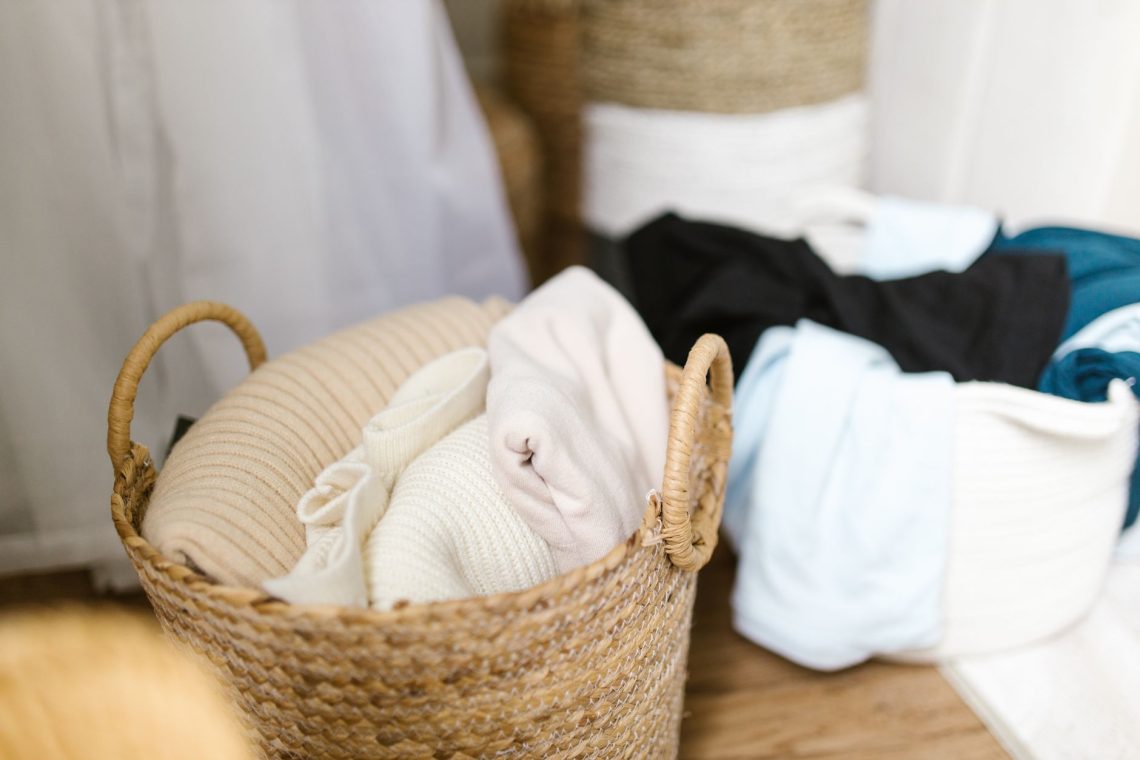
For many adult wardrobes, an everyday hamper and a smaller delicate basket are a manageable starting point. The smaller basket keeps items needing attention visible and prevents them from being swallowed by a large weekly pile. Put both within easy reach of where you usually change.
Decide what the delicate basket means in your home. It might hold lingerie, hosiery, fine washable tops and lightweight knitwear awaiting a label check. Its purpose is to prompt a pause before washing, rather than promise that everything inside can share a cycle.
- Everyday washing: clothes ready for the usual sorting by colour and care requirements.
- Delicate or check first: items that need their labels read or gentler handling planned.
- Professional cleaning: a separate, clearly marked bag if you regularly wear garments requiring it.
If you rarely use a cleaner, the third category can be a small labelled bag rather than another full basket. Keep garments awaiting repair somewhere distinct too: a loose strap or opening seam needs attention before laundering, even when the fabric itself is washable.
Choose a smooth interior and accessible shape
Run your hand around the inside of any basket you are considering. Look for rough joins, exposed fastenings, splintered weaving and sharp edges around ventilation holes. Lace, loose knits and sheer fabrics can catch on surfaces that sturdier clothes pass over without trouble.
A smooth, removable liner can make a woven basket more suitable, provided it fits securely and does not leave rough areas exposed. Check the liner’s care instructions as well. It should be straightforward to remove, clean and replace; an awkward liner is another small job likely to be postponed.
Choose a shape you can reach into comfortably. A deep, narrow hamper encourages rummaging and makes it easy to forget a lightweight camisole at the bottom. A shallower basket can work better for delicate pieces, particularly if you wash them in small batches.
Consider the journey to the washing machine. Handles should feel secure without forcing you to crush the contents against your body. A removable inner bag may help in a small flat, while a lightweight basket may be simpler if you carry washing downstairs.
Make room for damp clothes to dry first
Ventilation is useful, but it does not turn a closed hamper into a drying space. Let damp garments air fully before adding them to stored laundry. A sweaty vest or rain-damp blouse should not be folded into a pile of dry lingerie and left there.
Give this step a defined place: a clear section of an airer, for example, with space around the garment. Follow the care label when deciding whether an item should hang or lie flat, since some knits can stretch under their own weight. Once dry, move it into the appropriate basket.
Keep the baskets themselves in a dry spot where possible. If the bathroom is the only practical location, position them away from splashes and check for dampness regularly. A lid can make laundry look tidier, but easy access and dry storage matter more than hiding the contents.
Use mesh bags without skipping the sorting
Mesh laundry bags can help keep suitable small garments together and limit contact with other items during washing. Store clean bags beside the delicate basket so they are available when you need them. Choose smooth closures and bags with enough room for their intended contents.
A mesh bag does not make a hand-wash-only garment machine washable. Nor does it make incompatible colours, temperatures or washing methods compatible. Read the garment label and choose the load before treating the bag as the final preparation step.
For washable bras, fasten hooks before washing to reduce the chance of catching other fabrics. Give structured cups room rather than stuffing several bras tightly together. Keep hosiery away from exposed zips and hooks, and check bag closures before loading the machine.
Fit the routine to your changing habits
Place the sorting point where clothes come off, even if that means using two modest containers inside a wardrobe instead of one attractive hamper elsewhere. Check that doors still open and that you can drop something in with one hand. Convenience is part of protecting the clothes.
Use plain labels if someone else shares the system. “Check before washing” gives a clearer instruction than a decorative label such as “specials”. Explain which familiar garments belong there, especially when delicate and everyday pieces look similar.
Keep rewearable clothes out of the dirty-laundry system. A designated hook, hanger or shelf gives a lightly worn cardigan somewhere to go after airing, if it is suitable to wear again. That prevents it being washed simply because it landed in the hamper.
Reset the system when you wash
Before making a delicate load, lift items out individually and check labels, pockets, fastenings and visible marks. Deal with stains according to the garment’s care needs; avoid an improvised treatment on an unfamiliar fabric. Then group only items whose washing instructions and colours are compatible.
When the basket is empty, check its base and liner for debris, rough spots or moisture. Clean it as appropriate for its material and let it dry before refilling. Return clean mesh bags to their usual place so the next wash starts without a search.
If delicate clothes keep piling up, simplify the routine or choose a regular opportunity to deal with them. Add another compartment only when it solves a recurring problem. The right basket system is one you can use on an ordinary tired evening, giving your favourite clothes a clear route from getting changed to careful washing.