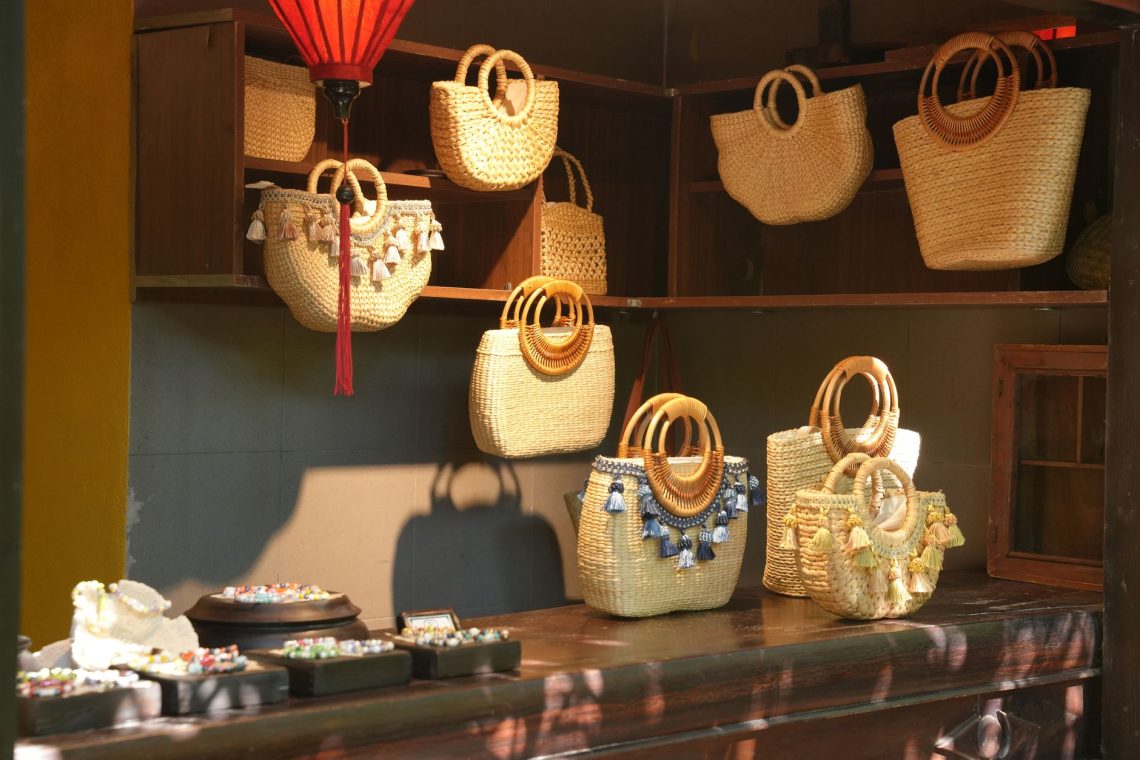
A straw bag looks wonderfully relaxed with a linen dress or summer tailoring, but leaving it in the hallway can give it a rather less intentional slouch. A crowded coat hook, a damp umbrella and a pile of shoes are all awkward neighbours for a woven accessory. The answer is to give the bag enough support to hold its outline without stretching the weave or turning the entrance into a storage cupboard.
Start with three things: light stuffing, a resting place that supports the base, and distance from wet outdoor kit. The right arrangement depends on whether your bag is a firm basket, a soft raffia tote or a small structured shoulder bag. Here is how to make that arrangement work for everyday use.
Check the bag before choosing its spot
“Straw” is often used loosely for woven bags, which may contain raffia, paper fibres, other plant fibres, fabric linings or leather trims. Check the care label first, particularly before cleaning or attempting to reshape anything. A method that suits one bag may damage another.
Empty the bag and set it on a flat surface. Notice where it naturally stands and where it folds. A basket with a firm rectangular base needs support beneath that whole base. A flexible tote may be designed to soften and fold; preserving its shape should not mean forcing it into a rigid box.
Look at the handles, too. If the weave pulls upwards around their attachment points when you lift the empty bag, hanging is unlikely to be the best everyday storage choice. Loose stitching, split fibres or a distorted rim are reasons to avoid putting more strain on those areas.
Stuff it lightly, following its natural outline
Stuffing should replace the gentle support that the contents normally provide. It should not make the bag feel tightly packed. Use clean, dry, unprinted tissue paper, loosely scrunched into small bundles. Alternatively, use a clean, colourfast cotton cloth that is soft enough to arrange without creating hard ridges.
Place a little filling across the bottom, then build up through the centre. For a broad tote, add loose bundles towards each end so the sides do not collapse inwards. For a rounded basket, follow the curve rather than pushing square corners into it. Stop when the bag holds its intended outline without the weave looking stretched.
- Support the corners gently. Fill empty spaces without pushing against seams or brittle sections.
- Keep the rim relaxed. Do not force the opening wider than it sits naturally.
- Leave closures comfortable. A zip or clasp should close easily if you normally store the bag shut.
- Keep the filling dry. Replace any tissue that becomes damp or grubby.
Avoid newspaper, which can transfer print, and heavy items such as books, which load the base rather than support the sides. Do not use a damp towel to persuade the bag into shape. Moisture and pressure are a poor combination when you do not know how the fibres, lining or adhesive will respond.
Make daily stuffing easy to remove
If you use the bag regularly, gather the tissue loosely inside a clean cotton pouch or spare pillowcase. You can lift the filling out in one movement before leaving home and put it back when you return. Keep the bundle light and loosely tied, so it settles into the bag rather than behaving like a solid cushion.
This small habit also encourages you to empty the bag each evening. A water bottle, purse and sunglasses case left in one corner can pull a soft bag unevenly while it waits by the door.
Choose a shelf before a coat hook
A clean, level shelf is usually the simplest hallway solution because it supports the bag from below. Choose a space deep enough for the base, with room above the handles and a little clearance at the sides. The bag should not need to squeeze between boots, storage baskets or another handbag.
If you use a hallway console, give the straw bag its own end of the lower shelf, away from feet and the door swing. Check that no rough edge or protruding screw can catch the weave. A clean cotton cloth beneath the bag can provide a smooth resting surface, but avoid a thick, uneven pad that makes it tilt.
A cubby can work for a smaller basket bag, provided the opening is generous enough. Store it upright if that is how it naturally rests. Do not fold the handles down to make it fit unless they are designed to fold freely.
When hanging is the only option
Hanging saves space, but it puts the bag’s weight through its handles and their attachment points. If the care instructions allow it and the construction is sturdy, use a broad, smooth hook for short periods with the bag empty. Avoid narrow pegs that pinch a handle or leave a sharp bend.
Where the handles sit together naturally, support both without pulling them apart. Keep the bag clear of coats, so sleeves and heavy pockets do not press against its sides. If hanging makes the rim peak upwards, the base droop or the handles stretch, move it to a supported surface. A hook is not worth preserving at the expense of the bag.
Keep rain and hallway damp away
The entrance is where wet coats, umbrellas and shoes collect, so think about where water actually lands. A shelf directly below coat hooks may catch drips even when it seems safely above the floor. Keep the bag outside that drip line and away from an umbrella stand, boot tray or frequently wet doormat.
After a rainy journey, check the bag before stuffing it or putting it away. If it is damp, empty it and gently blot surface moisture with a clean, dry cloth. Let it dry naturally in an airy indoor spot, supported on a flat surface. Follow any material-specific care instructions and avoid rubbing the weave.
Do not put a damp bag into a closed cupboard or wrap it in plastic. Avoid radiators, hairdryers and strong direct sunlight as shortcuts. Concentrated heat can affect fibres and trims, while an enclosed space can hold moisture around the bag. Return the dry stuffing only once the bag and lining have dried.
Watch heat, sunlight and passing traffic
A bright hallway window may make a straw bag look lovely on display, but a place in prolonged direct sun is less suitable for storage. Choose a shaded shelf away from the radiator and any heater. Check the spot at different times of day if sunshine moves across the entrance.
Physical knocks matter as well. A narrow ledge beside the front door invites the bag to be brushed, caught or knocked onto the floor. Leave enough space for people to pass while carrying shopping. Avoid balancing other accessories on top: even a light jacket can flatten a soft rim when left there repeatedly.
Deal gently with an existing dent
If the bag has started leaning, remove its contents and check for damage before trying to correct it. For a small collapse in a flexible section, arrange dry tissue inside to support the intended outline, then leave the bag resting evenly. Use gentle support rather than trying to bend the weave back by force.
A sharp crease, cracked fibre or pulled handle needs more caution. Do not steam, soak or iron the bag unless its maker specifically recommends that treatment. Ask the maker or a repair specialist about a valuable or badly misshapen piece.
For everyday care, keep the routine simple: empty the bag, check for damp, replace its light filling and return it to a clear shelf. A little breathing room and support will help your summer accessory stay ready for its next outing.