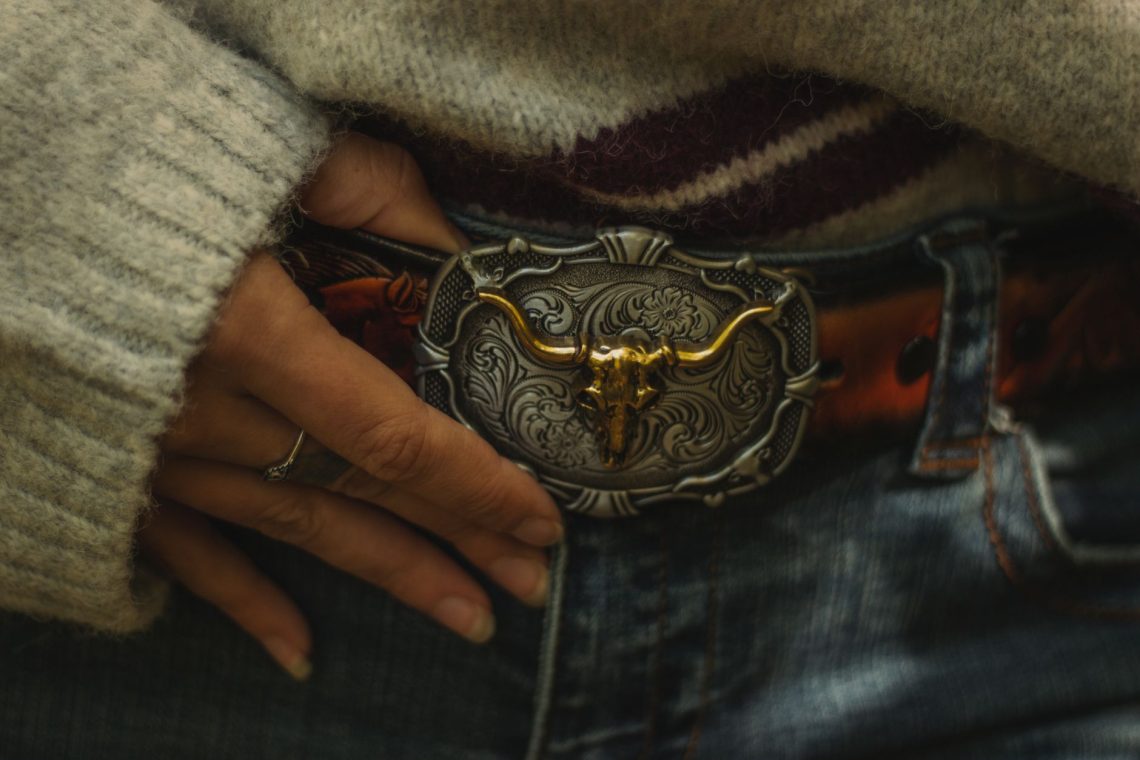
A western belt can make a familiar pair of jeans feel more deliberate. The engraved buckle, shaped tip or tooled leather adds interest to clothes you already wear, without needing an entirely new outfit. The difficulty is knowing where to stop: a good detail can become a theme when every other piece tells the same story.
The easiest approach is to let the belt do most of the western work. Start with everyday denim, add a simple top and choose footwear that suits your plans. Then adjust the scale, colour and amount of decoration until the belt feels like part of your wardrobe.
Choose how much western detail you want
Western belts range from plain leather with a subtly engraved buckle to heavily decorated styles with conchos, contrasting stitching and ornate metal tips. You do not need every feature at once. If this is unfamiliar territory, a straightforward leather strap with a modest silver-tone buckle gives you plenty to work with.
Think about the clothes you reach for most often. A black belt with restrained hardware sits easily alongside dark jeans, white shirts and tailored jackets. Brown tooled leather brings texture to faded blue denim, cotton T-shirts and soft knitwear. Neither colour needs a matching pair of cowboy boots to make sense.
If you love an oversized buckle, choose it deliberately and simplify elsewhere. A plain strap can give an elaborate buckle room to stand out. Equally, decorative leather may be enough on its own, especially if you tend to wear jewellery or patterned tops.
Get the fit right before styling anything
Try the belt with the jeans you actually intend to wear. Belt loops vary, and a wide strap that fits one pair may struggle through another. The strap should pass through comfortably without folding at the edges or pulling the loops out of shape.
Check the buckle while sitting as well as standing. A substantial buckle can press against your stomach, particularly with high-rise jeans. If it digs in or tips forwards, try a smaller buckle or a different combination of belt width and waistband height. An attractive belt is little use if you keep adjusting it.
Fasten it firmly enough to sit neatly, without gathering the waistband into folds. If your jeans need considerable cinching, the bunching can compete with the decorative hardware. Ideally, the jeans already fit and the belt adds a little support and a finishing detail.
Pay attention to the end of the strap, too. It should tuck securely through a keeper or belt loop. Avoid leaving a long, stiff tail sticking out across your hip. Follow the maker’s sizing guidance rather than assuming your usual trouser size will give the right fit.
Pair the belt with the shape of your jeans
Straight-leg jeans: an easy starting point
Straight-leg denim provides a simple backdrop for a decorated belt. Try mid-blue jeans, a white T-shirt and a black western belt with loafers or trainers. A neat front tuck reveals the buckle while keeping the outfit relaxed. Add a cardigan or an unstructured jacket if you need another layer.
Wide-leg jeans: define the waist
With wide-leg denim, showing the waistband helps the belt feel purposeful. A close-fitting knit or a shirt tucked in smoothly keeps the top half clear. A broader belt can work if the loops accommodate it, but check the whole silhouette rather than assuming wider jeans require bigger hardware.
Slim jeans: keep the buckle in proportion
Slim jeans leave a clear outline around the waist and hips, so an enormous buckle can become particularly prominent. Start with a narrower strap and less bulky hardware. A loose cotton shirt, partially tucked, softens the effect; ankle boots or simple flats keep the combination easy to wear.
Bootcut jeans: watch the supporting details
Bootcut jeans already have an association with western dressing. You can enjoy that shape without adding every familiar reference. Try a fine knit, a plain belt with an engraved buckle and loafers. If you prefer cowboy boots, keep your shirt and outerwear simple so the outfit still feels like everyday dressing.
Show enough of the belt to give it a purpose
A western belt does not have to be visible all the way around your waist. Often, a glimpse of the buckle is enough. Tuck the front of a T-shirt loosely into the waistband, then lift your arms and let the fabric settle before checking the result.
For a cleaner finish, tuck in a shirt fully and ease out a little fabric above the belt. Spread any excess towards the sides rather than letting it bunch directly behind the buckle. Thin fabrics are generally easier to arrange than heavy sweatshirts or chunky knits.
If you prefer longer tops, wear an open shirt or jacket over a tucked base layer. This gives the belt some visibility through the centre without requiring a completely exposed waistband. There is no need to force a tuck into an outfit that feels better worn loose.
Use colour and hardware to connect the outfit
Your belt and shoes do not need to match exactly. Instead, look for a connection in tone or mood. A worn brown leather belt can sit comfortably with tan loafers or cream trainers; a black belt can give pale denim a sharper edge.
Notice the metal details already present. A large engraved buckle beside a chunky necklace, several bracelets and a heavily embellished bag can feel crowded. You might keep your favourite earrings and choose a quieter bag, or let the buckle be the main piece of decoration.
Mixed metals are perfectly workable. What matters is whether you enjoy the balance, rather than whether every fastening is identical. If the combination feels busy, removing one accessory is often more useful than replacing everything.
Build three everyday outfits
- For a casual day: combine faded straight-leg jeans with a grey T-shirt, a brown western belt and white trainers. Add a plain cardigan for softness. The belt supplies texture without asking the rest of the outfit to dress up.
- For a smarter lunch: wear dark wide-leg jeans with a tucked cream blouse, a black belt with a modest engraved buckle and loafers. A tailored jacket gives the decorative hardware a more polished setting.
- For the evening: try black jeans, a simple sleeveless top and a western belt with a more prominent buckle. Add heeled ankle boots if you like them, and keep your bag compact and uncomplicated.
Use these as starting points rather than shopping lists. Swap in familiar pieces with similar shapes, then decide whether the belt improves the outfit. Repeating a combination you already like is a useful way to make a new accessory feel natural.
Know when the outfit is becoming a costume
A fringed jacket, checked shirt, cowboy boots and a large buckle can all be appealing individually. Together, they create a much stronger western statement. If your aim is an everyday outfit with one interesting detail, remove a reference: exchange the checked shirt for a plain tee, or the fringed jacket for a blazer.
Before leaving, look at the outfit from a little distance. Is the buckle sitting flat? Can you move comfortably? Does your eye travel around the outfit, or does every detail compete for attention? Make one small adjustment at a time. The most convincing western belt is usually the one you can put on with your favourite jeans and then forget about.